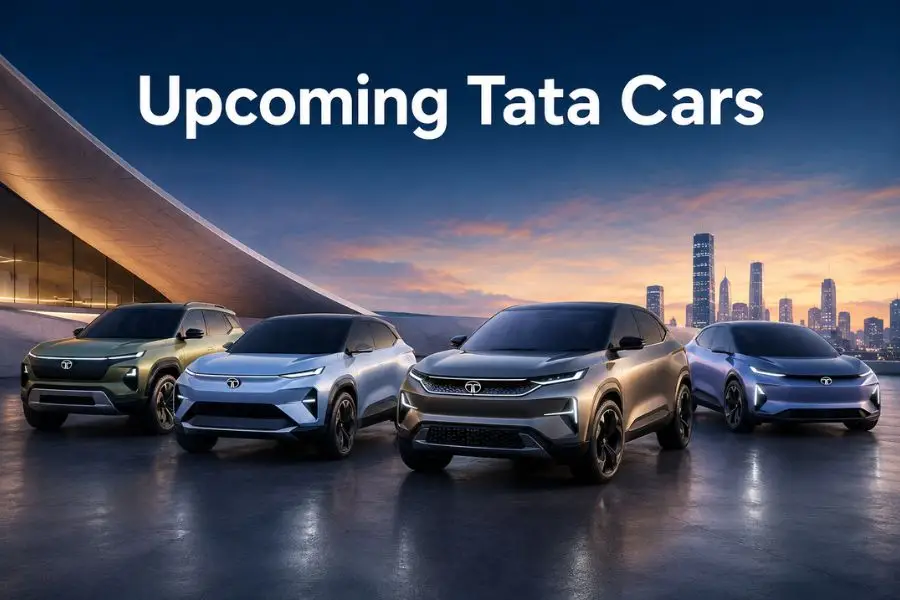
Tata Motors is gearing up for an eventful 2026 in India, with a mix of facelifts, electric vehicles and an all-new generation of one of its best-selling SUVs. After launching the all-new Sierra in front-wheel-drive form, the company has confirmed an electric Sierra for early 2026, while updates to the Punch and Nexon will further strengthen Tata’s mass-market portfolio. Here’s a closer look at all the Tata models expected to launch in India in 2026.
Tata Punch Facelift (2026)
Expected launch: Early 2026
Expected price: Rs 6 lakh to Rs 9.5 lakh (ex-showroom)
The first Tata launch of 2026 is likely to be the updated Punch. The micro-SUV is set to receive its most comprehensive refresh yet, bringing its design and features closer to the Punch EV.
On the outside, the facelifted Punch is expected to get a connected LED light bar, redesigned bumpers, updated alloy wheels and subtle changes to the rear styling for a fresher overall look. Inside, Tata is likely to introduce a fully digital instrument cluster and the EV’s two-spoke steering wheel. Feature upgrades could include ventilated front seats and additional connected tech, making the Punch more competitive in its segment.
Mechanically, the Punch facelift will continue on the ALFA platform and is expected to retain the existing 1.2-litre petrol engine, along with the CNG option. Prices are expected to see a marginal increase, with the range likely spanning from Rs 6 lakh to Rs 9.5 lakh.
Tata Sierra EV (2026)
Expected launch: Q1 2026
Expected price: Rs 16 lakh to Rs 25 lakh (ex-showroom)
The iconic Sierra nameplate will take a major step into the electric era with the launch of the Sierra EV in the first quarter of 2026. Tata has confirmed that the electric SUV will be offered with both rear-wheel-drive and all-wheel-drive configurations, making it one of the more versatile EVs in its class.
Built on Tata’s new Argos skateboard platform, the Sierra EV will support dual-motor setups and flexible battery packaging. While the overall design will closely mirror the ICE Sierra, the EV will feature a distinct front end with a closed-off grille and EV-specific detailing.
Although official specifications are yet to be announced, the Sierra EV is expected to borrow battery options from Tata’s existing electric line-up, including a 55kWh unit and a larger 65kWh pack. Production will take place at Tata’s Sanand facility, alongside the ICE version. The Sierra EV is expected to arrive by March 2026, with prices starting around Rs 16 lakh and going up to Rs 25 lakh.
Next-Generation Tata Nexon (2026–27)
Expected launch: Q4 2026 (or early 2027)
Expected price: Rs 8 lakh to Rs 17 lakh (ex-showroom)
Tata Motors is also working on an all-new Nexon, internally known as Project Garud. The next-generation Nexon is expected to debut towards the end of 2026, with showroom arrivals likely spilling over into early 2027.
This will be a ground-up update, with the Nexon expected to move to a new platform after nearly a decade on its current architecture. Expect significant changes to the exterior design and interior layout, aligning the compact SUV with Tata’s newer design philosophy and improved material quality.
Under the hood, the 1.2-litre petrol and CNG engines are likely to be carried forward. However, the future of the diesel engine remains uncertain due to the high costs involved in upgrading it to meet upcoming BS7 emission norms. Tata is also expected to update the Nexon EV alongside the ICE model at a later stage.
Initial production capacity is expected to be around 12,000 units per month, with scope for expansion depending on market demand. Pricing for the next-gen Nexon is estimated to range between Rs 8 lakh and Rs 17 lakh.
What to expect from Tata in 2026
With the Punch facelift kicking things off, followed by the Sierra EV and a brand-new Nexon, Tata Motors’ 2026 strategy clearly focuses on modernisation, electrification and feature-rich updates. These launches are expected to help Tata strengthen its position across the micro-SUV, compact SUV and midsize electric SUV segments in India.
Read More: