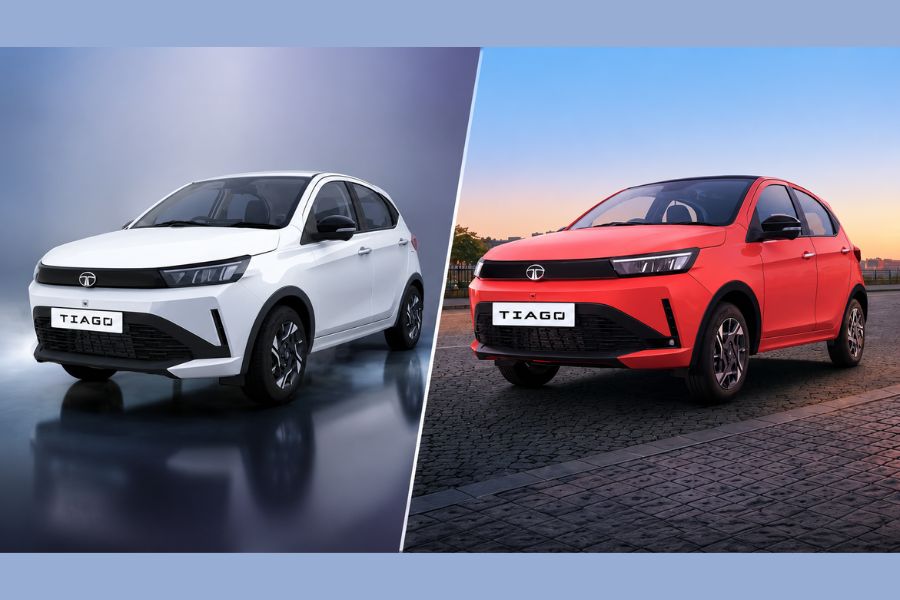
The Tata Tiago has always punched above its weight in India’s highly competitive entry-level hatchback segment. Since its debut in 2016, this plucky five-door has gone through several rounds of updates, and the 2025 model year brought some of the most meaningful revisions yet. But if you’re sitting on the fence between buying the updated model or holding on to (or hunting for a deal on) an older unit, it helps to know exactly what separates them. This guide breaks down every significant difference — and a few surprising similarities — between the new Tata Tiago and its older counterpart.
How the Old Tiago Got Here
When Tata first launched the Tiago, it arrived with a starting price of around ₹3.20 lakh and features like a Harman Kardon sound system, drive modes, and a cooled glovebox that felt almost too generous for the price. Over the years, the car picked up an AMT option, dropped the diesel engine after BS6 norms kicked in, and gained CNG capability with Tata’s dual-cylinder technology. A 2020 cosmetic update gave the front end a more angular look, drawing inspiration from the Altroz, but the fundamentals stayed largely unchanged. The 2025 update is where things get notably more interesting.
Exterior: What’s Changed and What Hasn’t
The 2025 Tiago’s exterior refresh is subtle enough that a casual passerby might not notice it, but the changes add up to a genuinely fresher look. The most visible update upfront is the switch from halogen headlights to full LED units — a meaningful upgrade in both aesthetics and nighttime visibility. The front bumper grille now features chrome inserts replacing the older plain design, and the fog lamp housings now include LED DRLs, which were absent or less prominent on older trims.
At the side, the old shark-fin antenna, which was a notable absentee on earlier Tiagos, is now standard — a small but modern touch. Alloy wheel designs carry over unchanged. The rear profile, too, remains mostly the same, meaning the Tiago still has that familiar compact silhouette that urban drivers love. Where the new car wins visually is in the finer details — the sharper lighting signature and the cleaner bumper treatment give it a more premium road presence without altering its core proportions.
Interior & Infotainment: The Biggest Leap Forward
This is where the 2025 Tiago makes its most convincing case over older versions. The headline change is a new 10.25-inch free-standing touchscreen infotainment system with wireless Android Auto and Apple CarPlay — a major jump over the 7-inch unit found in most previous variants. This is the same touchscreen specification you’d find in significantly more expensive Tata models, which makes the upgrade feel genuinely valuable.
The steering wheel has been redesigned with a sportier two-spoke layout featuring an illuminated Tata logo — borrowed directly from the Harrier and Safari — with integrated audio and phone controls. The instrument cluster now features a semi-digital display, though the fully digital setup that buyers might want remains reserved for higher variants.
Air conditioning vent surrounds get a new silver finish, replacing the older piano-black trim. The upholstery has moved to a grey-and-black combination, replacing older versions’ lighter fabric, which tended to show wear more quickly. USB Type-C charging ports have also been added alongside the existing Type-A port, making the cabin meaningfully more practical for daily use.
The overall cabin quality and layout remain consistent with earlier Tiagos — the dashboard architecture, door trims, and general layout haven’t been overhauled — so if you’ve sat in a pre-2025 Tiago, the new one won’t feel like a different car. It just feels more equipped.
Related Read: Top 15 Automatic Hatchbacks in India Under ₹10 Lakh — where the Tiago AMT holds its own against stiff competition.
Safety Features: A Meaningful Step Up
The safety story is where the 2025 Tiago genuinely improves on older models in ways that matter to real buyers. Tyre Pressure Monitoring System (TPMS) and hill hold control are now part of the package — features that the older Tiago simply didn’t offer. Electronic Stability Control (ESC) has also been added, which can make a real difference in emergency braking or slippery road situations.
The reversing camera now comes with dynamic guidelines rather than static ones, making parking significantly easier for urban drivers. Both old and new Tiago continue to offer dual front airbags and ABS with EBD as standard, meaning the baseline safety net hasn’t changed — but the 2025 car layers additional active safety systems on top.
Looking ahead, a next-generation Tiago facelift is reportedly in testing and could eventually bring six airbags and a 360-degree camera, which would represent an even more significant safety jump when it arrives.
Related Read: Upcoming Tata Cars in India in 2026 — including the Tiago facelift and other exciting launches to watch.
Powertrain: The One Thing That Hasn’t Changed
Here’s the big similarity: under the bonnet, the new Tiago is identical to the old one. It still uses the 1.2-litre three-cylinder Revotron petrol engine producing 86 PS and 113 Nm of torque, paired to either a 5-speed manual or a 5-speed AMT. The CNG version continues with the same dual-cylinder setup producing 75.5 PS and 96.5 Nm.
For most buyers, this is no bad thing. The engine has always been a smooth, willing unit that’s well-suited to city use and reasonably capable on highways. Fuel efficiency remains competitive, and the CNG option continues to make the Tiago one of the most economical cars to run in its class. If you were hoping for a power bump or a turbocharged option, the 2025 model won’t satisfy that itch — but for the car’s intended audience, the existing powertrain remains a solid choice.
Related Read: Top 10 Cheap CNG Cars Under ₹10 Lakh in India — featuring the Tiago CNG and why it continues to make strong financial sense.
Variants & Pricing: What the Update Means for Buyers
The 2025 model year also brought a streamlined variant lineup. Tata added a new XZ variant priced at ₹6.90 lakh (ex-showroom) while discontinuing several older variants including the XTO, XZO Plus, and multiple CNG configurations. Prices on retained variants saw modest hikes of ₹20,000–₹30,000.
The overall price range for the 2025 Tiago runs from approximately ₹4.99 lakh to ₹8.75 lakh (ex-showroom), which keeps it squarely positioned as a value hatchback. Compared to pre-2025 variants at similar price points, the new car objectively offers more — especially in infotainment and active safety.
Quick Comparison: New vs Old at a Glance
| Feature | Old Tiago (Pre-2025) | New Tiago (2025) |
|---|---|---|
| Headlights | Halogen | Full LED |
| Infotainment | 7-inch touchscreen | 10.25-inch, wireless AA/CP |
| Steering Wheel | Basic single-spoke | Two-spoke, illuminated logo |
| TPMS | Not available | Standard |
| Hill Hold Control | Not available | Standard |
| ESC | Not available | Standard |
| Reverse Camera | Static guidelines | Dynamic guidelines |
| USB Ports | Type-A only | Type-A + Type-C |
| Antenna | Standard rod type | Shark-fin |
| Engine | 1.2L, 86 PS | 1.2L, 86 PS (unchanged) |
| Starting Price (approx) | ~₹4.70 lakh | ~₹4.99 lakh |
The Verdict: Should You Choose New or Old?
If you’re comparing a new 2025 Tiago against a pre-2025 model at a discounted price, the decision comes down to how much you value infotainment quality and active safety features. The new car’s 10.25-inch wireless-capable screen, TPMS, ESC, and hill hold are real improvements that you’ll appreciate daily — not just on paper. The LED headlights also make a meaningful difference at night.
For buyers on an extremely tight budget, a well-maintained older Tiago with its proven powertrain and reliable build quality remains a sensible purchase — especially given that the engine, dimensions, and driving character are unchanged. But for anyone buying fresh in 2025–26, the updated model represents far better value per rupee than its predecessors ever did.
The Tata Tiago’s core identity — practical, well-built, and feature-generous for its price point — hasn’t changed. What has changed is that Tata has brought it convincingly into the modern era.