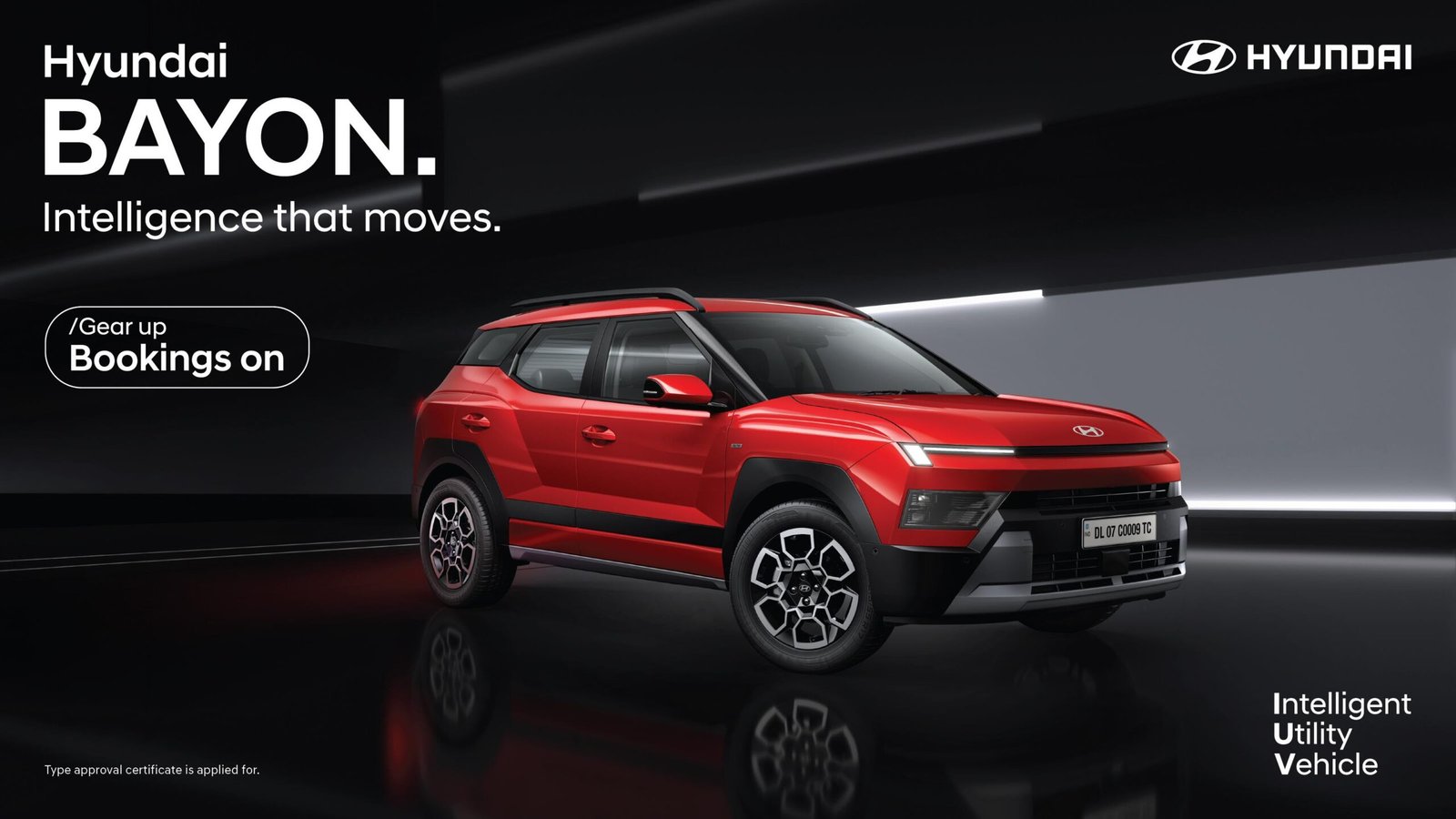
Hyundai Motor India has revealed the Hyundai Bayon ahead of its scheduled launch on October 26, 2026. Positioned between the Venue and Creta in the company’s SUV range, the upcoming model will target buyers looking for a technology-focused SUV with distinctive styling and petrol powertrain options.
The Hyundai Bayon is being introduced as an Intelligent Utility Vehicle, with a key highlight being its in-built generative AI voice assistant. Hyundai has also confirmed manual and IVT automatic transmission options, while bookings have opened at an initial amount of Rs 11,000. Pricing, variant-wise equipment and detailed specifications remain important details for buyers to evaluate before making a purchase.
Hyundai Bayon: Key Highlights
-
Launch date: October 26, 2026.
-
Positioning: Between the Hyundai Venue and Creta.
-
Bookings: Open at Rs 11,000.
-
Technology: In-built generative AI voice assistant.
-
Transmission options: Manual and IVT automatic, confirmed by Hyundai.
-
Platform: Global K Enhanced Platform, engineered with Indian safety requirements in mind.
Hyundai Bayon Design: A Distinctive SUV Appearance
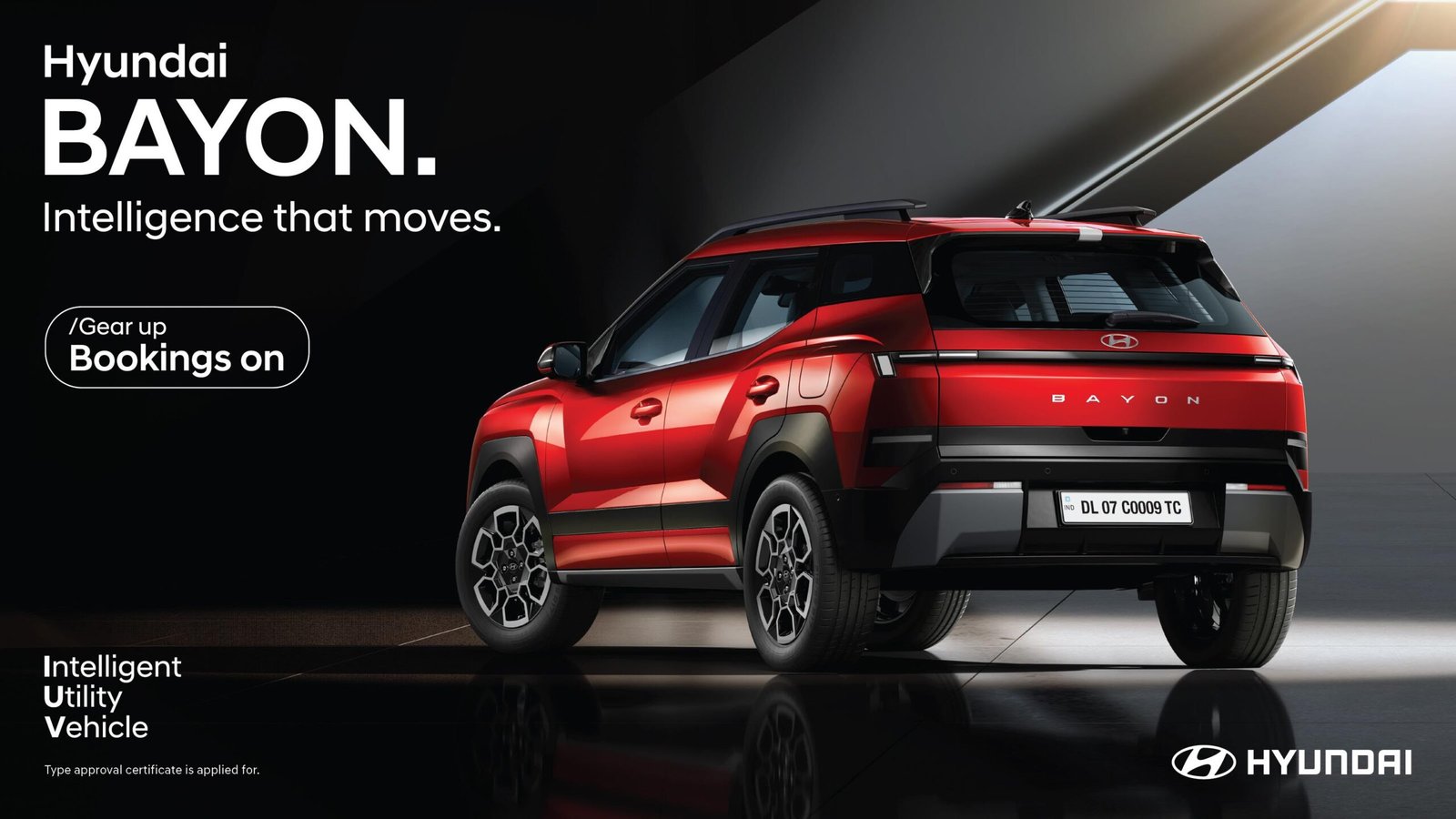
The India-spec Hyundai Bayon gets an upright exterior design with prominent lighting elements and angular bodywork. Its styling differs from the international Bayon, with Hyundai focusing on the preferences of Indian SUV buyers.
The front features a sculpted bonnet, a redesigned fascia and signature H-Edge LED daytime running lights. Rectangular headlamp clusters sit lower on the front bumper, while the geometric wheel arches, wrap-around door cladding and bridge-type roof rails give the SUV a more rugged appearance.
At the rear, a full-width LED lighting strip complements the front lighting signature. The dark skid plate and distinctive alloy wheel design add to its visual appeal.
Hyundai has confirmed an overall length of approximately 4.2 metres. This puts the Bayon in a position to attract buyers who want more road presence than a conventional compact SUV, although its final dimensions and ground clearance should be checked against the needs of individual buyers.
Hyundai Bayon Engine and Transmission Options
The Hyundai Bayon will use a 1.5-litre, four-cylinder MPi naturally aspirated petrol engine. According to information published ahead of the launch, the engine produces approximately 115 hp and 144 Nm of torque.
Buyers will be able to choose between a six-speed manual gearbox and an automatic transmission. Hyundai describes the automatic as an Intelligent Variable Transmission (IVT), its continuously variable transmission technology.
| Specification | Hyundai Bayon |
|---|---|
| Engine | 1.5-litre MPi petrol |
| Cylinders | Four |
| Maximum power | Approximately 115 hp |
| Maximum torque | Approximately 144 Nm |
| Manual gearbox | Six-speed |
| Automatic gearbox | IVT |
| Fuel type | Petrol |
| Claimed mileage | Not officially confirmed |
These figures should make the Bayon suitable for everyday commuting and highway travel, but real-world performance and fuel economy will depend on the final calibration, vehicle weight and driving conditions. An official ARAI-certified mileage figure has not been confirmed in the information available ahead of launch.
Hyundai Bayon Interior and Technology
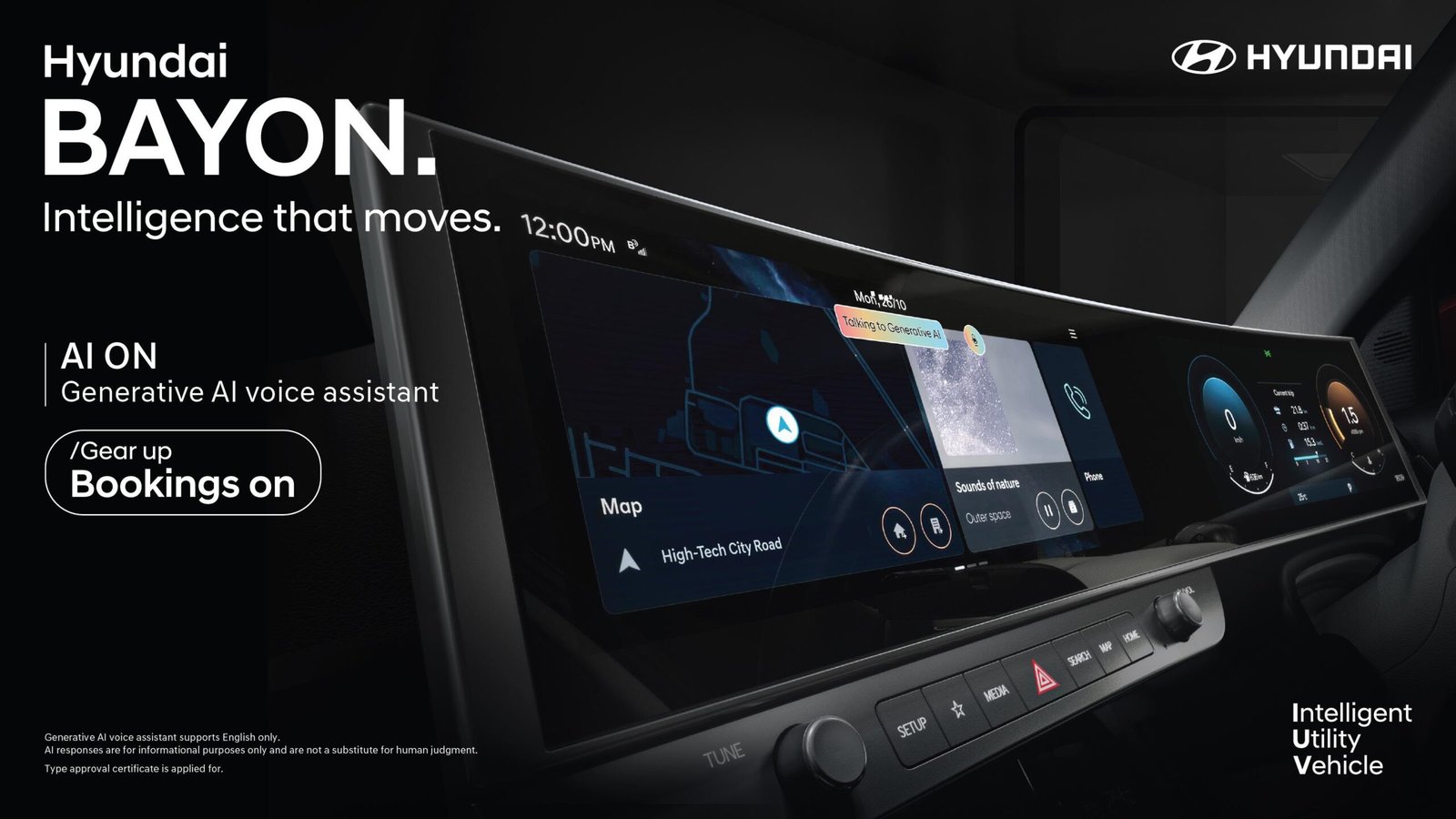
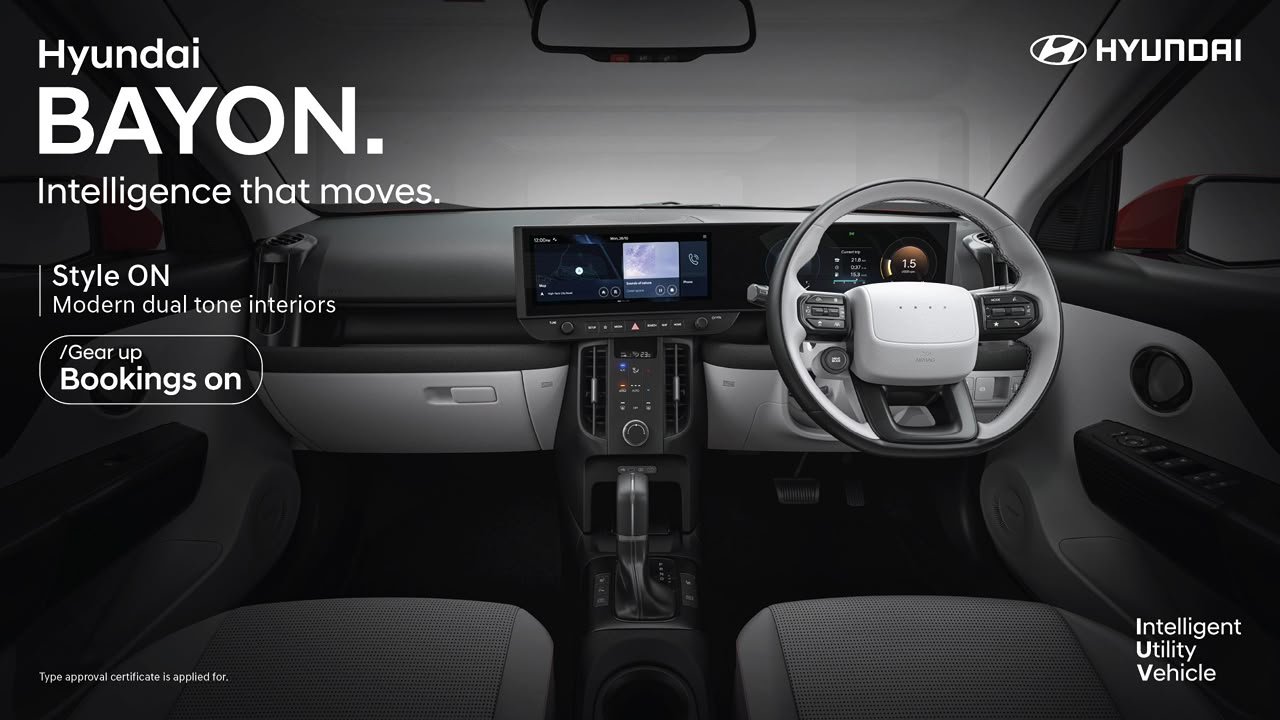
Technology is central to the Bayon’s positioning. One of its biggest talking points is Hyundai Motor India’s first in-built generative AI voice assistant, developed using Intelligence by Perplexity and voice AI technology from SoundHound AI.
The system is designed to understand conversational requests. Depending on supported functions and connectivity, occupants can ask for travel suggestions, weather information, restaurant recommendations and other assistance.
The SUV also features Hyundai’s Connected Car Navigation Cockpit (ccNC), supported by NVIDIA technology. The system brings navigation, vehicle information, entertainment and connected functions into a unified interface.
Other announced technology highlights include:
-
Dual 12.3-inch displays for the digital instrument cluster and infotainment system.
-
Hyundai Bluelink with more than 70 connected features.
-
Over-the-air updates for supported vehicle control modules.
-
Remote vehicle functions and smartphone connectivity.
-
Support for multiple regional languages.
-
More than 500 embedded voice commands across supported languages, including English, Hindi, Hinglish, Tamil, Bengali and Telugu.
Hyundai says certain voice commands can operate without an internet connection. The availability of individual functions may vary, so buyers should check the final variant-wise equipment list before booking.
Hyundai Bayon Safety Features
Hyundai says the Bayon is built on its Global K Enhanced Platform, engineered to meet five-star Indian safety standards. This is a statement about the platform’s engineering objectives, not confirmation that the production vehicle has already received a five-star Bharat NCAP or Global NCAP crash-test rating.
The company has indicated that safety is a key part of the Bayon’s development. However, the complete list of standard and variant-specific safety equipment, including the number of airbags and availability of advanced driver assistance systems, should be confirmed from the final specifications.
Buyers should look for essential equipment such as electronic stability control, rear parking sensors, a rear-view camera and tyre pressure monitoring, where available. A published independent crash-test result would provide a more meaningful assessment of occupant protection than a manufacturer’s engineering claim alone.
Hyundai Bayon Expected Price and Rivals
Hyundai has not officially announced the Bayon’s complete price list in the information available ahead of its October 26 launch. Its exact on-road cost will depend on the variant, city, insurance and applicable registration charges.
The SUV is positioned between the Venue and Creta, making it relevant to buyers considering a larger, technology-focused alternative to smaller crossovers.
| Rival model | What buyers should compare |
|---|---|
| Hyundai Venue | Smaller footprint, features and city usability |
| Kia Syros | Cabin packaging, equipment and powertrain options |
| Kia Seltos | Cabin space, engine choices and overall budget |
| Maruti Suzuki Victoris | Powertrain choices, fuel efficiency and running costs |
| Maruti Suzuki Grand Vitara | Hybrid availability and ownership costs |
These models do not all occupy exactly the same price or size category. The most suitable comparison will depend on the Bayon’s final pricing and equipment.
The Venue and Syros are particularly relevant for buyers prioritising urban usability, while the Seltos, Victoris and Grand Vitara offer alternatives for shoppers willing to consider different sizes and powertrain options.
Hyundai Bayon Pros and Cons
Pros
-
Distinctive exterior styling with H-Edge LED lighting.
-
Generative AI voice assistant with conversational interaction.
-
Two 12.3-inch displays and extensive connected-car functionality.
-
Choice of manual and IVT automatic transmissions.
-
Positioning between the Venue and Creta.
Cons
-
Official prices and variant-wise equipment need confirmation.
-
No verified official mileage figure available ahead of launch.
-
Independent crash-test results have not been established.
-
The value proposition will depend heavily on the final price and standard equipment.
FAQs About the Hyundai Bayon
1. When will the Hyundai Bayon launch in India?
The Hyundai Bayon is scheduled to launch in India on October 26, 2026.
2. What is the expected price of the Hyundai Bayon?
Hyundai has not officially announced its prices. Buyers should wait for the launch-day price list before estimating the final on-road cost.
3. Which engine will power the Hyundai Bayon?
The Bayon is expected to use a 1.5-litre, four-cylinder naturally aspirated petrol engine producing approximately 115 hp and 144 Nm.
4. Will the Hyundai Bayon get an automatic gearbox?
Yes. Hyundai has confirmed manual and IVT automatic transmission options.
5. What are the key features of the Hyundai Bayon?
Key announced features include dual 12.3-inch displays, an in-built generative AI voice assistant, connected-car functions and over-the-air software updates.
6. Is the Hyundai Bayon available for booking?
Yes. Bookings have opened through Hyundai’s website and authorised dealerships, with an initial booking amount of Rs 11,000.
7. Is the Hyundai Bayon a five-star safety-rated SUV?
Hyundai says its platform is engineered for five-star Indian safety standards. An independently verified crash-test rating should not be assumed unless an official result is published.
Conclusion
The Hyundai Bayon brings a fresh design, a technology-focused cabin and a naturally aspirated petrol engine to Hyundai’s Indian SUV range. Its AI voice assistant and dual-screen cockpit could appeal to buyers who value connected features, while the manual and IVT options should cater to different driving preferences.
However, the final buying decision should depend on its launch price, variant-wise safety equipment, fuel efficiency and real-world practicality. Buyers planning a purchase can place a booking, but comparing the final specifications and on-road prices after October 26 will provide a clearer picture of whether the Bayon offers better value than its alternatives.
Read More: