Selling a used car in India used to mean haggling with a local dealer who’d lowball you within the first two minutes. That’s changed. Between digital valuation tools, live dealer auctions, and stricter documentation rules, sellers today have more leverage than ever — but only if they know how the process actually works in 2026.
Whether you’re upgrading to an EV, moving cities, or simply retiring a car that’s served you well, getting the best price isn’t about luck. It’s about timing, paperwork, and choosing the right selling channel for your situation.
Key Highlights
- Online platforms like Cars24 and Spinny now dominate resale, offering doorstep inspection and same-day or next-day payment
- Vehicle age directly affects value: cars nearing 15 years (diesel) or facing the 20-year scrappage cutoff lose value fast
- A clean VAHAN record, valid PUC, and cleared challans can meaningfully boost your quote
- RC transfer via Form 29/30 remains the single most important legal step in any private sale
- Festive months (October–December) and financial year-end (January–March) typically see stronger demand
Understanding What Actually Drives Resale Value
Before listing your car anywhere, it helps to know what buyers and platforms are actually pricing in.
Age and Registration Date Matter More Than the “Model Year”
Buyers and valuation algorithms don’t go by the year printed in your brochure — they go by the original registration date on your RC. A car assembled in September and first registered the following January is treated as a vehicle of that later registration year for scrappage purposes. This matters because private cars older than 20 years must pass a mandatory fitness test at an Automated Testing Station, while commercial vehicles face this threshold at 15 years. Cars approaching either limit see resale demand soften noticeably.
If you’re in Delhi-NCR or another metro with stricter diesel norms, this matters even more. Diesel vehicles older than 10 years and petrol vehicles older than 15 years fall into the “end of life” category in many jurisdictions, which restricts where they can legally be driven and transferred — a fact that directly depresses their resale price.
Documentation Is Now a Price Factor, Not Just a Formality
Serious buyers and platforms increasingly pull your vehicle’s history straight from government records before making an offer. A car with pending challans, an unclosed loan hypothecation on the RC, or a lapsed fitness certificate will get a lower quote — sometimes a rejected one. All pending traffic challans and fines must be cleared before de-registration, and the RTO will not process de-registration with outstanding violations. Clear these before you even request a valuation.
Where to Sell: Comparing Your Options in 2026
| Platform Type | Best For | Payment Speed | Trade-off |
|---|---|---|---|
| Auction-based online (e.g., Cars24) | Fastest, most competitive offers | Often same-day | Small service deduction |
| Fixed-offer online (e.g., Spinny) | Sellers wanting price certainty | 24–48 hours | No negotiation once quoted |
| Classifieds (e.g., OLX) | Older/niche cars, private buyer premium | Depends on buyer | You handle inspection, negotiation, paperwork |
| OEM certified/exchange (Maruti True Value, Toyota U-Trust, etc.) | Trading in against a new purchase | Adjusted against new car invoice | Usually lower absolute payout |
Auction-model platforms where your car is bid on by thousands of verified dealers in real time consistently produce the strongest offers, largely because competitive bidding removes the single-buyer lowball risk. Fixed-offer platforms trade a bit of that upside for a clean, no-haggle process with fast payment. Classifieds can occasionally beat both — particularly for older or niche vehicles where private buyer demand may exceed dealer interest — but they demand more effort, patience, and caution from the seller.
Pros and Cons of Selling Online vs. Private Sale
Online Platforms (Cars24, Spinny, etc.)
- ✅ Free doorstep inspection and fast payout
- ✅ RC transfer handled end-to-end by the platform
- ✅ Lower fraud risk
- ❌ Offer may be slightly below best-case private sale price
- ❌ Service/commission deductions apply on some platforms
Private Sale (OLX, word-of-mouth, classifieds)
- ✅ Potential for a higher final price, no middleman cut
- ✅ Direct negotiation control
- ❌ You handle RC transfer, verification, and payment risk yourself
- ❌ Slower — can take weeks to find the right buyer
- ❌ Higher exposure to fraud if documentation isn’t verified
Practical Steps to Maximise Your Price
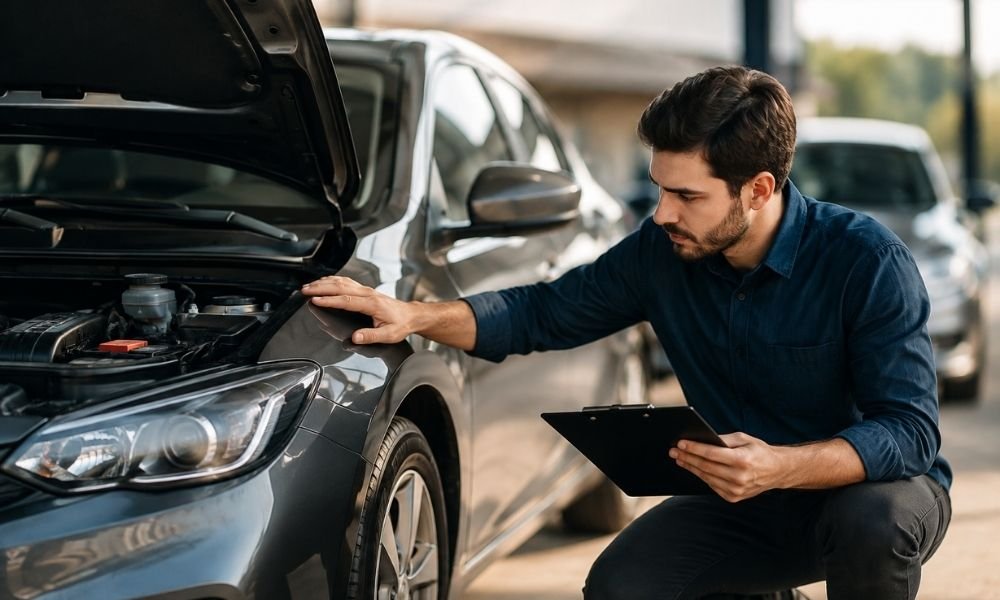
- Get your car professionally cleaned and minor dents fixed — first impressions during inspection directly affect the quote.
- Service the car and keep records handy — a documented service history reassures both platforms and private buyers.
- Check your RC status on the VAHAN portal before listing, and clear any pending challans.
- Get at least two to three quotes — one auction-based, one fixed-offer, and one private estimate — before committing.
- Complete Form 29 and Form 30 correctly at the RTO for ownership transfer; this protects you from future liability on the vehicle.
- Time your sale around high-demand periods — festive season and financial year-end typically bring stronger offers.
Frequently Asked Questions (FAQs)
Q1. Is it better to sell my car online or to a local dealer?
Online platforms generally offer more transparent, competitive pricing because they benchmark against real-time dealer demand, whereas a single local dealer has no such competitive pressure and often quotes conservatively.
Q2. How does car age affect resale value in India?
Value typically drops sharply as a car approaches the 15-year (diesel, in restricted zones) or 20-year (private vehicle scrappage) thresholds, since buyers factor in shrinking remaining usable life and stricter re-registration rules.
Q3. Do I need to be present for the RC transfer?
Not always — most certified platforms handle Form 29/30 submission on your behalf, but for a private sale, both buyer and seller (or their authorised representatives) typically need to complete RTO formalities.
Q4. What documents do I need ready before selling?
RC, valid insurance, PUC certificate, service history, original invoice (if available), and ID proof. A hypothecation closure letter is essential if the car was financed.
Q5. Will outstanding traffic challans affect my sale?
Yes — unresolved challans can block RTO transfer processing entirely, so clearing them beforehand is essential, not optional.
Q6. Can I sell a car that’s about to cross the scrappage age limit?
Yes, but transparently disclose its fitness status; a car nearing or past the mandatory fitness-test age will fetch significantly less and may require scrapping instead of resale if it fails testing.
Conclusion
Getting the best price for your old car in 2026 comes down to three things: knowing your car’s true condition and documentation status, comparing multiple selling channels rather than accepting the first offer, and completing the legal transfer correctly. Online auction platforms remain the fastest route to a competitive, hassle-free sale for most owners, while private sales still hold appeal for specific, well-documented vehicles. Whichever route you choose, a clean VAHAN record and a well-maintained car will always be your strongest negotiating tools.
Read More: