Ducati has just handed India’s naked motorcycle segment a fresh headache. The 2026 Ducati Monster V2, the fifth generation of the bike that essentially invented the “streetfighter” category back in 1992, is now on sale with prices starting at Rs 13.99 lakh (ex-showroom). It isn’t just a styling refresh — Ducati has torn up the engine architecture, dropped weight, stretched service intervals, and thrown in an electronics suite that would have seemed excessive on a superbike a decade ago. For anyone shopping in the premium naked space, this launch changes the math considerably.
Key Highlights
- Price: Rs 13.99 lakh to Rs 14.45 lakh (ex-showroom, India) across Monster and Monster+ variants
- Engine: All-new 890cc V2 with Intake Variable Timing (IVT), shared with the Panigale V2 and Multistrada V2
- Power/Torque: 111 PS at 9,000rpm and 91.1 Nm at 7,250rpm
- Weight: 175 kg wet (without fuel), 4 kg lighter than the outgoing Monster
- Chassis: New aluminium monocoque frame with a Panigale V4-style double-sided swingarm
- Service interval: Valve clearance checks now due every 45,000 km, a segment-leading figure
- Electronics: 6-axis IMU, Cornering ABS, Ducati Traction Control, Wheelie Control, Engine Brake Control, Quick Shift 2.0
- Colours: Ducati Red, Iceberg White, Sport Livery
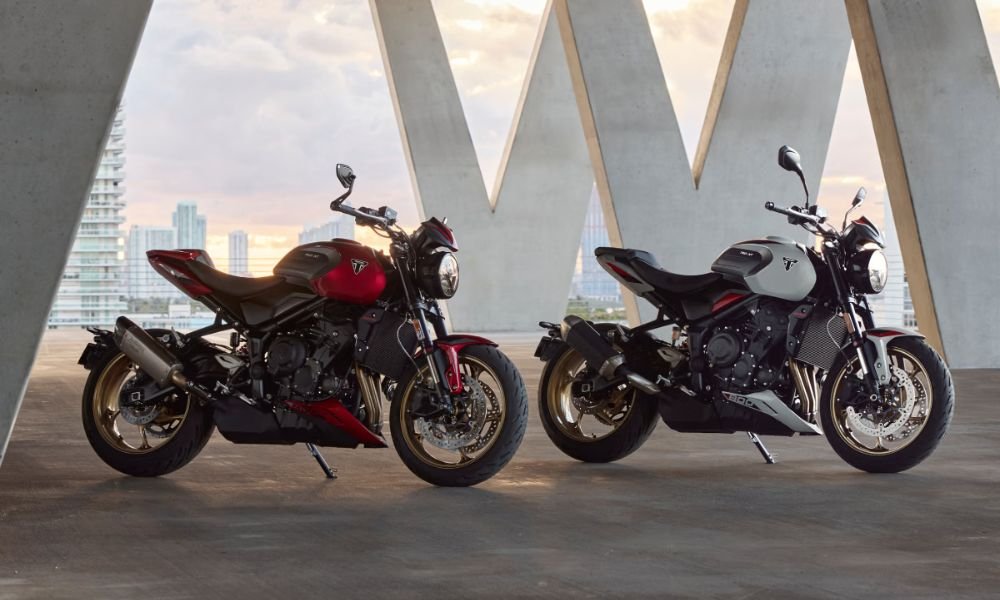
- Rival in sight: Triumph Street Triple RS
What’s New: The 890cc Engine Changes Everything
The single biggest story here is under the tank. Ducati has retired the 937cc Testastretta unit that powered the outgoing Monster and replaced it with a smaller, lighter 890cc V-twin borrowed from the Panigale V2 and Multistrada V2 stable. On paper, that sounds like a downgrade. In practice, it isn’t.
Thanks to Intake Variable Timing (IVT), a system that continuously adjusts intake valve opening based on load and rpm, the new engine matches the old one’s 111 PS peak power output, now arriving slightly earlier at 9,000rpm. Torque dips marginally, from 93.1 Nm to 91.1 Nm, and peak torque now lands at 7,250rpm instead of 6,500rpm. But the real-world number that matters is this: over 80 percent of that torque is available anywhere between 4,000rpm and 10,000rpm, which means the bike should feel just as flexible and tractable in city traffic as it does on a weekend canyon run.
Ducati also claims the new engine is roughly 5.9 kg lighter than the outgoing Testastretta Evoluzione unit, which feeds directly into the bike’s overall weight reduction.
Why the 45,000km Service Interval Is a Big Deal
For Ducati owners in India, the biggest historical pain point hasn’t been performance — it’s ownership cost. Valve clearance checks on desmodromic engines are notoriously expensive and were previously required at much shorter intervals. With IVT, Ducati has pushed that check out to 45,000 km, a figure the company is positioning as a segment benchmark. Combine that with an expected annual or 15,000 km service interval, and the Monster V2 finally starts to look like a Ducati you could live with day-to-day, not just ride on weekends.
Design, Chassis, and Hardware
The Monster V2 keeps its unmistakable silhouette but ditches the old aluminium frame entirely in favour of a new monocoque chassis, with the engine itself acting as a stressed structural member. This is paired with a double-sided swingarm inspired by the Panigale V4, replacing the single-sided arm on the outgoing model.
Key hardware specifications:
| Component | Specification |
|---|---|
| Front suspension | 43mm Showa upside-down fork |
| Rear suspension | Showa monoshock, preload adjustable |
| Front brakes | Dual 320mm discs, Brembo M4.32 radial calipers |
| Rear brake | 245mm disc |
| Tyres | Pirelli Diablo Rosso IV |
| Fuel tank capacity | 14 litres |
| Seat height | 815mm (5mm lower than before) |
| Kerb weight | 175 kg (without fuel) |
| Instrument console | 5-inch TFT with joystick control |
Visually, the Monster gets a restyled “bison-back” fuel tank that looks bulkier without actually holding more fuel, a full-LED round headlamp, a twin-exhaust setup with titanium liners and carbon end caps co-developed with Termignoni, and side panel graphics referencing the coordinates of Ducati’s Borgo Panigale factory — a nice touch for brand purists.
Electronics Package: Superbike Tech Trickles Down
Underpinning all the rider aids is a 6-axis Inertial Measurement Unit (IMU), which allows the bike’s electronics to react to lean angle and pitch in real time. Riders get four ride modes — Sport, Road, Urban, and Wet — each of which reconfigures throttle response, traction control, and ABS intervention.
Standard electronic aids include:
- Cornering ABS
- Ducati Traction Control (DTC)
- Ducati Wheelie Control (DWC)
- Engine Brake Control (EBC)
- Ducati Quick Shift 2.0 (clutchless up and down shifts)
- Cruise control
- Turn-by-turn navigation via the Ducati Multimedia System
This is a genuinely comprehensive package for a motorcycle at this price point, and it puts real distance between the Monster and more budget-focused naked bikes.
Monster vs Monster+: Which One Should You Buy?
Ducati India is offering two trims, and the difference is straightforward.
| Variant | Price (Ducati Red) | Price (Other colours) | What you get extra |
|---|---|---|---|
| Monster | Rs 13.99 lakh | Rs 14.23 lakh | Standard equipment |
| Monster+ | Rs 14.34 lakh | Rs 14.45 lakh | Headlight cowl + passenger seat cover |
Mechanically, the two are identical — same engine, same chassis, same electronics. The Monster+ is purely a styling and comfort play, aimed at buyers who want a slightly sportier look or occasionally ride two-up. If you don’t care about the cowl or the extra seat padding, the standard Monster gives you everything that matters for roughly Rs 35,000 less.
Pros and Cons
Pros:
- Genuinely usable mid-range power delivery, not just a top-end rush
- Segment-leading 45,000km valve service interval cuts long-term ownership cost
- 4kg weight reduction improves agility without sacrificing stability
- Comprehensive IMU-based electronics package at this price point
- Strong resale value and brand cachet associated with the Monster nameplate
Cons:
- Torque figure is marginally lower than the outgoing 937cc model
- Rs 15,000 price hike over the previous generation, plus GST and registration will push on-road prices meaningfully higher
- Ducati service network in India is still thinner than mainstream brands, particularly outside metro cities
- Seat height, while reduced, may still be tall for shorter riders
Ownership Considerations
Ducati India is pairing the Monster V2 launch with its Ducati Protect maintenance programs, which is worth budgeting for if you’re serious about keeping running costs predictable. Two tiers are on offer: a shorter plan covering 2 years or 15,000 km, and an extended plan covering 4 years or 30,000 km. Given how service-heavy performance motorcycles can get, opting into one of these at the time of purchase is a sensible move rather than an afterthought.
Insurance, given the bike’s price bracket and power output, will also be a meaningful annual outlay, so factor that into your total cost of ownership before signing the booking form.
How It Stacks Up Against Rivals
The Monster V2’s most direct rival in India is the Triumph Street Triple RS, which competes on similar territory — a sporty, electronics-rich naked bike aimed at enthusiasts who want performance without committing to a full-faired superbike. Buyers cross-shopping this segment will also likely glance at bikes like the Kawasaki Z900 and Aprilia Tuono 660, though neither carries quite the same brand prestige or engineering pedigree as the Ducati badge.
Where the Monster pulls ahead is in outright character — the V-twin engine note, the chassis feel, and five generations of design heritage are hard to replicate. Where it may lose ground is outright value, since Ducati ownership in India still carries a premium beyond just the sticker price.
Conclusion: Is the Ducati Monster V2 Worth It?
The 2026 Ducati Monster V2 is not a bike chasing bigger numbers for the sake of a spec sheet. It’s a more refined, more livable, and genuinely cleverer motorcycle than the model it replaces, even if the torque figure ticks down slightly. The longer service intervals alone make a real dent in one of Ducati ownership’s biggest historical drawbacks, and the added electronics bring genuine safety and usability benefits, not just marketing bullet points.
If you’ve been eyeing a premium naked motorcycle and want something that blends everyday usability with unmistakable Italian character, the Monster V2 deserves a serious test ride before you commit to anything else in this bracket. At Rs 13.99 lakh onward, it isn’t cheap — but for what it now offers, it’s arguably better value than the Monster it replaces.
Frequently Asked Questions (FAQs)
Q1: What is the price of the new Ducati Monster V2 in India? The Ducati Monster V2 starts at Rs 13.99 lakh (ex-showroom) for the base Monster in Ducati Red, going up to Rs 14.45 lakh for the top-spec Monster+ in Iceberg White or Sport Livery.
Q2: What engine does the 2026 Ducati Monster V2 use? It uses an all-new 890cc V2 engine with Intake Variable Timing (IVT), shared with the Ducati Panigale V2 and Multistrada V2, producing 111 PS and 91.1 Nm of torque.
Q3: How is the Monster+ different from the standard Monster? The Monster+ is mechanically identical to the standard Monster but adds a headlight cowl and a passenger seat cover, aimed at riders who want a sportier look or occasional pillion comfort.
Q4: How much lighter is the new Monster compared to the outgoing model? The 2026 Monster V2 weighs 175 kg (wet, without fuel), which is 4 kg lighter than the previous-generation Monster, thanks to the new engine and monocoque chassis.
Q5: What is the service interval for the Ducati Monster V2? Valve clearance checks are now required only every 45,000 km, a significant improvement over previous Ducati models, with Ducati recommending general servicing once a year or every 15,000 km, whichever comes first.
Q6: Who is the main rival to the Ducati Monster V2 in India? The Triumph Street Triple RS is considered its closest direct competitor, with buyers also cross-shopping bikes like the Kawasaki Z900 and Aprilia Tuono 660.
Q7: What colours is the Ducati Monster V2 available in? It comes in three colour options: Ducati Red, Iceberg White, and Sport Livery.
Read More: