Electric passenger vehicles (EVs) recorded their strongest-ever year in India in 2025, with registrations crossing 1.76 lakh units, marking a 77 percent year-on-year rise. The growth was powered by a broader model mix across mass-market SUVs and MPVs, sustained urban demand, and a flurry of new launches—even as competition intensified and year-end demand softened after GST cuts on ICE vehicles.
2025 at a Glance
-
Total EVs sold: 1,76,538 units
-
Increment vs 2024: +76,845 units
-
Peak month: October (19,161 units)
-
Momentum: 11 months above the 11,000-unit mark
-
Product pipeline: EVs made up 40%+ of all new car launches in 2025
Source: Vahan (as of January 2, 2026)
Monthly Performance: Consistent Momentum Through the Year
EV sales stayed resilient across 2025, with particularly strong gains from April to October. While demand cooled slightly toward December following tax relief on conventional vehicles, annual volumes still finished far ahead of 2024.
1) Tata Motors — 69,955 units (+13% YoY)
Tata Motors remained India’s largest EV brand by volume. However, its market share slipped to ~40%, down sharply from previous years, as rivals expanded faster. The Nexon EV, Tiago EV, Punch EV, and the newly introduced Harrier EV underpinned demand, but competition diluted dominance.
2) JSW MG Motor India — 51,376 units (+136% YoY)
MG posted one of the year’s biggest jumps, lifting share to ~29%. The Windsor EV drove scale, while premium additions like the M9 and Cyberster broadened its reach. MG also crossed 1 lakh cumulative EV sales in India.
3) Mahindra — 33,512 units (+369% YoY)
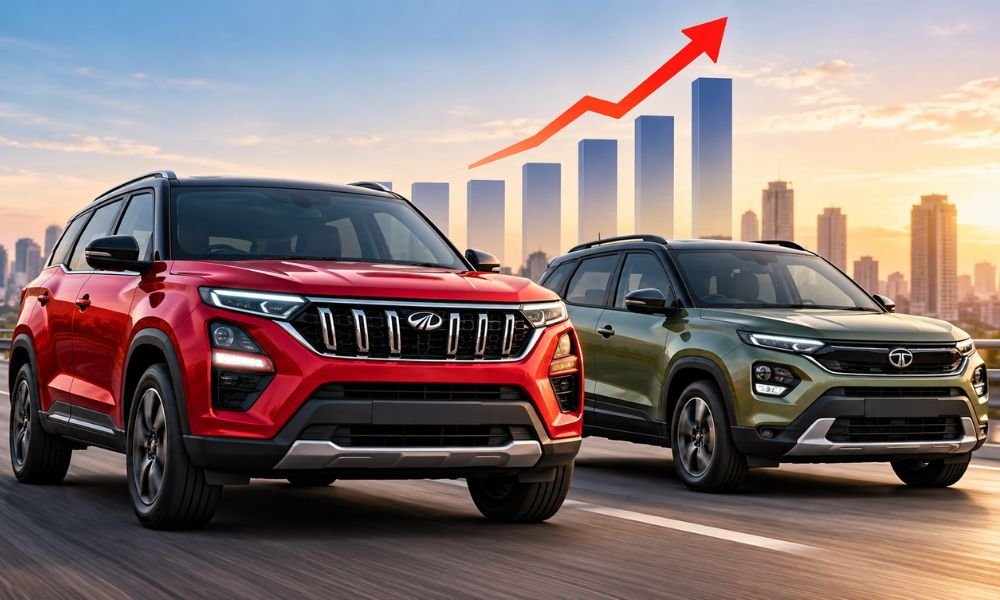
Mahindra surged to third place as its born-electric SUVs gained traction. The BE 6 and XEV 9e led volumes, followed by the XEV 9S, India’s first mass-market three-row electric SUV with multiple battery options—helping the brand claim nearly 19% share.
4) Hyundai — 6,726 units (+637% YoY)
Hyundai’s leap was driven by the Creta Electric, launched in January with two battery choices and up to 473 km range. While not matching ICE Creta demand, the EV lifted Hyundai’s share to ~4%.
5) BYD — 5,402 units (+88% YoY)
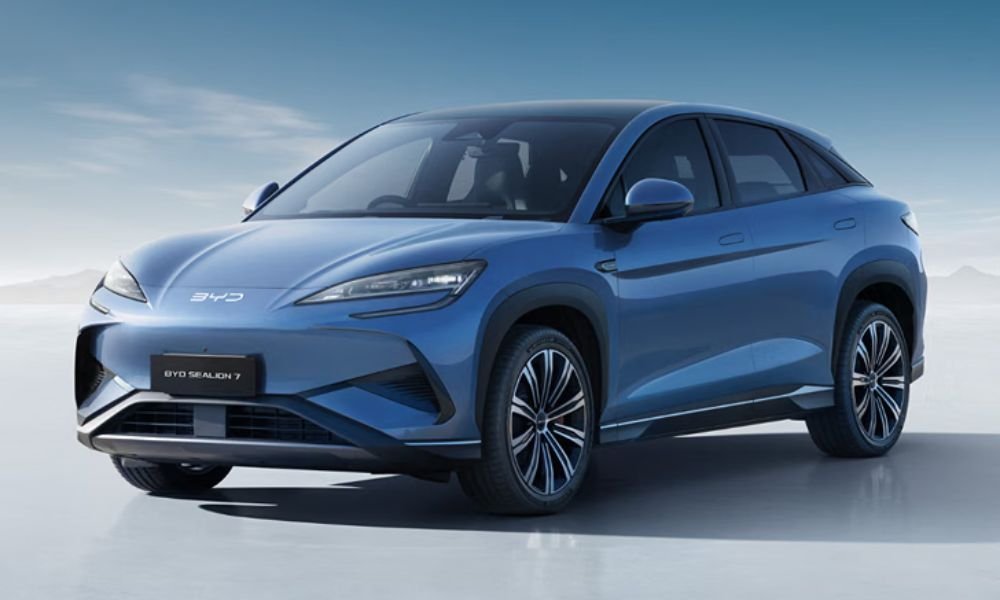
Despite CBUs and a limited network, BYD delivered steady growth via the Atto 3, Seal, eMax7, and Sealion 7, underscoring rising acceptance of global EV brands.
6) BMW — 3,195 units (+160% YoY)
BMW led the luxury EV space, buoyed by demand for the iX1 LWB, iX, and i7, maintaining a clear edge over rivals.
7) Kia — 2,731 units (+558% YoY)
Kia climbed rapidly on the back of the Carens Clavis EV MPV. Premium imports like the EV6 and EV9 added halo appeal, albeit at higher price points.
8) Mercedes-Benz — 1,168 units (+22% YoY)
Steady demand across EQA, EQB, EQE SUV, and EQS kept Mercedes-Benz second in luxury EVs.
9) Stellantis — 871 units (-55% YoY)
With the Citroën eC3 as its sole EV, Stellantis lost ground. Sales skewed toward fleets, and the absence of a Jeep EV constrained growth.
10) VinFast — 826 units (new)
In roughly three months, VinFast posted encouraging starts with locally assembled VF6 and VF7 SUVs. A seven-seat electric MPV is confirmed for early 2026.
Luxury EV Market: Another Record Year
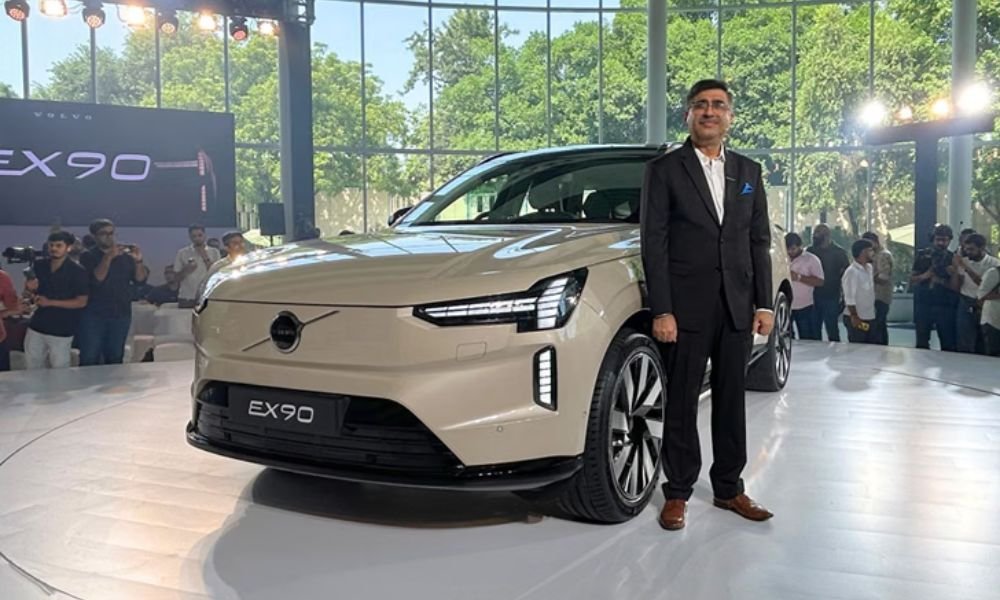
Luxury EV volumes climbed 78% to 5,116 units. BMW topped the charts, followed by Mercedes-Benz. Volvo dipped slightly, while Tesla entered the market with initial Model Y sales. Rolls-Royce saw rising interest in the Spectre, whereas Audi and Porsche reported softer numbers.
What Drove the 2025 EV Boom?
-
Wider choice: From compact hatchbacks to three-row SUVs
-
Improving value: Better range, features, and charging support
-
Brand diversification: Faster gains by MG and Mahindra reshaped shares
-
Premium pull: Luxury EVs gained acceptance in metros
Outlook: With more affordable launches, expanding charging networks, and fresh nameplates due in 2026, India’s EV momentum looks set to continue—albeit with fiercer competition and sharper differentiation across segments.