


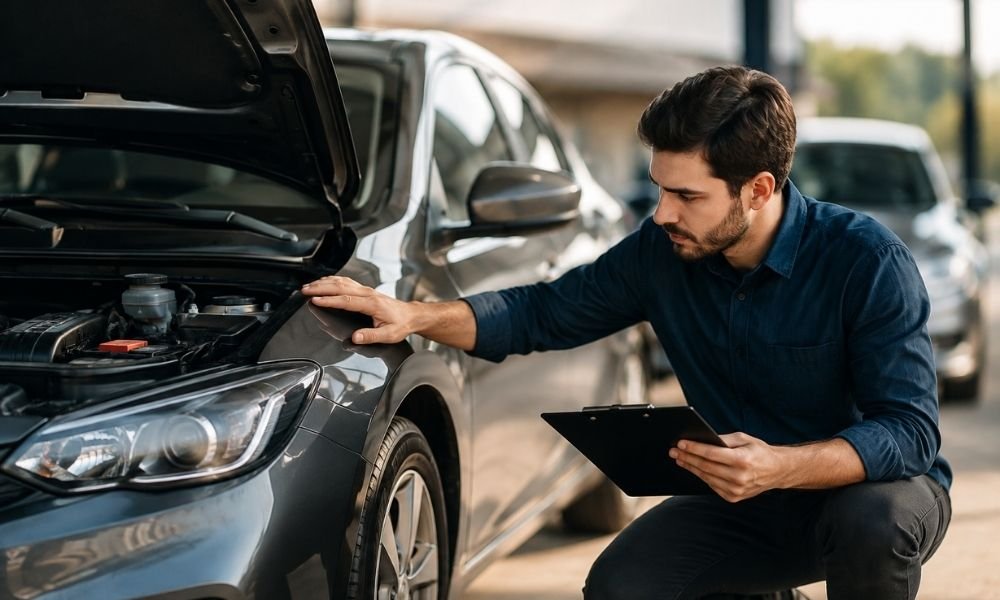
Buying a used car in India today is nothing like it was a decade ago — and that’s mostly a good thing. Certified platforms, digital inspection reports, and easier financing have made pre-owned cars a smarter buy than ever. But here’s the catch: none of that protects you if you skip the fundamentals. A car that looks spotless in photos can still hide a flooded engine, a tampered odometer, or a title dispute waiting to ruin your year. This checklist walks you through exactly what to inspect — mechanically, legally, and financially — before you hand over a single rupee.
Key Highlights
- India’s used-car market is projected to nearly touch ₹3.5 lakh crore (US$37–42 billion) in value through 2026, with roughly 6 million units changing hands annually
- Around 70–80% of used-car transactions still happen through unorganised, local dealers — making personal due diligence essential
- SUVs and compact crossovers now dominate resale demand, while used EVs and hybrids are a fast-growing niche buyers should inspect differently
- A thorough check covers five zones: documents, exterior/structure, engine and mechanicals, interior electronics, and a real-world test drive
- RC transfer, No Objection Certificate (NOC), and outstanding loan hypothecation are the most commonly overlooked — and most costly — checks
Why the Pre-Purchase Check Matters More in 2026
With new-car prices climbing and manual gearboxes gradually giving way to automatics even in the resale pool, buyers are holding on to search-and-compare habits longer, but rushing the final inspection. Unorganised dealers still handle the bulk of transactions, so unlike a certified pre-owned (CPO) purchase with a warranty, there’s often no safety net if something goes wrong after the sale. That makes your own checklist your best insurance policy.
Documents: Check These Before You Check the Car
- Registration Certificate (RC): Confirm the chassis and engine numbers on the RC match the physical car exactly
- Ownership history: Ask for the number of previous owners; three or more owners in a short span is a red flag
- Hypothecation status: Verify on the RC or via the Vahan portal whether a bank loan is still active against the vehicle
- Insurance papers: Check validity and whether it’s comprehensive or third-party only
- PUC certificate and road tax receipts: Both should be current and match the registration state
- NOC for interstate transfer: Mandatory if you’re buying a car registered outside your home state
- Service history/logbook: A consistent service record from an authorised centre is worth more than a shiny paint job
Exterior and Structural Inspection
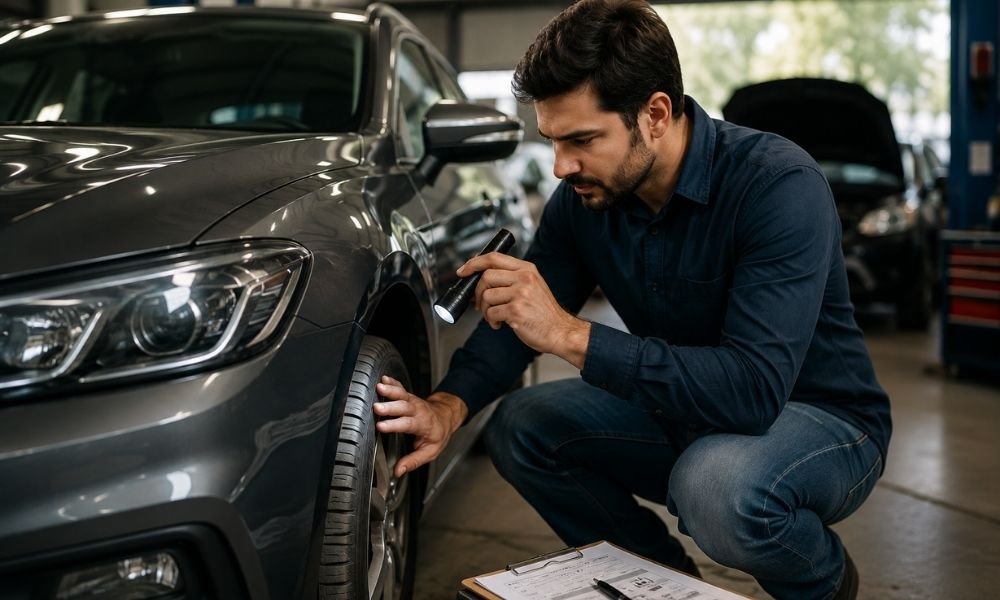
Walk around the car in daylight, never under showroom lighting or after dark.
- Check panel gaps and paint texture for signs of accident repair or repainting
- Look for rust near wheel arches, the boot floor, and door sills
- Examine tyre wear patterns — uneven wear can indicate alignment or suspension issues
- Check the chassis number stamped on the body frame against the RC
Engine and Mechanical Health
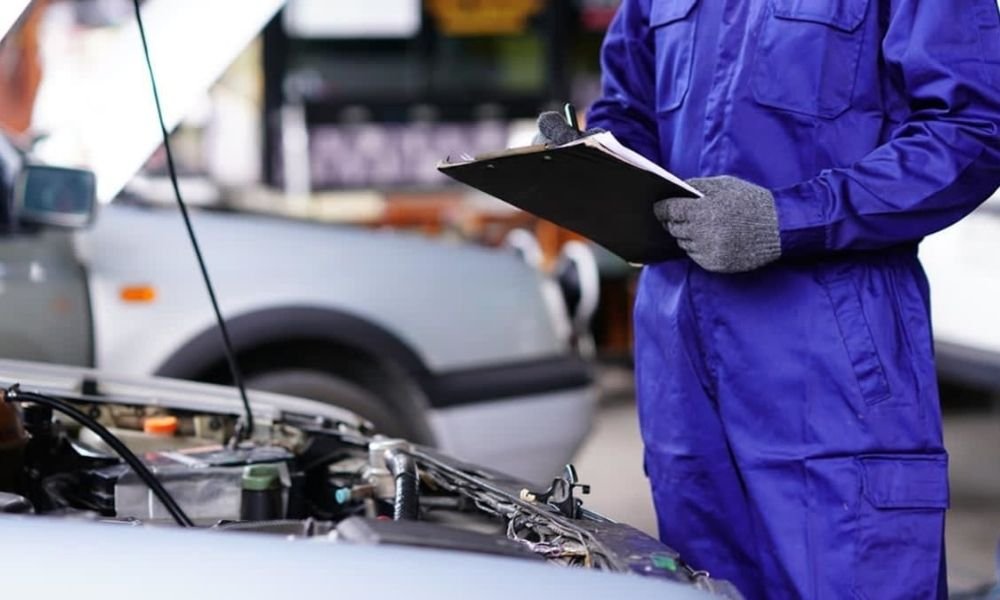
Under the Hood
- Start the engine cold; listen for knocking, excessive vibration, or unusual smoke colour
- Check engine oil for a milky appearance, which can signal a coolant leak into the engine
- Inspect belts, hoses, and the battery terminal for corrosion
Suspension and Brakes
- Bounce each corner of the car; it should settle within one or two bounces
- Test the brake pedal for sponginess, which may point to air in the brake lines
Interior, Electronics, and Comfort Features
- Test all power windows, central locking, and the air conditioning on both hot and cold settings
- Check that infotainment, reverse camera, and ADAS-linked sensors (if equipped) respond correctly
- Look under the seats and carpets for water staining — a strong indicator of past flood damage
- Verify odometer reading against service records to rule out tampering
The Test Drive: Non-Negotiable
Never skip this. Drive on a mix of city roads, a flyover or incline, and if possible, a rough stretch. Listen for clunks over bumps, check if the car pulls to one side under braking, and confirm the gearbox — manual or automatic — shifts smoothly without hesitation or jerking.
Comparison: Buying via Dealer vs Certified Platform vs Private Seller
| Factor | Local Dealer | Certified Platform (CPO) | Private Seller |
|---|---|---|---|
| Price | Often lowest | Slightly higher | Negotiable, mid-range |
| Warranty | Rarely offered | Usually included (30–90 days) | None |
| Inspection Report | Not standard | Multi-point digital report | Buyer’s responsibility |
| Paperwork Support | Variable | End-to-end handled | Buyer must manage |
| Trust Level | Depends on reputation | Higher, standardised | Depends on seller |
Pros and Cons of Buying a Used Car
Pros:
- Significantly lower upfront cost and depreciation hit compared to a new car
- Wider choice across body styles, including discontinued or older-generation models
- Faster ownership transfer with no waiting period, unlike new-car bookings
- Growing availability of used-car loans and warranty add-ons
Cons:
- Higher risk of hidden mechanical or accident history without proper inspection
- Limited or no manufacturer warranty on non-certified purchases
- Resale value and running costs can be less predictable on older vehicles
- Financing interest rates are typically higher than new-car loans
Frequently Asked Questions (FAQs)
1. How do I check if a used car has an accident history? Look for mismatched paint shades, uneven panel gaps, and overspray on rubber seals or plastic trim. A paint-thickness gauge, used by professional inspectors, can also confirm if a panel has been repainted.
2. Is it safe to buy a used car without a warranty? It can be, provided you get a thorough mechanical inspection done by an independent mechanic and the service history checks out. Budgeting for potential repairs in the first few months is wise regardless.
3. How important is it to check the hypothecation status? Extremely important. If a loan is still active against the vehicle, ownership transfer can be blocked until it’s cleared, and you could inherit a legal dispute.
4. What should I check differently when buying a used electric vehicle? Prioritise the battery health report, remaining battery warranty, charging history, and any software update logs, since these matter more than traditional engine checks.
5. Should I get a professional inspection even if the seller provides one? Yes. A seller-provided report can be biased. An independent, paid inspection from a trusted garage or third-party service typically costs a small fraction of the car’s price and can save you from a costly mistake.
6. How many previous owners is considered acceptable for a used car? One or two owners is ideal. Three or more, especially within a short registration period, often signals recurring issues the earlier owners may have wanted to avoid.
Conclusion
A used car can be one of the smartest purchases you make — or one of the costliest mistakes, depending entirely on how carefully you inspect it. Documents first, then structure, then mechanicals, then a proper test drive: skip none of these steps. Take your time, bring along a trusted mechanic if you can, and never let a good price rush you past a bad inspection. The extra hour you spend checking today could save you months of repair bills tomorrow.
Read Also: