


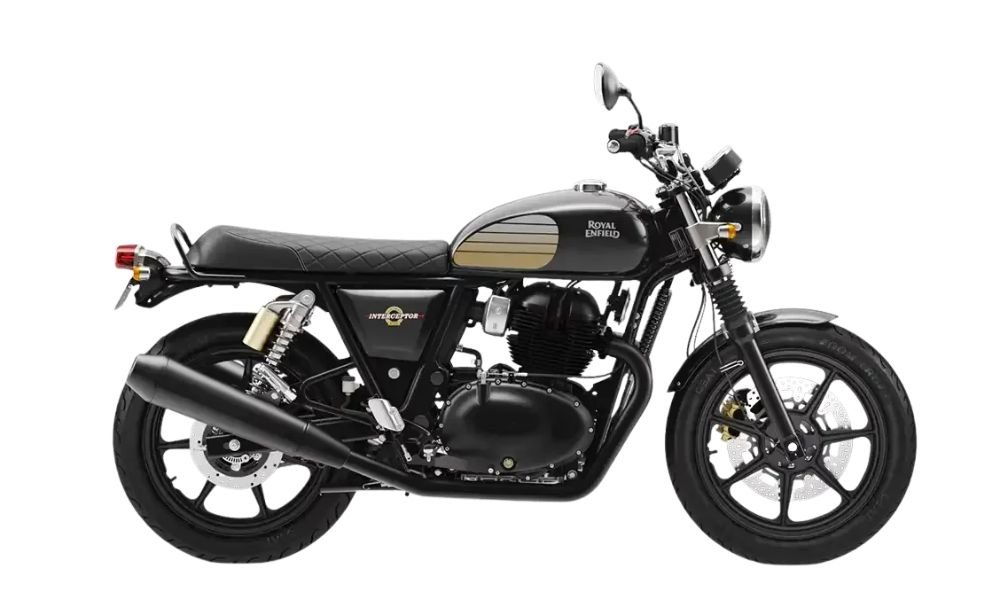
The updated Royal Enfield Interceptor 650 is expected to launch in India in 2027 with significant improvements to its braking system, suspension and overall equipment. However, unlike the newly unveiled 750cc Royal Enfield motorcycles, the refreshed Interceptor is expected to retain its existing 648cc parallel-twin engine. The upcoming update could be the motorcycle’s most substantial revision since its introduction in 2018, addressing some of the areas where the current model could benefit from improvements.
Key Highlights
-
Updated Royal Enfield Interceptor 650 expected to launch in 2027.
-
Existing 648cc parallel-twin engine likely to continue.
-
Twin front disc brakes expected as part of the hardware upgrade.
-
Revised suspension and possible weight reduction.
-
Updated instrument cluster and switchgear could be introduced.
-
Prices are expected to increase over the current model.
2027 Royal Enfield Interceptor 650: Expected Design and Hardware Changes
The Interceptor 650 is expected to retain its familiar retro-roadster styling, including its round headlamp, sculpted fuel tank, wide handlebar, twin exhausts and relatively upright riding position. Royal Enfield is unlikely to completely redesign the motorcycle because its existing appearance remains central to its identity.
The bigger changes could come underneath the bodywork.
1. Twin front disc brakes
One of the most important expected upgrades is a twin-disc front braking arrangement. A test mule spotted in 2024 featured two front brake discs, compared with the single 320mm front disc on the current motorcycle.
The additional disc could offer better braking performance and heat management during repeated hard braking. However, the final rotor dimensions, calliper specifications and ABS calibration have not been confirmed.
2. Revised suspension setup
The existing Interceptor 650 uses telescopic front forks and twin gas-charged rear shock absorbers with adjustable preload.
The updated motorcycle could receive revised suspension components to improve ride comfort and stability. Royal Enfield may also reconsider the spring and shock absorber configuration, taking inspiration from the hardware changes introduced on its newer 750cc platform.
These changes could make the motorcycle more comfortable on uneven Indian roads, although the final suspension specifications remain unknown.
3. Possible weight reduction
At 218kg with fuel, the current Interceptor 650 is a relatively heavy roadster. Reducing its weight could improve low-speed manoeuvrability, parking convenience and handling through corners.
Royal Enfield could achieve this through revised chassis components or lighter hardware. However, there is no confirmed weight target for the 2027 model.
4. Updated instrument cluster
The existing retro-style instrument arrangement could receive a technology upgrade. One possibility is a TFT display inset, similar to the arrangement seen on the new Continental GT 750.
Updated switchgear could also accompany the instrument changes. These additions would bring modern functionality while preserving the motorcycle’s traditional appearance.
Neither the TFT display nor additional connectivity features have been officially confirmed.
2027 Royal Enfield Interceptor 650 Engine and Performance
The biggest talking point is the engine. Despite Royal Enfield introducing its new 743cc parallel-twin engine for the Himalayan 750 and Continental GT 750, the updated Interceptor 650 is expected to continue with the existing 648cc motor.
The current air/oil-cooled, parallel-twin engine produces 47hp at 7,250rpm and 52Nm of torque at 5,150rpm. It comes paired with a six-speed gearbox.
| Engine specification | Current Interceptor 650 |
|---|---|
| Engine | 648cc parallel-twin |
| Cooling | Air/oil-cooled |
| Maximum power | 47hp |
| Peak torque | 52Nm |
| Gearbox | 6-speed |
| Fuel tank | 13.7 litres |
| Kerb weight | 218kg |
Royal Enfield could make minor changes to the engine’s internal components or tuning. However, a substantial increase in displacement is not expected.
The existing power output is also close to the 35kW limit applicable to A2-licence motorcycles in European markets. Maintaining a similar output would allow Royal Enfield to retain a consistent international specification.
2027 Royal Enfield Interceptor 650 Price and Variants
The updated Interceptor 650 is expected to cost more than the outgoing motorcycle because of its anticipated hardware and equipment upgrades.
For reference, the existing model’s published prices range from approximately Rs 3.38 lakh to Rs 3.69 lakh, ex-showroom, depending on the colour and wheel configuration. Royal Enfield’s official price listing quotes Chennai prices, so these figures should not be treated as Delhi-specific October 2026 prices.
The 2027 model’s Delhi ex-showroom price has not been announced. A premium over the current motorcycle is likely, but assigning a specific expected price would be speculative.
Royal Enfield is also expected to continue offering multiple colour and wheel configurations. The final variant lineup will be revealed closer to launch.
Royal Enfield Interceptor 650 vs Its Main Rivals
The updated Interceptor will continue to compete in the premium middleweight motorcycle segment. The BSA Gold Star 650 is one of its closest alternatives, while the Continental GT 650 offers a sportier interpretation of the same Royal Enfield twin-cylinder platform.
| Motorcycle | Engine | Character |
|---|---|---|
| Interceptor 650 | 648cc twin | Retro roadster |
| BSA Gold Star 650 | 652cc single | Classic roadster |
| Continental GT 650 | 648cc twin | Cafe racer |
The Interceptor makes sense for buyers who prefer a twin-cylinder engine and comfortable upright ergonomics. The BSA Gold Star 650 offers a different single-cylinder riding experience, while the Continental GT 650 is better suited to riders who prefer a committed cafe-racer riding position.
The updated Interceptor’s value will ultimately depend on how much Royal Enfield improves its hardware and how significantly it increases the price.
Mileage, Safety and Ownership Expectations
The current Interceptor 650 delivers approximately 23.75kmpl according to Royal Enfield’s published information. Actual fuel efficiency will depend on traffic, riding conditions, speed and maintenance. There is no confirmed mileage figure for the updated motorcycle.
The existing model gets dual-channel ABS, a 320mm front disc and a 240mm rear disc. The expected additional front disc could improve braking capability, but the final safety equipment will need confirmation.
For ownership, buyers should consider the following:
-
Warranty: Check the applicable standard and extended warranty terms before booking the updated motorcycle.
-
Servicing: Follow Royal Enfield’s prescribed service schedule and use authorised service centres for routine maintenance.
-
Insurance: Compare comprehensive insurance premiums, particularly the cost of covering a premium twin-cylinder motorcycle.
-
Running costs: Budget for fuel, tyres, chain maintenance and periodic replacement of brake components.
Should You Buy the Current Interceptor 650 or Wait for the 2027 Model?
Waiting makes sense if you are specifically looking for better braking hardware, revised suspension and potentially lower weight. These improvements could address some of the current motorcycle’s limitations.
However, buyers who want an established 650cc roadster without waiting for an upcoming launch can consider the existing Interceptor 650. Its engine, styling and overall mechanical package are already well established.
There is also no confirmed launch date, final equipment list or official pricing for the updated motorcycle. Therefore, buyers should avoid postponing a purchase solely on the assumption that every expected feature will make it to the production model.
Royal Enfield Interceptor 650: Pros and Cons
Expected advantages
-
Potential twin-disc front braking setup.
-
Revised suspension components.
-
Possible reduction in kerb weight.
-
Updated instrumentation and switchgear.
-
Familiar 648cc parallel-twin engine.
Potential drawbacks
-
No expected 750cc engine upgrade.
-
Likely price increase.
-
Final equipment and performance improvements remain unconfirmed.
-
The motorcycle could retain its relatively heavy construction.
Frequently Asked Questions
1. When will the updated Royal Enfield Interceptor 650 launch in India?
The updated Royal Enfield Interceptor 650 is expected to launch in India in 2027. Royal Enfield has not announced an exact launch date, booking schedule or official unveiling timeline for the revised motorcycle.
2. Will the 2027 Interceptor 650 get a 750cc engine?
No major engine capacity upgrade is currently expected. The updated motorcycle is likely to retain the existing 648cc parallel-twin engine, producing approximately 47hp and 52Nm. Minor mechanical or tuning changes remain possible.
3. Will the new Interceptor 650 get twin front disc brakes?
Twin front disc brakes are among the expected upgrades. A test motorcycle spotted in 2024 featured two front brake discs. However, Royal Enfield has not confirmed whether this configuration will be included in the production version.
4. What will be the expected price of the 2027 Interceptor 650?
The updated motorcycle is expected to cost more than the existing model, which is priced between approximately Rs 3.38 lakh and Rs 3.69 lakh ex-showroom in Chennai. The 2027 model’s official Delhi pricing is yet to be announced.
5. Is it worth waiting for the 2027 Royal Enfield Interceptor 650?
Yes, waiting could make sense for buyers who prioritise improved braking, suspension and modern instrumentation. However, those comfortable with the current motorcycle’s specifications can consider buying it instead of waiting for an update with unconfirmed features.
Conclusion
The 2027 Royal Enfield Interceptor 650 could be a meaningful upgrade for buyers seeking better hardware without losing the familiar character of the existing motorcycle. Retaining the 648cc engine while improving suspension, braking and weight could be a sensible approach. Buyers who are not in a hurry should wait for the official specifications and pricing before making a decision.
Read More: