


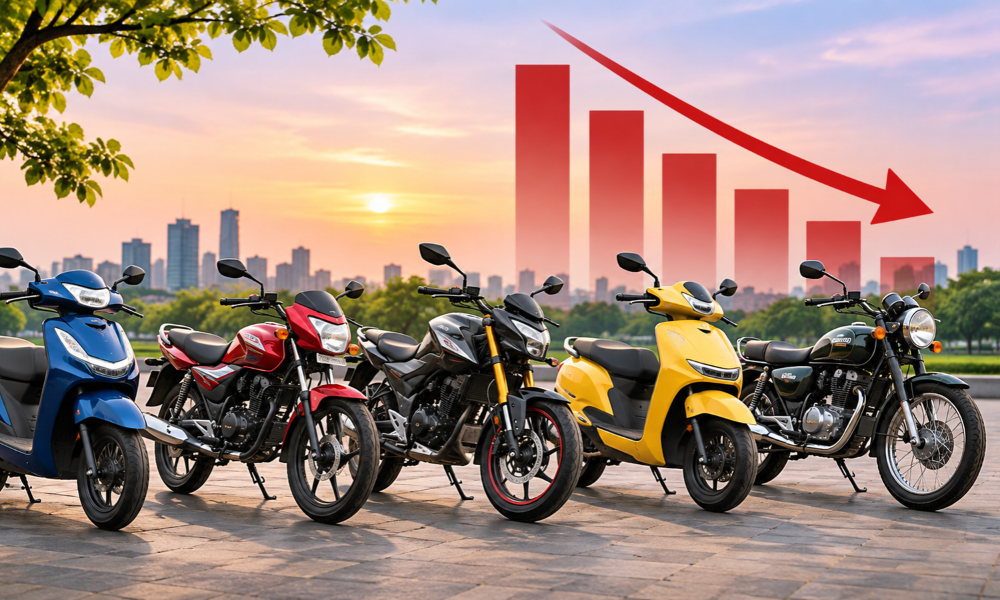
India’s two-wheeler retail sales recorded a year-on-year decline in October 2026, indicating a softer month for the country’s largest vehicle segment. The monthly performance is important for manufacturers such as Hero MotoCorp, Honda, TVS Motor, Bajaj Auto and Royal Enfield, as retail registrations provide a clearer picture of actual customer deliveries than wholesale dispatches.
What the October 2026 sales trend means
A year-on-year decline in two-wheeler retail registrations deserves attention because the segment caters to a broad range of Indian buyers, from daily commuters and students to families and premium motorcycle enthusiasts.
However, a monthly decline does not automatically indicate a sustained slowdown. Retail performance can be influenced by several factors, including festive-season timing, regional demand, inventory availability, financing conditions and the number of working days during the month.
October is particularly important because it often overlaps with the festive buying period. Dussehra and Diwali-related purchases can influence registration numbers, although the exact timing of these festivals changes every year. Consequently, comparing October figures with the previous year requires looking at the festive calendar as well.
Retail sales versus wholesale dispatches
Retail and wholesale numbers measure different stages of the automotive sales process.
-
Retail sales: Vehicles registered with customers through the VAHAN system.
-
Wholesale sales: Vehicles dispatched by manufacturers to dealerships.
A manufacturer can report strong wholesale dispatches while retail registrations remain weaker. This may result in higher dealer inventory, particularly if dispatches exceed actual customer demand.
For this reason, October retail performance should be evaluated alongside wholesale sales and dealer inventory levels before drawing conclusions about the market.
Which manufacturers will be affected?
The performance of India’s leading two-wheeler manufacturers will be particularly important when assessing the October trend.
Major players include:
-
Hero MotoCorp: Its commuter motorcycles and scooters cater to price-conscious buyers, making rural demand and entry-level affordability important factors.
-
Honda Motorcycle and Scooter India: The company has a significant presence in the scooter segment, particularly through its Activa range.
-
TVS Motor Company: Its portfolio covers commuter motorcycles, scooters and premium offerings, including the Apache range.
-
Bajaj Auto: Its motorcycle portfolio spans commuter and performance-oriented segments, with Pulsar remaining an important name.
-
Royal Enfield: The manufacturer operates in the mid-size motorcycle category, where purchase decisions are influenced by brand positioning and discretionary spending.
Brand-wise October registration figures are necessary to determine which manufacturers gained market share despite the overall decline. Without verified figures, ranking manufacturers or attributing the market contraction to a particular company would be misleading.
Why could two-wheeler retail demand decline?
Several factors can influence monthly two-wheeler registrations.
1. Rural and urban demand
Rural markets remain important for commuter motorcycles. Agricultural income, crop prices, monsoon conditions and local employment can influence purchasing decisions.
Urban demand, meanwhile, is affected by household budgets, commuting requirements and financing costs. Weakness in either market can affect overall registrations.
2. Vehicle affordability
Entry-level motorcycles and scooters are particularly sensitive to price changes. Buyers consider the ex-showroom price, insurance, registration charges and financing expenses before making a purchase.
An increase in the total on-road cost can encourage customers to postpone their purchase or consider a more affordable variant.
3. Financing conditions
Two-wheelers are commonly purchased through loans and finance schemes. Interest rates, down-payment requirements and loan eligibility can influence monthly demand.
For first-time buyers, even a relatively small increase in monthly instalments can affect the purchasing decision.
4. Festive-season timing
Festive demand can shift between September, October and November depending on the calendar.
Therefore, a year-on-year comparison should consider the timing of Dussehra and Diwali. Looking at a two-month or three-month trend can provide a more balanced picture than relying on one month.
What does the decline mean for buyers?
A reduction in retail registrations does not necessarily mean customers should delay buying a two-wheeler.
Instead, buyers should evaluate the available offers, vehicle prices and ownership expenses before making a decision.
Those considering a commuter motorcycle should compare fuel efficiency, service accessibility, warranty coverage and spare-part costs. Scooter buyers should also consider storage capacity, braking equipment and practical features.
Customers planning to purchase a premium motorcycle should pay attention to insurance costs, maintenance expenses and resale value.
There may also be opportunities to negotiate with dealerships if inventory levels are higher than usual. However, discounts and benefits depend on the manufacturer, model, dealership and available stock.
What to watch in November 2026
November registrations will help determine whether October’s weakness was temporary or part of a broader slowdown.
Three indicators deserve attention:
-
Retail registrations: Whether customer deliveries recover after October’s year-on-year decline.
-
Wholesale dispatches: Whether manufacturers adjust dealership supplies in response to retail demand.
-
Dealer inventory: Whether stock levels improve or remain elevated across major two-wheeler brands.
The performance of commuter motorcycles and scooters will be especially important because these categories account for a substantial portion of India’s two-wheeler market.
Pros and Cons of the October market trend
Positive aspects
-
A softer retail market could improve dealership-level negotiation opportunities.
-
Buyers may find attractive exchange benefits or manufacturer offers.
-
Manufacturers have an opportunity to align dispatches with actual customer demand.
Concerns
-
Sustained weakness could affect manufacturer sales and dealer profitability.
-
Higher inventory may increase pressure on dealerships.
-
Entry-level buyers could remain sensitive to vehicle and financing costs.
Frequently Asked Questions
1. Did two-wheeler retail sales decline in October 2026?
The reported October trend indicates a year-on-year decline in India’s two-wheeler retail sales. The exact number of registrations and percentage decline should be established using the final October 2026 registration dataset.
2. Which company sells the most two-wheelers in India?
Hero MotoCorp, Honda Motorcycle and Scooter India, TVS Motor Company and Bajaj Auto are among India’s leading two-wheeler manufacturers. Their relative positions depend on the reporting period and whether wholesale or retail sales are being compared.
3. What is the difference between two-wheeler retail and wholesale sales?
Retail sales represent vehicles registered with customers, while wholesale sales measure vehicles dispatched by manufacturers to dealerships. The two figures can differ because of changes in dealer inventory.
4. Why do two-wheeler sales fluctuate during festive months?
Festive purchases depend on the timing of Dussehra and Diwali, regional celebrations, discounts and household spending. Changes in festival dates can shift registrations between September, October and November.
5. Will two-wheeler sales recover in November 2026?
A recovery will depend on consumer demand, financing conditions, dealership inventory and manufacturer offers. November registration figures will help establish whether October’s decline was temporary or part of a longer slowdown.
6. Is October a good month to buy a two-wheeler in India?
October can offer festive discounts and exchange benefits, but the best buying opportunity depends on the model and dealership. Buyers should compare the final on-road price, insurance, financing costs and available offers before booking.
Conclusion
October’s year-on-year decline in two-wheeler retail sales highlights the importance of monitoring actual customer registrations alongside manufacturer dispatches. The November performance will be crucial in determining whether the weakness was temporary or reflects softer underlying demand.
For manufacturers, matching dealership inventory with customer demand will remain important. For buyers, comparing on-road prices and available dealership benefits can help secure a better purchase deal.
Read More: