


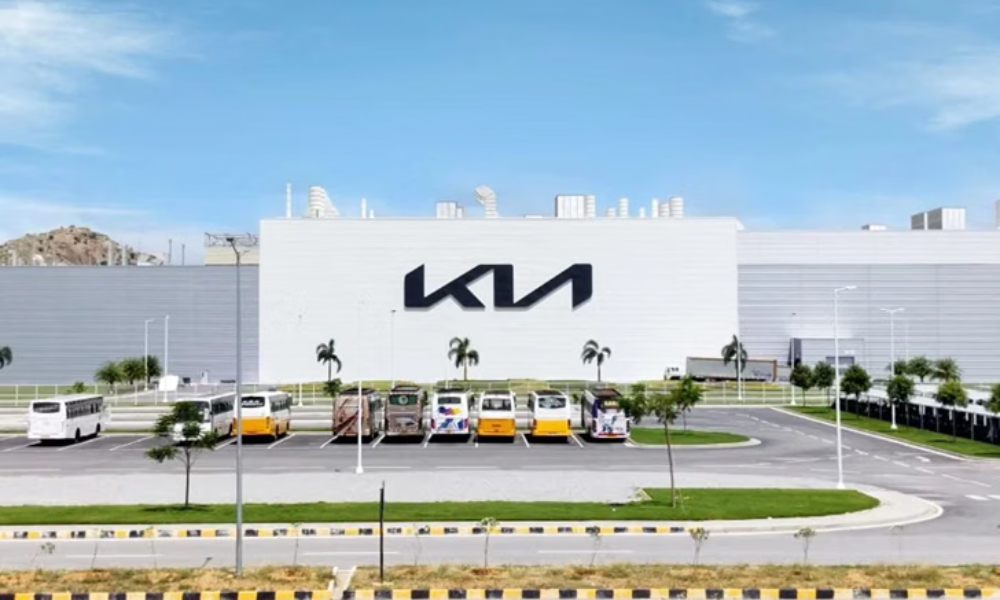
Kia India has announced plans to invest approximately $2 billion in a second manufacturing facility in Andhra Pradesh, expanding its production capacity to 6.3 lakh vehicles annually. The proposed plant will be developed in Anantapur and is expected to begin production in early 2030. The project, announced by Kia India Managing Director and CEO Gwanggu Lee at the CII Partnership Summit on November 12, 2026, will support the company’s future petrol, diesel and electric vehicle plans while creating around 12,000 direct and indirect jobs.
Key Highlights
-
Investment: Approximately $2 billion by Kia India and its supplier partners.
-
Location: Anantapur, Andhra Pradesh.
-
Additional production capacity: 2 lakh vehicles annually.
-
Total manufacturing capacity: 6.3 lakh vehicles per year.
-
Expected production start: Early 2030.
-
Employment generation: Around 12,000 direct and indirect jobs.
-
Land requirement: Approximately 465 acres for the facility and supplier operations.
Kia Second Manufacturing Plant: Investment and Location
Kia India has signed a Memorandum of Understanding (MoU) with the Andhra Pradesh government to establish its second manufacturing facility in the state. The project involves an investment of approximately $2 billion, including contributions from the automaker’s supplier partners.
The proposed facility will be developed across approximately 465 acres in Anantapur. This will further strengthen Kia’s existing manufacturing presence in the region, where its first Indian production facility has been operational since 2019.
The announcement was made by Gwanggu Lee during the 31st CII Partnership Summit in Visakhapatnam. The investment is part of Kia’s longer-term strategy to increase its manufacturing capabilities in India and strengthen the country’s position as an important production and export base.
According to the announced plan, the new facility will generate approximately 12,000 direct and indirect employment opportunities. The investment is also expected to benefit local component manufacturers, logistics companies and other businesses associated with automotive production.
Kia India’s Production Capacity to Increase to 6.3 Lakh Units
Kia currently operates its manufacturing facility in Anantapur with an installed annual production capacity of approximately 4.3 lakh vehicles.
The proposed second facility will contribute another 2 lakh units of annual production capacity, taking the combined capacity to approximately 6.3 lakh vehicles.
| Manufacturing Details | Existing Plant | New Plant |
|---|---|---|
| Location | Anantapur | Anantapur |
| Annual capacity | 4.3 lakh units | 2 lakh units |
| Investment | Part of existing investment | Part of $2 billion project |
| Production | Operational | Expected early 2030 |
| Powertrains | Multiple | ICE and EV |
The additional capacity represents an increase of approximately 47% over Kia’s existing installed capacity. It should provide the company with greater flexibility to manufacture new models and respond to changing demand in India and international markets.
Kia’s cumulative investment across its two Indian manufacturing facilities, including supplier investments, is expected to reach approximately $5 billion.
New Kia Plant to Manufacture Petrol, Diesel and Electric Vehicles
One of the important aspects of the upcoming facility is its ability to support different vehicle technologies.
Kia plans to manufacture new models featuring internal combustion engine (ICE) and electric vehicle (EV) powertrains at the proposed plant. However, the company has not yet announced the specific models or their production allocation.
The facility is expected to include four major manufacturing operations:
-
Stamping
-
Welding
-
Painting
-
Vehicle assembly
The flexibility to manufacture vehicles with different powertrains will be important as Indian buyers increasingly get more choices across conventional petrol and diesel vehicles, hybrids and electric cars.
Kia already has a presence in several passenger vehicle segments in India through models such as the Seltos, Sonet, Syros, Carens and Carens Clavis. The additional manufacturing capacity could support future model introductions and expand production volumes for existing vehicles.
However, it is too early to associate any particular upcoming Kia SUV or electric car with the new facility. The manufacturer has not confirmed its future production lineup.
Why Kia Is Expanding Its Manufacturing Operations in India
India has become an important market for Kia since the company’s entry in 2019. Its local manufacturing operations have helped the brand establish a presence in the mass-market SUV and MPV segments while supporting exports.
During FY2026, Kia India produced approximately 3.17 lakh vehicles. Its domestic dispatches stood at around 2.89 lakh units, while exports accounted for 27,953 vehicles.
The proposed expansion will give the company additional production capacity to support future growth.
There is also an export opportunity. Kia already uses India as a manufacturing base for supplying vehicles to international markets. Increasing local production capacity could help the company strengthen its overseas supply operations.
Another important consideration is the growing importance of electric and hybrid vehicles. By planning production across ICE and EV platforms, Kia can prepare its manufacturing operations for changing customer preferences without depending entirely on one powertrain technology.
What Does the New Kia Plant Mean for Indian Car Buyers?
The upcoming manufacturing facility is unlikely to have an immediate impact on vehicle prices or availability because production is planned to begin only in early 2030.
However, the additional capacity could benefit Indian buyers over the longer term in several ways.
More new models: Additional manufacturing capacity could support the introduction of new SUVs, MPVs and electric vehicles.
Improved production flexibility: A larger manufacturing network could help Kia respond to demand across different vehicle segments.
Stronger EV portfolio: Dedicated manufacturing capabilities for electric vehicles could support the company’s future electrification plans.
Potential export benefits: Increased production capacity could strengthen India’s role in Kia’s international supply chain.
For existing Kia customers, the announcement does not indicate any immediate changes to vehicle warranties, service intervals or ownership costs. These will continue to depend on individual models and the company’s existing policies.
Pros and Cons of Kia’s Manufacturing Expansion
Pros
-
Additional 2 lakh units of annual production capacity.
-
Significant $2 billion investment in Indian manufacturing.
-
Production support for both ICE and electric vehicles.
-
Around 12,000 direct and indirect employment opportunities.
-
Greater potential for domestic sales and vehicle exports.
Cons
-
Production is still several years away.
-
Specific models for the new facility remain unannounced.
-
The company has not disclosed a detailed construction schedule.
Frequently Asked Questions
1. Is Kia setting up a second manufacturing plant in India?
Yes. Kia India has announced plans for a second manufacturing facility in Anantapur, Andhra Pradesh. The project involves an investment of approximately $2 billion, including supplier investments, and will add 2 lakh vehicles to its annual production capacity.
2. What is the investment for Kia’s new Andhra Pradesh plant?
Kia and its supplier partners are expected to invest approximately $2 billion in the proposed facility. The company’s cumulative investment across its two Indian manufacturing facilities is expected to reach around $5 billion.
3. When will Kia’s second plant start production?
Production at the proposed manufacturing facility is planned to begin in early 2030. Kia has not announced a detailed construction or production ramp-up schedule.
4. What will be the production capacity of Kia’s new plant?
The second manufacturing facility will add approximately 2 lakh vehicles of annual production capacity. This will increase Kia India’s combined installed manufacturing capacity from 4.3 lakh to approximately 6.3 lakh vehicles annually.
5. Will Kia manufacture electric cars at its new Andhra Pradesh plant?
Yes. Kia has confirmed plans to manufacture vehicles with internal combustion engines and electric powertrains at the proposed facility. However, the specific electric models have not been announced.
6. How many jobs will Kia’s new plant create?
The project is expected to generate approximately 12,000 direct and indirect employment opportunities. This includes opportunities associated with the manufacturing facility and its supplier ecosystem.
7. Will Kia’s new plant reduce car prices in India?
There is no confirmed indication of an immediate price reduction. Additional production capacity could improve manufacturing flexibility and supply over time, but vehicle prices will continue to depend on production costs, taxes, equipment and market conditions.
Conclusion
Kia’s second manufacturing facility in Andhra Pradesh is a significant step in the company’s long-term India strategy. With an investment of approximately $2 billion, an additional 2 lakh units of annual capacity and production planned for early 2030, the project will strengthen Kia’s ability to serve domestic and international markets.
The most important development for buyers is the planned inclusion of both ICE and electric vehicle production. However, the actual impact will depend on the models Kia introduces and how quickly the company brings the new facility into operation.
Read More: