


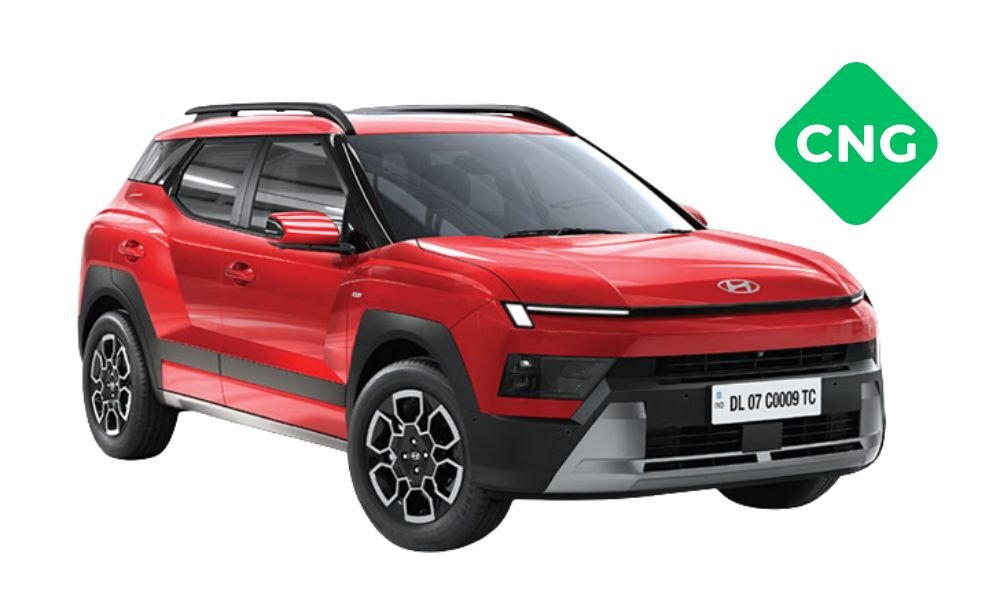
Hyundai Motor India has confirmed that the Hyundai Bayon CNG will launch in January 2027, expanding the newly introduced SUV’s powertrain range with a factory-fitted compressed natural gas option. The upcoming model is aimed at buyers who want an SUV with lower fuel expenses without moving to a smaller vehicle.
The Hyundai Bayon was launched in India on October 26, 2026, with an introductory starting price of ₹9.99 lakh (ex-showroom). It currently gets a 1.5-litre naturally aspirated petrol engine with manual and automatic transmission options. The CNG version is expected to use the same basic engine architecture, although Hyundai has yet to announce its final specifications, fuel efficiency, variant lineup or pricing.
The Bayon CNG could become an important addition to Hyundai’s range, particularly for high-mileage users who want the practicality and features of a midsize SUV.
Key Highlights
-
Launch timeline: January 2027, confirmed by Hyundai.
-
Expected engine: 1.5-litre naturally aspirated petrol engine adapted for CNG operation.
-
Petrol engine benchmark: 115 PS and 143.8 Nm in the standard Bayon.
-
Expected transmission: Six-speed manual, subject to official confirmation.
-
Expected price: A premium over the equivalent petrol variant; the final price is yet to be announced.
-
Main rivals: Maruti Suzuki Victoris CNG, Maruti Suzuki Grand Vitara CNG and Toyota Urban Cruiser Hyryder CNG.
Hyundai Bayon CNG: Expected Engine and Performance
The petrol-powered Bayon uses a four-cylinder, 1.5-litre MPi naturally aspirated engine producing 115 PS and 143.8 Nm of torque. It is available with a six-speed manual gearbox or Hyundai’s Intelligent Variable Transmission (iVT).
The CNG version is expected to use this engine with adjustments for gas operation. Power and torque figures in CNG mode have not been confirmed. A six-speed manual transmission is the likely choice, but Hyundai has not ruled in or ruled out an automatic CNG option publicly.
| Specification | Hyundai Bayon petrol | Hyundai Bayon CNG |
|---|---|---|
| Engine | 1.5-litre, four-cylinder MPi | Expected 1.5-litre MPi |
| Maximum power | 115 PS | Not announced |
| Peak torque | 143.8 Nm | Not announced |
| Transmission | 6-speed MT, iVT | Manual expected |
| Fuel type | Petrol | Petrol and CNG |
| Mileage | Depends on transmission and driving conditions | Not announced |
| Launch | October 2026 | January 2027 |
The petrol version provides a useful reference for prospective buyers, but its power output and mileage figures should not be treated as CNG specifications.
Hyundai Bayon CNG Expected Price in India
Hyundai has not announced the Bayon CNG’s price or variant-wise positioning. The petrol range starts at an introductory ₹9.99 lakh (ex-showroom), giving buyers a baseline for estimating the cost of the upcoming version.
The CNG variants are expected to carry a premium over their petrol equivalents because of the additional fuel-system hardware. However, the exact difference will depend on the final equipment and variant strategy.
For budgeting purposes, buyers should wait for the official price list instead of relying on unofficial estimates. On-road prices will vary by state and city based on registration charges, insurance and applicable taxes.
The key question will be how much extra Hyundai charges for CNG. A modest premium could make the SUV attractive to buyers covering substantial distances each month. A larger price gap would increase the time required to recover the additional purchase cost through fuel savings.
Design, Features and Boot Space
The Bayon petrol already offers equipment that could make the CNG version appealing to family buyers. Depending on the selected petrol variant, highlights include:
-
Dual 12.3-inch panoramic displays for the instrument cluster and infotainment system.
-
Hyundai Bluelink connected-car features and over-the-air updates.
-
A generative AI-powered voice assistant.
-
Wireless Android Auto and Apple CarPlay.
-
Bose premium audio system.
-
Available panoramic sunroof and ventilated front seats.
-
Hyundai SmartSense Level 2 Pro ADAS, with 23 driver-assistance features.
The availability of these features on the CNG variants remains unconfirmed. Hyundai may reserve certain premium equipment for higher trims, so buyers should compare the final variant-wise feature list before booking.
Will the Hyundai Bayon CNG retain its boot space?
Boot space could be one of the most important factors in the Bayon CNG’s appeal. The petrol model has a claimed 505-litre luggage capacity, which is useful for family holidays and airport runs.
An underbody-mounted CNG tank could help preserve the luggage compartment, following a layout used by the Maruti Suzuki Victoris CNG. However, Hyundai has not officially confirmed the Bayon CNG’s tank location or final boot capacity.
Buyers should also check where the spare wheel will be stored and whether the CNG installation affects luggage loading or ground clearance. These practical details matter more in daily use than a headline fuel-efficiency figure.
Hyundai Bayon CNG vs Rivals
The Bayon CNG will enter a market where buyers already have factory-fitted CNG options in SUVs. Its main alternatives include the Maruti Suzuki Victoris, Grand Vitara and Toyota Urban Cruiser Hyryder, although their CNG availability, pricing and equipment differ by variant.
| Model | Powertrain choice | Main consideration |
|---|---|---|
| Hyundai Bayon CNG | CNG, specifications pending | Newer cabin technology and feature package |
| Maruti Suzuki Victoris CNG | Factory-fitted CNG | Underbody tank packaging |
| Maruti Suzuki Grand Vitara CNG | Factory-fitted CNG | Established alternative for fuel-conscious buyers |
| Toyota Urban Cruiser Hyryder CNG | Factory-fitted CNG | Alternative with Toyota’s ownership network |
The Bayon could stand out through its technology package, but its value will depend on pricing, real-world fuel economy, rear-seat comfort and the space available for luggage.
Buyers who prioritise an established ownership record and readily available CNG servicing should also compare their local dealer and service networks before deciding.
Expected Running Costs and Ownership Considerations
CNG can reduce fuel expenses compared with petrol, particularly for owners who drive long distances regularly. Actual savings depend on local fuel prices, kilometres covered, vehicle efficiency and the difference between petrol and CNG variant prices.
Before buying the Bayon CNG, consider these factors:
-
Monthly driving distance: Higher usage generally makes it easier to recover the CNG variant’s additional purchase cost.
-
CNG availability: Check station access along regular commuting routes and highway journeys.
-
Boot practicality: Confirm the final tank arrangement and spare-wheel provision.
-
Servicing: Follow Hyundai’s prescribed maintenance schedule for the factory-fitted CNG system.
-
Warranty: Check the official warranty coverage for the vehicle and CNG components before purchase.
Hyundai has not yet announced the Bayon CNG’s certified fuel efficiency, warranty details or maintenance schedule. These should be verified once the production model’s specifications are released.
Pros and Cons of the Hyundai Bayon CNG
Potential advantages
-
Factory-fitted CNG option in a midsize SUV.
-
Potentially lower fuel costs for high-mileage users.
-
Modern cabin technology and connected features from the Bayon range.
-
Potential for better luggage usability if the underbody tank layout is adopted.
Potential disadvantages
-
CNG power and fuel-efficiency figures remain unknown.
-
A manual-only offering could disappoint automatic buyers.
-
The price premium and variant availability are unconfirmed.
-
Boot space and spare-wheel arrangements still need clarification.
Frequently Asked Questions
1. When will the Hyundai Bayon CNG launch in India?
The Hyundai Bayon CNG is scheduled to launch in January 2027, as confirmed by Hyundai Motor India in October 2026.
2. What will be the Hyundai Bayon CNG price?
The price has not been announced. The petrol Bayon starts at an introductory ₹9.99 lakh (ex-showroom), and the CNG version is expected to cost more than its equivalent petrol variant.
3. What is the expected mileage of the Hyundai Bayon CNG?
Hyundai has not disclosed the CNG model’s mileage. Buyers should wait for official fuel-efficiency figures rather than relying on estimates.
4. Will the Hyundai Bayon CNG get an automatic gearbox?
An automatic CNG version has not been confirmed. A six-speed manual gearbox is expected, while the availability of the iVT automatic remains uncertain.
5. Will the Hyundai Bayon CNG have the same boot space as the petrol model?
The petrol model offers a claimed 505-litre boot. The CNG version’s final luggage capacity will depend on the tank placement, which Hyundai has yet to confirm.
6. Which cars will compete with the Hyundai Bayon CNG?
Its key alternatives will include the Maruti Suzuki Victoris CNG, Grand Vitara CNG and Toyota Urban Cruiser Hyryder CNG.
7. Should you wait for the Hyundai Bayon CNG?
Buyers who cover high monthly distances and have convenient access to CNG stations should consider waiting for the official price, mileage and variant details. Those needing a car immediately can compare the petrol Bayon with existing CNG SUVs.
Conclusion
The Hyundai Bayon CNG, scheduled for January 2027, could offer Indian buyers a useful combination of midsize SUV practicality, modern technology and potentially lower fuel expenses. Its success will depend on the final price premium, certified mileage, transmission options and how effectively Hyundai packages the CNG tank.
For now, buyers should treat the engine setup and underbody tank arrangement as expectations rather than confirmed specifications. The most sensible decision is to compare the official CNG variant against the equivalent petrol model and established rivals once Hyundai releases the complete price list.
Read More: