


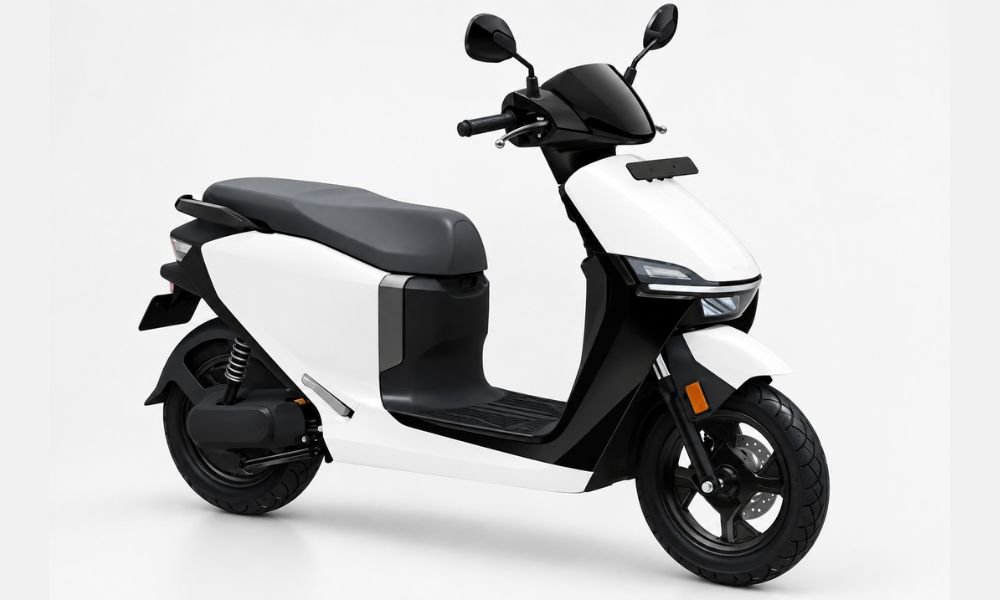
Honda Motorcycle & Scooter India has launched the Honda QC3 electric scooter in India at Rs 1.35 lakh (ex-showroom, New Delhi). The new family-oriented electric scooter becomes Honda’s third EV for the Indian market, following the QC1 and Activa e:. Bookings have opened for Rs 5,000, although initial availability is restricted to select cities.
The QC3 uses a 3kWh battery and offers a claimed 145km IDC range according to Honda’s launch information. It also gets 32 litres of under-seat storage, a 5-inch TFT display, Honda RoadSync connectivity and a Smart Key.
Key Highlights
- Price: Rs 1.35 lakh, ex-showroom New Delhi
- Battery: 3kWh fixed battery pack
- Claimed range: 145km IDC
- Charging: 0-80% in 2 hours 40 minutes, full charge in around 4 hours
- Storage: 32-litre under-seat compartment
- Technology: 5-inch TFT display with Honda RoadSync and turn-by-turn navigation
- Initial availability: Delhi, Agra, Cuttack, Surat and Kollam
Honda QC3 Price and Availability
Honda has priced the QC3 at Rs 1,35,000 ex-showroom in New Delhi. The scooter is currently being offered in a single configuration, with no separate variant-wise price structure announced at launch. Bookings are open with a Rs 5,000 booking amount.
For the initial phase, Honda is selling the QC3 through selected RedWing dealerships in Delhi, Agra, Cuttack, Surat and Kollam. This means buyers in other cities may have to wait for the next phase of the rollout.
The Rs 1.35 lakh price puts the QC3 directly into the increasingly competitive family electric scooter category, where models such as the Ather Rizta, TVS iQube, Bajaj Chetak and Vida V2 are available.
Honda QC3 Battery, Range and Charging
The biggest upgrade over Honda’s entry-level QC1 is the battery capacity. The QC3 gets a 3kWh battery pack, which is fixed to the scooter rather than being designed around a battery-swapping system.
Honda quotes a 145km IDC-certified range for the QC3 in its launch information. The company’s current website has also listed a 151km IDC figure, creating a discrepancy in published figures. For this launch report, 145km is used because that is the figure repeated in Honda’s July product announcement and the September launch-day information.
Charging is rated at 0-80% in approximately 2 hours 40 minutes, while a complete charge takes around four hours. This makes the QC3 more suitable for owners who can charge at home or at their regular parking location.
Honda has not officially published the motor’s peak power, torque or top-speed figures in the launch information. Therefore, figures circulating online for motor output or top speed should not be treated as confirmed specifications.
Honda QC3 Battery and Charging Specifications
| Specification | Honda QC3 |
|---|---|
| Powertrain | Electric |
| Battery capacity | 3kWh |
| Claimed IDC range | 145km |
| 0-80% charging | 2 hours 40 minutes |
| Full charging | Around 4 hours |
| Battery type | Lithium-ion |
| Battery | Fixed |
Features and Practicality
Honda has designed the QC3 around everyday family use rather than outright performance. One of its strongest practical features is the 32-litre under-seat storage compartment, giving riders considerably more room for everyday luggage, shopping bags and other items.
The scooter also gets a 5-inch TFT instrument display. It is paired with Honda RoadSync connectivity and supports turn-by-turn navigation, allowing riders to access navigation information without relying entirely on a phone mounted separately on the handlebar.
A Smart Key is another notable addition. It adds keyless convenience for daily use and gives the QC3 a more premium equipment package than Honda’s smaller QC1.
Honda is offering the scooter in four colours:
- Matt Photon Gray Metallic
- Pearl Precious White
- Pearl Shallow Blue
- Pearl Siren Blue
Honda QC3 vs Key Rivals
At Rs 1.35 lakh, the QC3 enters a segment with several established electric scooters. However, direct comparisons need to take into account that prices vary by battery size, variant, city and promotional offers.
| Scooter | Battery | Claimed Range | Under-seat Storage |
|---|---|---|---|
| Honda QC3 | 3kWh | 145km IDC | 32 litres |
| Ather Rizta | 2.9-3.7kWh | 123-161km | 34 litres |
| Bajaj Chetak C35 | 3.5kWh | 151-153km | Not specified |
| Ampere Nexus | 3kWh | 136km | 22 litres |
| Honda Activa e: | 3kWh | 102km | Not directly comparable |
The QC3’s combination of a 3kWh battery, 145km claimed range and 32-litre storage gives it a clear family-oriented focus. Its feature list also places greater emphasis on everyday convenience and connectivity than Honda’s earlier QC1.
Safety and Ownership Considerations
Honda has not yet published a detailed independent crash-test rating for the QC3, and it should not be confused with a car-style Bharat NCAP assessment. Buyers should therefore rely on the manufacturer’s confirmed safety equipment and wait for detailed road tests before drawing conclusions about braking performance or real-world handling.
The fixed battery also means the QC3 follows a conventional home-charging ownership model. Buyers should check whether their parking location has a suitable electrical connection before making a purchase.
Honda’s wide existing two-wheeler service network could be relevant for buyers who place importance on access to authorised service facilities. However, the QC3 is being rolled out initially in only five cities, so prospective customers outside these markets should confirm service and delivery availability before booking.
Honda has not provided enough publicly verified information at launch to state a complete long-term maintenance schedule or battery warranty package. These details should be confirmed with the authorised dealership before purchase.
Pros and Cons
Pros
- 3kWh battery with 145km claimed IDC range
- 32-litre under-seat storage is useful for family use
- 5-inch TFT display with RoadSync connectivity
- Turn-by-turn navigation
- Smart Key
- Competitive positioning against established family EVs
Cons
- Initial availability is limited to five cities
- Motor power and top-speed figures have not been officially detailed
- Fixed battery cannot be removed for charging elsewhere
- Real-world range will vary depending on riding conditions, load and speed
- Warranty details need confirmation from Honda at the time of purchase
Who Should Buy the Honda QC3?
The QC3 makes the most sense for buyers looking for a family-focused electric scooter for regular urban commuting and who have convenient access to home or workplace charging.
Its 32-litre storage capacity should appeal to families, while the 145km claimed range provides a useful buffer for daily city travel. The RoadSync-equipped TFT display and Smart Key also make it better equipped for buyers who want connected features without moving into a more performance-focused electric scooter.
Those primarily interested in high performance, rapid acceleration or extensive highway use should wait for confirmed motor specifications and independent road tests before making a decision.
FAQs
What is the price of the Honda QC3 in India?
The Honda QC3 is priced at Rs 1.35 lakh ex-showroom in New Delhi.
What is the Honda QC3 range?
Honda’s launch information states a claimed 145km IDC range from its 3kWh battery.
How long does the Honda QC3 take to charge?
The QC3 takes approximately 2 hours 40 minutes to charge from 0 to 80%, while a full charge takes around four hours.
How much storage does the Honda QC3 have?
The electric scooter offers 32 litres of under-seat storage, making practicality one of its key selling points.
What are the main features of the Honda QC3?
Key features include a 5-inch TFT display, Honda RoadSync connectivity, turn-by-turn navigation, Smart Key and 32-litre under-seat storage.
Where can I buy the Honda QC3?
At launch, Honda is making the QC3 available through selected RedWing dealerships in Delhi, Agra, Cuttack, Surat and Kollam.
Conclusion
The Honda QC3 marks a significant expansion of Honda’s electric scooter strategy in India. At Rs 1.35 lakh, it combines a 3kWh battery, 145km claimed IDC range, 32-litre storage and connected technology in a family-oriented package.
Its biggest limitation at launch is availability, while Honda has also not disclosed key performance figures such as motor output and top speed. For buyers in the five launch cities who want a practical electric scooter for everyday commuting, the QC3 is worth considering. A wider rollout and independent real-world testing will give a clearer picture of how it performs against established rivals.
Read More: