


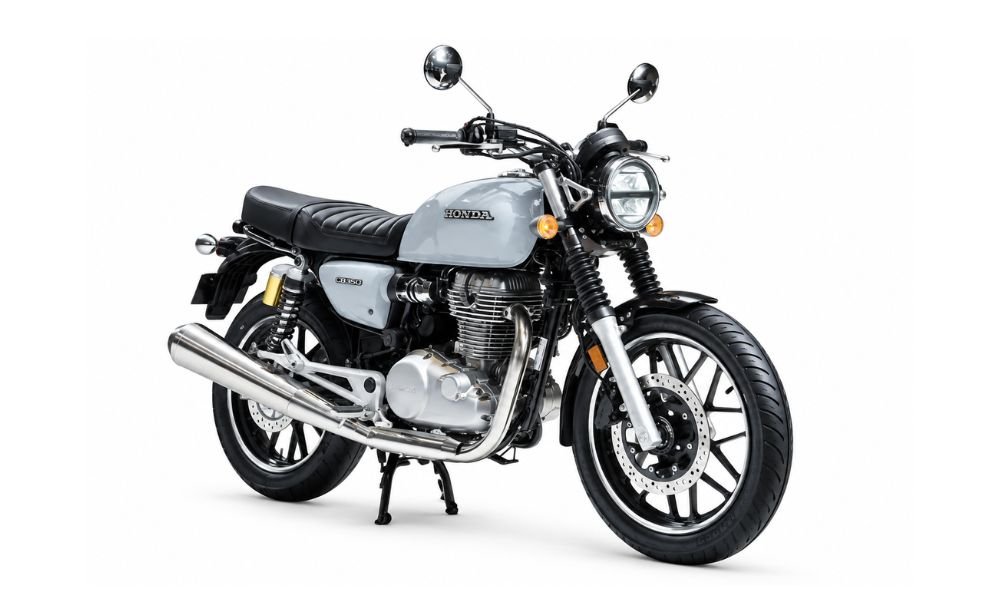
Honda has launched the new CB500 in India at a starting price of Rs 2.75 lakh (ex-showroom), bringing a 500cc single-cylinder retro roadster to the company’s BigWing range. The motorcycle is available in three variants, with prices going up to Rs 3.02 lakh. Bookings have also opened through Honda BigWing dealerships.
Unlike Honda’s existing 500cc twin-cylinder motorcycles sold in international markets, the India-specific CB500 uses a completely different 501cc air-cooled and oil-cooled single-cylinder engine. With 43.3Nm of torque and a classic roadster design, the motorcycle is aimed at riders looking for a larger, relaxed retro motorcycle without moving into the 650cc category.
Key Highlights
- Honda CB500 price starts at Rs 2.75 lakh, ex-showroom
- Available in three variants: Alloy, Spoke and Spoke with Stripes
- Powered by a 501cc air/oil-cooled single-cylinder engine
- Produces 27.6hp and 43.3Nm
- Gets Honda Selectable Torque Control and a slipper clutch as standard
- Manufactured in India and positioned above the CB350 range
Honda CB500 Price and Variants
The Honda CB500 is offered in three versions. The differences are primarily related to the wheel design, colours and graphics rather than the mechanical package.
| Variant | Ex-showroom Price |
|---|---|
| CB500 Alloy | Rs 2.75 lakh |
| CB500 Spoke | Rs 2.99 lakh |
| CB500 Spoke with Stripes | Rs 3.02 lakh |
The prices above are reported as ex-showroom Bengaluru prices. The exact on-road price will vary depending on the registration location, insurance and applicable local charges.
The Alloy variant is the entry point, while the Spoke version gets cross-spoke tubeless rims. The top-spec Spoke with Stripes version adds exclusive colour and graphics options.
Honda CB500 Engine and Performance
The biggest talking point is the engine. The CB500 gets an all-new 501cc single-cylinder, air-cooled engine with an oil cooler. It develops 27.6hp and 43.3Nm, with the torque output giving the motorcycle its intended relaxed and torque-focused character.
This engine configuration also gives the CB500 a distinct position in the Indian market. The motorcycle brings back the idea of a large-capacity single-cylinder roadster after Royal Enfield discontinued its 500cc UCE-powered motorcycles in 2020.
Honda has not yet published a complete set of official India-spec figures covering claimed fuel efficiency, top speed and every dimensional measurement. Therefore, those figures should not be treated as confirmed specifications at launch.
Features and Equipment
Despite its retro appearance, the Honda CB500 gets several modern features.
The standard equipment includes:
- Honda Selectable Torque Control (HSTC)
- Slipper clutch
- Analogue-digital instrument console
- Honda RoadSync smartphone connectivity
- LED lighting
- Dual-channel ABS
- Disc brakes
- Alloy or spoke-wheel options depending on variant
The inclusion of HSTC is particularly relevant for a motorcycle producing more than 43Nm of torque. It can help manage rear-wheel slip when traction is limited, while the slipper clutch is useful during aggressive downshifts.
Design and Hardware
The CB500 follows Honda’s modern interpretation of a classic roadster. Its styling takes cues from the CB family, including a round headlamp, conventional roadster proportions and a relatively simple bodywork design.
Honda is positioning the motorcycle as a Heritage Roadster, with the emphasis on everyday usability and a torque-rich riding experience rather than outright performance. The company has also confirmed that the CB500 is manufactured in India.
The three-variant strategy gives buyers a choice between the simpler alloy-wheel version and the more traditional spoke-wheel appearance. The cross-spoke setup on the mid-spec model also supports tubeless tyres.
Honda CB500 vs Rivals
The CB500 occupies an unusual position in the Indian motorcycle market. Its closest alternatives by price and engine capacity include the Royal Enfield Interceptor 650 and BSA Gold Star 650, while the Harley-Davidson X440 sits lower in terms of displacement and pricing.
| Motorcycle | Engine | Character | Positioning |
|---|---|---|---|
| Honda CB500 | 501cc single-cylinder | Retro roadster | Rs 2.75 lakh onwards |
| Harley-Davidson X440 | 440cc single-cylinder | Roadster | Lower-priced alternative |
| Royal Enfield Interceptor 650 | 648cc twin-cylinder | Classic roadster | Above CB500 |
| BSA Gold Star 650 | 652cc single-cylinder | Classic roadster | Similar retro focus |
The CB500’s key distinction is its combination of a 500cc-class single-cylinder engine, Honda’s electronics and a price that remains below the Royal Enfield 650 range. The Interceptor 650, for example, starts at Rs 3.39 lakh in Chennai according to current published pricing referenced at launch.
Is the Honda CB500 Worth Considering?
The Rs 2.75 lakh Alloy variant is likely to attract the most attention because it provides the complete mechanical package at the lowest entry price. Buyers who prefer the visual appeal of spoke wheels can move to the Rs 2.99 lakh variant.
The CB500 makes the most sense for riders who want a relaxed, distinctive motorcycle with a large single-cylinder engine rather than chasing maximum horsepower. Its 27.6hp output is modest compared with some 650cc rivals, but the 43.3Nm torque figure and single-cylinder configuration are central to its character.
There is also a practical advantage to Honda manufacturing the motorcycle locally. Local production has helped Honda keep the introductory price below the Royal Enfield 650 range despite motorcycles above 350cc attracting the higher 40 percent GST rate cited in current launch reporting.
However, buyers should wait for detailed ownership information, including official fuel-efficiency figures, service intervals, warranty terms and long-term maintenance costs, before making a final purchase decision. These details are not fully established in the launch information currently available.
Pros and Cons
Pros
- 501cc engine with strong 43.3Nm torque
- Distinctive large-capacity single-cylinder configuration
- Starting price below the 650cc Royal Enfield range
- HSTC and slipper clutch offered
- Three variants provide different wheel and styling choices
- Made in India
Cons
- Power output is relatively modest for a 500cc motorcycle
- Official fuel-efficiency figure has not been announced
- Detailed ownership and maintenance information is still limited
- Top variants cross the Rs 3 lakh mark
FAQs
What is the Honda CB500 price in India?
The Honda CB500 starts at Rs 2.75 lakh ex-showroom for the Alloy variant. The Spoke costs Rs 2.99 lakh, while the Spoke with Stripes costs Rs 3.02 lakh.
What engine does the Honda CB500 use?
The motorcycle uses a 501cc single-cylinder, air-cooled engine with an oil cooler. It produces 27.6hp and 43.3Nm.
How many Honda CB500 variants are available?
There are three variants: Alloy, Spoke and Spoke with Stripes.
Does the Honda CB500 get traction control?
Yes. Honda Selectable Torque Control, or HSTC, is available as standard across the CB500 range.
Who are the Honda CB500’s main rivals?
The CB500 competes in a niche between motorcycles such as the Harley-Davidson X440 and larger 650cc roadsters including the Royal Enfield Interceptor 650 and BSA Gold Star 650.
Is the Honda CB500 made in India?
Yes. Honda has confirmed that the CB500 is manufactured in India.
Conclusion
The Honda CB500 brings a much-needed 500cc single-cylinder option to India’s premium motorcycle market. Its Rs 2.75 lakh starting price places it below Honda’s larger imported motorcycles and the Royal Enfield 650 range, while the 501cc engine gives it a clear identity of its own.
For buyers attracted to the character of a big single rather than outright horsepower, the CB500 Alloy is the most straightforward entry into the range. The Spoke variants make more sense for those who place greater importance on the motorcycle’s traditional styling. With local production, modern electronic aids and a relatively accessible starting price, the CB500 gives Honda a new option in a segment that has remained largely vacant since the disappearance of India’s old 500cc singles.
Read More: