


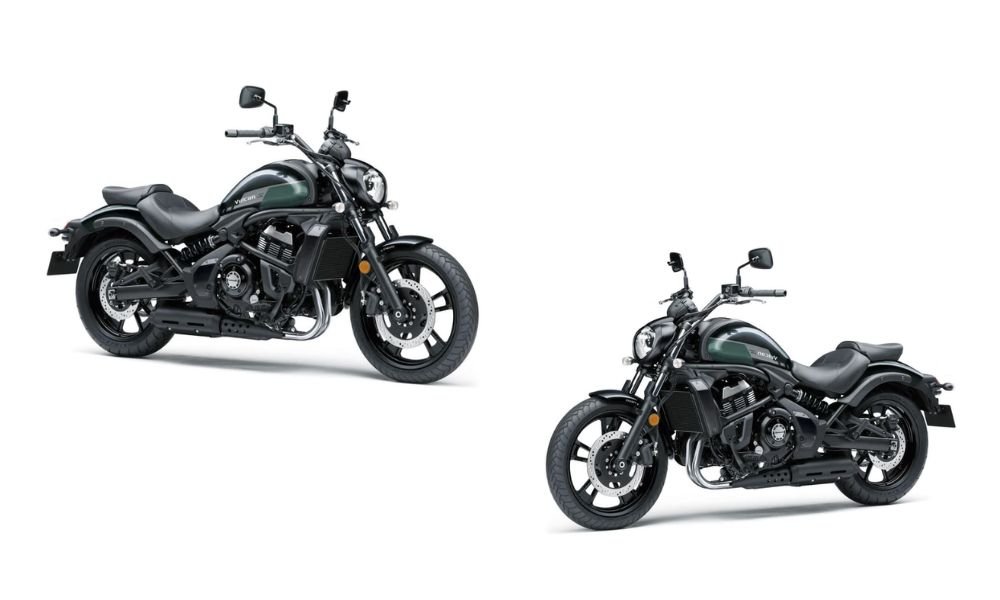
The 2027 Kawasaki Vulcan S has been launched in India at Rs 8.23 lakh (ex-showroom), making it Rs 10,000 more expensive than the 2026 model. Kawasaki has kept the motorcycle’s core package largely unchanged, but the latest model year gets a revised engine torque output, smaller brake rotors and a new colour scheme.
The Vulcan S continues to use Kawasaki’s 649cc parallel-twin engine and remains one of the more powerful options in India’s middleweight cruiser segment. Deliveries of the 2027 model are scheduled to begin from mid-September 2026.
Key Highlights
- Price: Rs 8.23 lakh, ex-showroom
- Engine: 649cc, liquid-cooled, parallel-twin petrol engine
- Power: 61 PS at 7,500 rpm
- Torque: 62.4 Nm at 6,600 rpm
- Kerb weight: 235 kg
- Seat height: 705 mm
- Fuel tank: 14 litres
- New colour: Metallic Carbon Gray with bluish-green highlights
- Brakes: Dual-channel ABS, with revised 272mm front and 216mm rear discs
2027 Kawasaki Vulcan S Price and Variants
Kawasaki has launched the 2027 Vulcan S in one standard variant, priced at Rs 8.23 lakh ex-showroom. The motorcycle replaces the 2026 model, which was priced at Rs 8.13 lakh.
There is no higher-spec variant announced for India, so buyers do not have to choose between different mechanical configurations. The Rs 10,000 increase is relatively modest considering the motorcycle’s price bracket.
The price does, however, put the Vulcan S considerably above the Royal Enfield Super Meteor 650, which starts at around Rs 4.06 lakh ex-showroom in September 2026. The Kawasaki’s higher price is primarily justified by its stronger engine output and more premium positioning.
What’s New on the 2027 Kawasaki Vulcan S?
The 2027 update is more substantial mechanically than the modest price increase initially suggests.
The biggest change is the return of the 62.4 Nm torque output at 6,600 rpm. The 2026 model produced 61 Nm, a reduction of 1.4 Nm from the earlier version. Kawasaki has now restored the previous torque figure.
Peak power remains unchanged at 61 PS at 7,500 rpm, while the six-speed gearbox is also carried over.
The second mechanical change concerns the brakes. The 2027 motorcycle gets a 272mm front disc and a 216mm rear disc, down from the 300mm front and 250mm rear rotors used on the 2026 model. Dual-channel ABS continues to be standard.
The suspension setup remains unchanged, with a 41mm telescopic fork at the front and a linkage-mounted rear monoshock with preload adjustment.
Engine and Performance
The Kawasaki Vulcan S continues with its familiar 649cc liquid-cooled, DOHC parallel-twin engine. The motor uses fuel injection and is paired with a six-speed manual transmission.
The key engine figures are:
| Specification | 2027 Kawasaki Vulcan S |
|---|---|
| Engine | 649cc parallel-twin |
| Cooling | Liquid-cooled |
| Max Power | 61 PS @ 7,500 rpm |
| Max Torque | 62.4 Nm @ 6,600 rpm |
| Gearbox | 6-speed |
| Fuel Tank | 14 litres |
| Final Drive | Chain |
The engine is one of the Vulcan S’s biggest advantages. Compared with traditional cruiser engines that prioritise low-rpm character, Kawasaki’s parallel-twin has a broader, more responsive nature and can handle both relaxed cruising and quicker highway riding.
The restored torque figure should also make the 2027 motorcycle slightly stronger in the mid-range, although buyers should not expect a dramatic performance difference over the 2026 model.
Dimensions, Comfort and Practicality
The Vulcan S retains its low-slung cruiser proportions, with a 705mm seat height and 130mm ground clearance. The low seat is particularly useful for riders who prioritise easy foot placement at traffic lights and during slow-speed manoeuvres.
However, the 235kg kerb weight is substantial. The low centre of gravity helps, but moving the motorcycle around manually or parking it on an incline will still require some effort.
The motorcycle rides on an 18-inch front wheel with a 120/70 tyre and a 17-inch rear wheel with a 160/60 tyre.
Kawasaki’s ERGO-FIT system remains an important part of the Vulcan S package. The footpeg position can be adjusted, while different seat and handlebar options can be used to tailor the riding position. This makes the Vulcan S more adaptable than its conventional cruiser appearance suggests.
Features and Safety
The Vulcan S does not chase a long list of electronic rider aids. Its equipment remains relatively straightforward.
The motorcycle gets an analogue-style tachometer with a multifunction LCD display that provides information such as speed, gear position and an economical riding indicator.
Safety equipment includes:
- Dual-channel ABS
- Front and rear disc brakes
- Adjustable rear suspension preload
- Tubular diamond frame
- LED lighting elements
There is no traction control or multiple riding modes. That is unlikely to concern buyers looking for a relatively uncomplicated middleweight cruiser, but riders expecting the latest electronic package may find the equipment list conservative for an Rs 8 lakh-plus motorcycle.
Mileage and Running Costs
The Vulcan S is listed with a mileage figure of around 20.58 kmpl in current Indian market data. Actual fuel economy will depend heavily on riding style, traffic and highway speeds.
With its 14-litre fuel tank, the motorcycle offers a useful touring range, although riders should not plan long-distance trips solely around the claimed mileage figure.
Maintenance costs are likely to be higher than those of a Royal Enfield Super Meteor 650 simply because the Kawasaki is a more premium imported-platform motorcycle. Buyers should also factor in insurance, tyres, Kawasaki-specific parts and authorised-service availability when calculating ownership costs.
Kawasaki Vulcan S vs Key Alternatives
| Motorcycle | Engine | Power | Torque | Ex-showroom price |
|---|---|---|---|---|
| Kawasaki Vulcan S | 649cc twin | 61 PS | 62.4 Nm | Rs 8.23 lakh |
| Royal Enfield Super Meteor 650 | 648cc twin | 47 PS | 52.3 Nm | From Rs 4.06 lakh |
| Kawasaki Eliminator | 451cc twin | 45 PS | 42.6 Nm | Rs 6.16 lakh |
The Royal Enfield Super Meteor 650 is the obvious alternative if value, classic cruiser styling and a lower purchase price are priorities. It costs roughly half as much as the Vulcan S at the entry point.
The Kawasaki Eliminator is another option for buyers who want Kawasaki ownership and a cruiser format without spending Rs 8 lakh. It is lighter and considerably cheaper, but its 451cc engine produces less power and torque.
The Vulcan S therefore occupies a more performance-focused position. It is expensive, but its 61 PS engine gives it a significant advantage over both alternatives.
Pros and Cons
Pros
- Strong 649cc parallel-twin engine
- 61 PS and 62.4 Nm suit highway touring
- Low 705mm seat height
- ERGO-FIT allows greater riding-position flexibility
- Dual-channel ABS is standard
- New colour gives the 2027 model a distinctive appearance
Cons
- Rs 8.23 lakh ex-showroom is expensive
- 235kg kerb weight is high
- Only one variant is offered
- Ground clearance is limited to 130mm
- Electronic rider aids are minimal
Who Should Buy the 2027 Kawasaki Vulcan S?
The Vulcan S makes the most sense for riders who want a middleweight cruiser with strong highway performance, a low seat and a distinctive alternative to the more traditional Royal Enfield formula.
It is less convincing as a purely value-focused purchase. The Super Meteor 650 delivers much of the same basic cruiser experience for substantially less money, while Kawasaki’s own Eliminator provides a lighter and cheaper entry point.
For buyers who specifically want the Vulcan S’s stronger parallel-twin performance and ERGO-FIT ergonomics, however, the Rs 8.23 lakh price is easier to justify.
FAQs
What is the price of the 2027 Kawasaki Vulcan S in India?
The 2027 Kawasaki Vulcan S is priced at Rs 8.23 lakh ex-showroom in India.
What engine does the Kawasaki Vulcan S use?
It uses a 649cc liquid-cooled parallel-twin petrol engine paired with a six-speed gearbox.
How much power does the 2027 Kawasaki Vulcan S produce?
The motorcycle produces 61 PS at 7,500 rpm.
What is the torque output of the 2027 Kawasaki Vulcan S?
The 2027 model produces 62.4 Nm at 6,600 rpm, which is 1.4 Nm more than the 2026 model.
What is the seat height of the Kawasaki Vulcan S?
The Vulcan S has a 705mm seat height, making it relatively accessible for a middleweight motorcycle.
What is the mileage of the Kawasaki Vulcan S?
Current Indian market data lists mileage at around 20.58 kmpl. Actual consumption will vary according to riding conditions.
Does the Kawasaki Vulcan S have ABS?
Yes. Dual-channel ABS is standard on the motorcycle.
Is the 2027 Kawasaki Vulcan S worth buying?
It is worth considering if strong engine performance, low-seat ergonomics and Kawasaki’s distinctive cruiser design are priorities. Buyers mainly looking for value should consider the Super Meteor 650 or Kawasaki Eliminator.
Conclusion
The 2027 Kawasaki Vulcan S is an evolutionary update rather than a major redesign. The motorcycle gets its torque figure back to 62.4 Nm, revised brake hardware and a new Metallic Carbon Gray colour scheme, while the core 649cc engine, chassis, 705mm seat height and 235kg weight remain unchanged.
At Rs 8.23 lakh ex-showroom, it is considerably more expensive than the Royal Enfield Super Meteor 650 and Kawasaki Eliminator. That makes the Vulcan S a niche purchase, but its 61 PS parallel-twin engine gives it a clear performance advantage. For riders who want a low-slung cruiser without sacrificing highway pace, the Vulcan S remains one of the more distinctive choices in India’s middleweight motorcycle market.
Read More: