


Which Retro Motorcycle Should You Buy? Expert Analysis
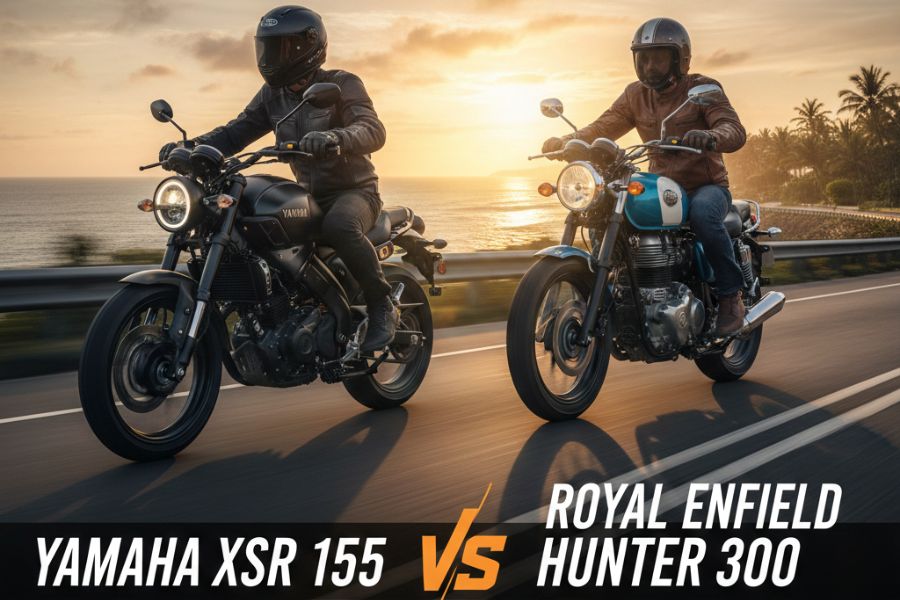
Choosing between the Yamaha XSR 155 and Royal Enfield Hunter 350 might seem unusual given their different engine sizes, but these retro-styled motorcycles compete in the same price bracket and target similar riders. Here’s everything you need to know to make an informed decision.
Engine Performance: Speed vs Character
Yamaha XSR 155 – The High-Revving Performer
The XSR 155 features a compact 155cc liquid-cooled single-cylinder motor delivering 18.4 horsepower at 10,000 RPM and 14.2 Nm of torque at 7,500 RPM. Paired with a smooth 6-speed transmission, this engine loves high revs and rewards spirited riding.
Key Performance Metrics:
- 0-60 km/h: 4.29 seconds
- 0-80 km/h: 7.02 seconds
- 0-100 km/h: 11.66 seconds
Royal Enfield Hunter 350 – The Torquey Cruiser
The Hunter 350 packs a larger 349cc air-cooled engine producing 20.2 horsepower at 6,100 RPM and a substantial 27 Nm of torque at 4,000 RPM, mated to a 5-speed gearbox.
Key Performance Metrics:
- 0-60 km/h: 4.95 seconds
- 0-80 km/h: 8.75 seconds
- 0-100 km/h: 15.15 seconds
Real-World Performance Comparison
Despite having half the displacement, the XSR 155 significantly outpaces the Hunter 350 in acceleration tests. The Yamaha’s Variable Valve Actuation technology shines when you push it past 7,000 RPM, delivering an engaging exhaust note and strong pull.
The Hunter 350 takes a different approach, offering effortless low-end grunt that makes city riding relaxed. You’ll find yourself upshifting less frequently in traffic, as the bike happily pulls from lower RPMs in higher gears.
Highway cruising? Both handle 100 km/h comfortably, though the XSR’s sixth gear and higher top speed give it an edge on long-distance rides.
Fuel Efficiency: Impressive Numbers from Both
The lightweight XSR 155 delivers outstanding fuel economy:
- Highway: 51.7 km/l
- City: 50.3 km/l
The Hunter 350 returns respectable figures for its class:
- Highway: 39.8 km/l
- City: 30.6 km/l
Handling Dynamics: Agility vs Stability
Weight Comparison
- XSR 155: 137 kg (kerb weight)
- Hunter 350: 181 kg (kerb weight)
That 44 kg difference translates directly to how these bikes behave on the road.
Urban Riding Experience
The XSR 155 feels incredibly agile in city traffic, darting through gaps with ease. Its R15-derived deltabox frame and firm suspension setup make quick direction changes effortless. However, the 810mm seat height might challenge shorter riders.
The Hunter 350’s 790mm seat height makes it more accessible for riders under 5’5″. While it requires more effort to flick through traffic, its planted nature and upright riding position reduce fatigue during long commutes.
Cornering Behavior
Through twisty roads, the XSR 155 proves more engaging. Its sport bike DNA shows through responsive steering and confident handling. The Hunter 350 takes more deliberate input but rewards you with exceptional stability mid-corner. The XSR’s top-end power helps it exit corners faster, though the Hunter keeps pace through most bends.
Ride Comfort: Tale of Two Philosophies
Suspension Setup
Royal Enfield’s 2024 suspension updates transformed the Hunter 350. What was once harsh now absorbs potholes and speed breakers gracefully, maintaining stability even over rough roads at speed. The conventional telescopic forks and twin shocks prioritize comfort.
The XSR 155’s upside-down forks and monoshock offer sportier handling but at the cost of comfort. The firm rear shock especially can punish your lower back on deteriorated roads. Speed breakers demand careful approach.
Ergonomics
XSR 155:
- Wide handlebars with forward reach
- Rear-set footpegs
- Slightly aggressive riding position
Hunter 350:
- Upright, relaxed seating position
- Moderately rear-set footpegs
- Pillion grab rails included
Technology and Features Breakdown
Yamaha XSR 155 Equipment
- Fully digital instrument console
- Bluetooth connectivity (call/message alerts)
- Traction control system
- Variable Valve Actuation (VVA)
- USD front forks
- Full LED lighting
- Assist and slipper clutch
- Dual-channel ABS
Royal Enfield Hunter 350 Equipment
- Semi-digital cluster (no tachometer on base variant)
- Tripper navigation pod (higher variants)
- Conventional telescopic forks
- Twin rear shocks
- Slipper clutch
- Dual-channel ABS
- LED lighting
- USB charging port (select variants)
The XSR leans heavily into modern tech, while the Hunter maintains classic simplicity with select modern conveniences.
Design Philosophy: Neo-Retro vs Classic Retro
Both motorcycles feature excellent build quality and premium finishes for their segment.
The XSR 155 embraces neo-retro styling—modern interpretation of classic design cues. It shares its sporty platform with the R15 and MT-15, giving it aggressive proportions.
The Hunter 350 commits fully to retro aesthetics with traditional styling elements. Despite being heavier, it appears more compact. The lower seat, pillion grab rails, and comfortable ergonomics make it more practical for daily use and two-up riding.
Pricing Analysis (Ex-Showroom)
- Yamaha XSR 155: ₹1.50 lakh (introductory price)
- Royal Enfield Hunter 350: ₹1.53 – ₹1.67 lakh (variant-dependent)
The XSR 155 undercuts the Hunter 350’s top variant by ₹17,000 while offering more performance-oriented features.
Final Verdict: Which Should You Choose?
Choose the Yamaha XSR 155 if you want:
- Superior acceleration and performance
- Better fuel efficiency
- Modern technology features
- Sporty handling dynamics
- Lighter, more nimble urban mobility
- Best value for money
Choose the Royal Enfield Hunter 350 if you prefer:
- Relaxed, comfortable riding experience
- Low-end torque for effortless city riding
- Lower seat height and accessible ergonomics
- Classic motorcycle character
- Superior ride quality over bad roads
- Better pillion accommodation
The Bottom Line
The Yamaha XSR 155 wins on paper with better performance, efficiency, and value. It’s ideal for younger, enthusiastic riders who appreciate modern tech and spirited riding.
The Royal Enfield Hunter 350 appeals to those seeking a more traditional motorcycling experience. Its recent suspension and clutch improvements have addressed previous weaknesses, making it a genuinely comfortable and characterful machine.
Neither choice is wrong—it depends entirely on your riding priorities and style preferences.