


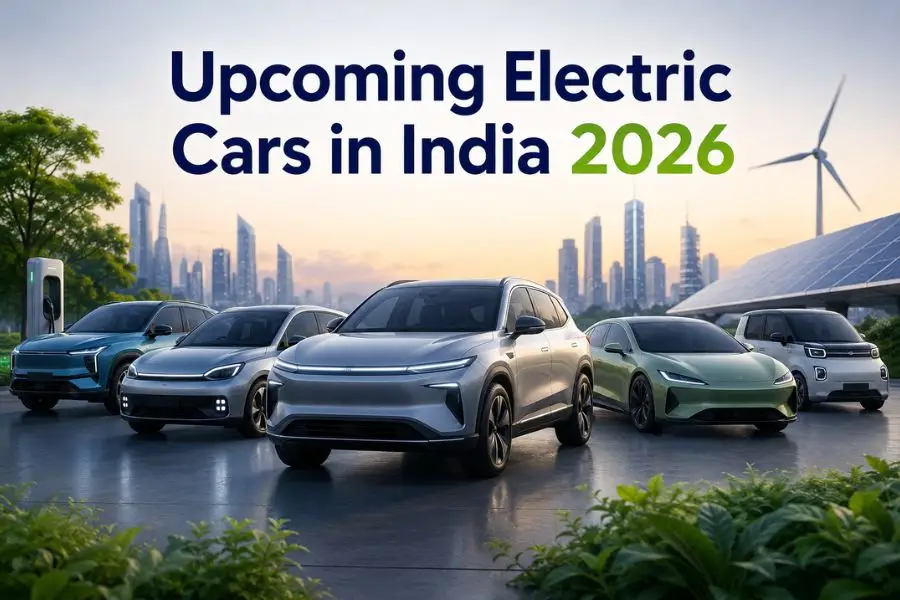
India’s electric vehicle revolution is no longer a slow simmer — it’s a full boil. After 2025 delivered a record-breaking wave of EV launches, 2026 is shaping up to be the year India’s mainstream car buyer finally goes electric. From badge-engineered Japanese SUVs to homegrown powerhouses and affordable Chinese entrants, the upcoming electric cars in India in 2026 span every budget, every body style, and every ambition.
If you have been sitting on the fence wondering whether to buy a petrol car or wait, this guide is your answer. Here is every significant EV headed to Indian roads — with real prices, honest specs, and what they mean for you.
Why 2026 Is the Defining Year for EVs in India
Fuel prices continue to bite, government EV subsidies under FAME and state-level policies are incentivising purchases, and charging infrastructure has expanded significantly across metro cities and national highways. Automakers have sensed the shift. At least 9 all-new mass-market electric cars are expected to arrive in India across 2026, covering segments from sub-₹10 lakh hatchbacks to ₹40 lakh+ premium SUVs.
👉 Related Read: Best Electric Cars Under ₹15 Lakh in India – carquestindia.com
1. Toyota Urban Cruiser Ebella — Already Here, Already Winning
Expected Price: ₹16 lakh – ₹21 lakh (ex-showroom) Battery Options: 49 kWh | 61 kWh Claimed Range: Up to 543 km (ARAI, 61 kWh variant) Highlights: Toyota’s first-ever EV for India, ADAS Level 2, 7 airbags, 360° camera
Toyota officially revealed prices for the Urban Cruiser Ebella on 15 April 2026, making it a landmark moment for the Japanese brand’s India journey. Built on the same 27PL platform as the Maruti Suzuki e Vitara — but with sharper “hammerhead” styling, triangular LED headlights, and a completely distinct front fascia — the Ebella is more than a rebadge. It brings Toyota’s legendary after-sales network of 560+ touchpoints and an 8-year battery warranty, which is the kind of ownership assurance that matters in the Indian market.
The entry 49 kWh variant handles city commutes with ease, while the 61 kWh top-spec Ebella claims a 543 km ARAI range — comfortably the best in its price bracket. Toyota is also offering a Battery-as-a-Service (BaaS) scheme, which could reduce the upfront cost further.
👉 Also Read: Toyota Urban Cruiser Ebella vs Hyundai Creta Electric: Which One Should You Buy? – carquestindia.com
2. Tata Avinya — India’s First Dedicated Premium EV Brand
Expected Price: ₹30 lakh – ₹40 lakh (estimated) Expected Launch: Mid-2026 Highlights: Ground-up electric platform, four-door coupe and SUV variants, premium cabin
Tata Motors has confirmed the Avinya will arrive before end-2026. This is not just another Tata EV — it is the debut of an entirely new premium electric sub-brand. The Avinya is built on a dedicated EV architecture, unlike the adapted ICE platforms used in the Nexon EV or Punch EV.
Tata has teased two concepts: a sleek four-door coupe-style saloon and the Avinya X SUV. The production model is expected to lean towards the SUV direction. The Avinya will take on the Mahindra XEV 9e and international entrants in the ₹30–40 lakh space. This is Tata’s statement that Indian brands can compete at the premium end.
3. Mahindra BE.07 — The Boldest Mahindra EV Yet
Expected Price: ₹25 lakh – ₹30 lakh (ex-showroom) Expected Launch: October 2026 Battery Options: 60 kWh | 80 kWh (INGLO platform) Range: Up to 450 km (WLTP) Fast Charging: Up to 175 kW Power: Up to 394 PS (AWD)
Mahindra’s INGLO-based electric offensive continues with the BE.07, a Tata Harrier-sized electric SUV with a tall, squared-off stance and a distinctly muscular character. Unlike the coupe-silhouette BE 6, the BE.07 wears a more conventional upright roofline — broadening its appeal to families who need headroom and a practical boot.
Inside, expect the same triple-screen setup (three 12.3-inch displays), panoramic sunroof, OTA updates, and a comprehensive ADAS suite. The AWD variant with 394 PS will make it one of the fastest production SUVs under ₹35 lakh anywhere in the world.
👉 Related Read: Mahindra BE 6 vs BE.07 — Full Comparison Guide – carquestindia.com
4. BYD Atto 2 — Affordable Chinese Tech Lands in India
Expected Price: ₹20 lakh – ₹25 lakh (ex-showroom) Battery Options: 45.1 kWh | 51.1 kWh Range: Up to ~410 km (real-world estimate) Highlights: Large touchscreen, ADAS, premium cabin — at a mass-market price
BYD’s strategy in India has always been to offer more car for the money. The Atto 2, positioned below the Atto 3, brings the brand’s Blade Battery technology, refined interiors, and solid safety credentials into the ₹20–25 lakh bracket — a space previously dominated by Tata and Mahindra. If BYD’s import-to-local-pricing formula works out, the Atto 2 could genuinely disrupt the mid-segment EV space.
5. Tata Sierra EV — The Icon Returns Electric
Expected Price: ₹15 lakh – ₹22 lakh (estimated) Expected Launch: Mid-to-late 2026 Highlights: Retro-modern design, lifestyle-oriented SUV, dedicated EV platform
The Tata Sierra is a nameplate that carries genuine emotional weight for Indian car buyers. The 2026 Sierra EV is not a nostalgia play — it is built on a modern dedicated EV architecture with contemporary proportions and a bold, upright stance. Tata is targeting the lifestyle SUV buyer who wants an EV that looks different from every other crossover on the road. The Sierra’s boxy design and (reportedly) a panoramic roof spanning almost the entire cabin make it one of the most distinctive EVs India will see this year.
6. Tata Tiago EV Facelift — Making EVs More Accessible
Expected Price: Around ₹8 lakh (estimated base) Expected Launch: Late May – June 2026 Highlights: Updated styling, refreshed cabin, proven EV platform
The Tiago EV already democratised electric mobility in India when it launched as the most affordable EV in its time. The facelift keeps the affordability intact while delivering updated exterior cues and a fresher cabin. For first-time EV buyers in smaller cities and towns, this remains the most accessible entry point into electric motoring.
7. Hyundai Inster — The Global Compact EV for Urban India
Expected Price: Around ₹12 lakh (estimated) Expected Launch: June 2026 Highlights: Global NCAP-tested, compact urban EV, Hyundai’s sub-Venue electric
Hyundai’s success with the Creta Electric has given the brand confidence to push into the affordable segment. The Inster is a purpose-built urban EV sold globally, with an impressive safety record and a quirky, likeable design. At around ₹12 lakh, it could be the Creta Electric’s little sibling that opens Hyundai to entirely new buyer profiles.
👉 Related Read: Hyundai Creta Electric vs Inster — Which Hyundai EV Is Right for You? – carquestindia.com
8. VinFast Limo Green — Electric MPV for Fleet and Family
Expected Price: ₹18 lakh – ₹22 lakh (estimated) Battery: 60 kWh Range: ~450 km (real-world) Seats: 7
Vietnam’s VinFast is making a calculated play in India’s fast-growing MPV-for-fleet segment. The Limo Green uses the same underpinnings as the VF MPV 7 but is optimised for commercial and fleet operators — fewer luxury features, same robust powertrain. However, with a 450 km real-world range, it could also appeal to large families who drive long distances regularly.
Quick Comparison: Upcoming EVs at a Glance
| Model | Est. Price | Battery | Range | Launch |
|---|---|---|---|---|
| Toyota Urban Cruiser Ebella | ₹16–21L | 49/61 kWh | 543 km | Launched Apr 2026 |
| Tata Tiago EV Facelift | ~₹8L | — | — | May–Jun 2026 |
| Hyundai Inster | ~₹12L | — | — | Jun 2026 |
| Tata Avinya | ₹30–40L | Dedicated platform | — | Mid 2026 |
| Tata Sierra EV | ₹15–22L | Dedicated EV | — | Mid-Late 2026 |
| BYD Atto 2 | ₹20–25L | 45.1/51.1 kWh | ~410 km | 2026 |
| Mahindra BE.07 | ₹25–30L | 60/80 kWh | 450 km | Oct 2026 |
| VinFast Limo Green | ₹18–22L | 60 kWh | ~450 km | 2026 |
What Should You Actually Buy?
With so many options, the choice depends entirely on what you need:
- Best value city EV: Tata Tiago EV Facelift — around ₹8 lakh, proven reliability, low running costs
- Best family SUV under ₹25 lakh: Toyota Urban Cruiser Ebella — the best range in its class, Toyota’s service network
- Best performance EV: Mahindra BE.07 AWD — 394 PS for under ₹30 lakh is extraordinary
- Best premium EV: Tata Avinya — if you want something genuinely special and exclusively Indian
- Best affordable segment disruptor: Hyundai Inster — compact, safe, and brand-backed
👉 Related Read: Top 5 Electric Cars in India for Long-Distance Highway Driving – carquestindia.com
The Road Ahead
India’s EV market is at an inflection point. The question is no longer whether to go electric — it’s which electric car suits your life. With 2026 offering choice at every price point from ₹8 lakh to ₹40 lakh, the transition has never made more practical and financial sense.
Charging infrastructure continues to expand, battery technology is improving every generation, and resale values for EVs are stabilising. The 2026 lineup represents the maturation of electric mobility in India — not a niche, but the new normal.
Stay ahead of every launch, price reveal, and test drive review right here on carquestindia.com.
All prices are estimated ex-showroom figures based on information available as of May 2026. Final prices may vary at the time of official launch.