


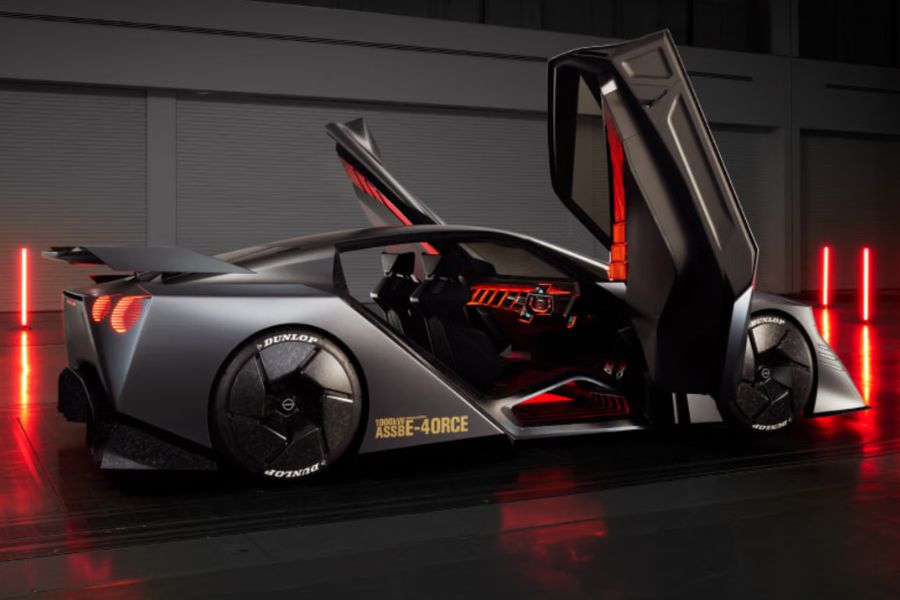
After the legendary R35 generation bowed out in 2025, Nissan is now actively working on the next chapter of its iconic performance car – the GT-R R36. The upcoming model is expected to debut before 2030, bringing with it a completely new platform and a significantly reworked powertrain.
Launch Timeline: When Will the R36 Arrive?
Nissan has indicated that the first concrete details about the next-generation GT-R could emerge around 2028. The official debut is expected to follow before the end of the decade, marking the return of one of the most celebrated performance cars globally.
All-New Platform and Engineering Overhaul
The R36 GT-R will not be a simple evolution of its predecessor. Instead, it will be built from the ground up on an entirely new architecture. This includes a redesigned chassis and major mechanical upgrades, ensuring the car remains competitive in an era of rapid technological advancement.
Nissan is aiming to retain the GT-R’s core identity while adapting it to meet modern performance and regulatory demands.
Hybrid Powertrain Likely, Full EV Ruled Out (For Now)
One of the biggest changes for the R36 will be the introduction of electrification. However, instead of going fully electric, Nissan is expected to adopt a hybrid powertrain.
This approach allows the GT-R to balance performance with efficiency while complying with increasingly strict global emission norms. A full-electric GT-R is currently unlikely, as the brand appears focused on preserving the driving character associated with the nameplate.
Iconic VR38 Engine to Continue – With Major Upgrades
The legendary VR38 twin-turbo V6 engine is expected to remain at the heart of the new GT-R, but not without significant changes.
Engineers are likely to heavily revise the internal components, including the cylinder heads, pistons and combustion process, to integrate seamlessly with hybrid technology. This ensures improved efficiency, reduced emissions and enhanced performance output.
Inspired by the Hyper Force Concept
Nissan had earlier showcased the Hyper Force concept, hinting at a more futuristic and electrified direction for the GT-R. While that concept leaned heavily towards full electrification, the production R36 is now expected to adopt a more balanced hybrid setup.
This shift reflects a broader industry trend, where manufacturers are prioritising hybrid solutions as a practical bridge between traditional combustion engines and fully electric vehicles.
Built for Global Compliance
The next-generation GT-R is being developed as a truly global model. This means it will need to comply with upcoming regulations such as Euro 7 emission standards, which are far more stringent than current norms.
The outgoing R35’s powertrain would struggle to meet these requirements, making electrification a necessity for the R36.
The Return of a Legend
The Nissan GT-R has long been known for delivering supercar-rivalling performance at a relatively accessible price point. With the R36, Nissan aims to carry forward that legacy while embracing modern technology.
By combining hybrid innovation with its iconic engineering DNA, the next GT-R could redefine what performance means in the electrified era.
If executed right, the R36 GT-R won’t just be a successor — it could be a new benchmark for hybrid performance cars.