


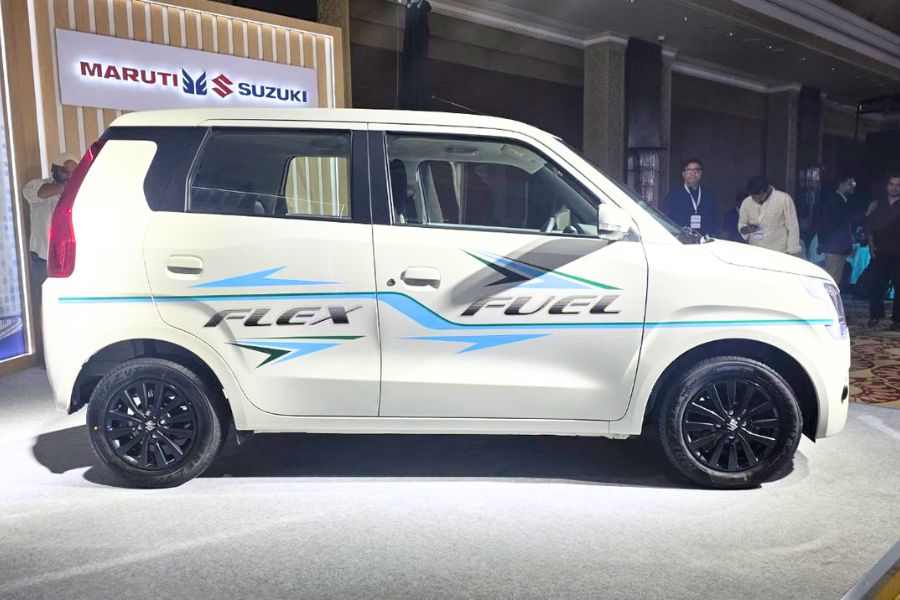
India’s automotive history just turned a new page. On the eve of World Environment Day, Maruti Suzuki launched India’s first flex-fuel passenger car — and they chose the most beloved hatchback in the country to carry that torch. Priced at Rs 7.24 lakh (ex-showroom), the Wagon R Flex Fuel supports ethanol blends ranging from E20 all the way up to E85. This isn’t just a new variant. It’s a statement about where Indian motoring is headed.
A Historic Launch on a Symbolic Day
Maruti Suzuki launched the Wagon R Flex Fuel in New Delhi on June 4, 2026, in the presence of Union Ministers Nitin Gadkari and Hardeep Singh Puri. The timing was deliberate — World Environment Day. Launching a vehicle that can run on homegrown ethanol, on that particular date, sent a clear message about the government’s intent to wean India off crude oil imports.
Maruti Suzuki chose the Wagon R specifically because it has long pioneered alternate fuel vehicles in India, including CNG and LPG. The brand legacy fits perfectly. The Wagon R has been a working-class hero for over two decades, and now it’s being asked to carry the banner for India’s clean energy ambitions too.
What Is Flex Fuel, and Why Does It Matter?
Before diving deeper, let’s be clear about what flex fuel actually means for everyday drivers.
A flex-fuel vehicle (FFV) doesn’t lock you into a single fuel type. It gives the flexibility to run on any blend of ethanol and petrol, from E20 to E100. In practice, that means you could fill up with whatever ethanol-blended fuel is available at your nearest pump — whether that’s the standard E20 blend sold widely today or a higher E85 blend if you’re near a dedicated dispensing station.
Ethanol is largely produced from sugarcane and other agricultural feedstock, which means every litre of ethanol used displaces imported crude oil. This aligns directly with the Atmanirbhar Bharat vision, reducing dependence on crude oil imports while boosting farmer income. India currently spends hundreds of billions of dollars on crude imports annually — so even a modest shift toward domestic ethanol has massive strategic value.
Under the Hood: Engine and Powertrain
Powering the Wagon R Bioflex is Maruti’s 1.2-litre four-cylinder K12N engine, paired with a 5-speed manual transmission. This is the same engine family that powers the standard Wagon R ZXi+, but it’s been meaningfully reworked for ethanol compatibility.
To accommodate higher ethanol levels, Maruti has made several changes including upgraded fuel injectors and fuel pumps, new fuel lines, a recalibrated ECU, and an ethanol sensor. That ethanol sensor is the unsung hero here — it detects the blend ratio of your fuel and automatically adjusts engine parameters to optimize combustion and performance, regardless of whether you fill up with E20 today and E85 tomorrow.
One honest caveat on fuel efficiency: Maruti has yet to reveal official mileage figures for the Wagon R Bioflex. However, based on their recent E20 vs E85 fuel mileage test with the Suzuki Gixxer SF 250, E85 fuel showed approximately 24.40 percent lower fuel efficiency than E20. Ethanol has lower energy density than petrol, which is a known trade-off. The flip side is that E85 is cheaper per litre, which partially offsets the efficiency gap — though buyers should do the math for their typical usage.
Design: Familiar Silhouette, New Identity
Visually, the Wagon R Bioflex doesn’t try to reinvent the wheel — nor should it. There are no major differences in the exterior and interior design compared to the standard version. The only visible changes on the outside include ‘Flex Fuel’ decals on the profile and a ‘Bioflex’ badge on the tailgate.
The tall-boy design remains, offering generous headroom, wide cabin visibility, and the practical appeal that has made the Wagon R a go-to choice for families and fleet operators alike. Inside, you get the fully-loaded ZXi+ treatment — which means you’re not sacrificing anything in terms of equipment to go green.
Features: ZXi+ Level, No Compromises
Since the Wagon R Bioflex is built exclusively on the top-spec ZXi+ variant, it doesn’t skimp on equipment. Expect the full suite of features from the standard ZXi+ including:
- Smartplay Studio touchscreen infotainment with Apple CarPlay and Android Auto
- Automatic climate control
- Keyless entry and push-button start
- Rear parking sensors and camera
- Dual front airbags as standard
- ABS with EBD
- Electronic Stability Programme (ESP)
- Hill Hold Assist
The commercial-sector focus for now also means this car will be evaluated on durability and cost-of-ownership — exactly where the Wagon R’s reputation is already bulletproof.
Pricing: What You Pay for Being First
| Variant | Price (Ex-showroom) |
|---|---|
| Wagon R ZXi+ 1.2 MT (Standard Petrol) | ~Rs 6.38 lakh |
| Wagon R Bioflex ZXi+ MT | Rs 7.24 lakh |
| Premium over standard ZXi+ | ~Rs 86,000 |
The Bioflex version costs Rs 86,000 more than the standard ZXi+ MT variant. Whether that premium is justified depends on where you operate and how accessible E85 fuel becomes over the next 12–24 months. For fleet operators and commercial aggregators who can source ethanol fuel at scale, the economics could work in their favour quickly.
Availability: Commercial Sector First
Here’s the reality check that private buyers need to know upfront. The Wagon R Flex Fuel is currently available for commercial use only. This is a deliberate strategy — it allows Maruti to gather real-world data, validate the powertrain across high-mileage commercial use, and build the case for a private launch once E85 fuel infrastructure becomes more widespread.
The government targets up to 5,000 E85 fuel dispensing stations by end of 2027. Once that network is in place, a private buyer launch becomes far more viable. Expect Maruti to monitor adoption closely before opening bookings to retail customers.
Pros and Cons
Pros
- Pioneer advantage: India’s first, which matters for brand visibility and fleet tenders
- Runs on domestically produced ethanol, reducing fuel import dependency
- Full ZXi+ feature set — no equipment trade-off
- Lower running costs possible with cheaper ethanol blends
- Supports the national ethanol blending programme
- Proven K12N engine platform with new ethanol-specific upgrades
Cons
- Currently limited to commercial buyers — private customers must wait
- No AMT option available at launch
- E85 fuel availability remains patchy across India
- Fuel efficiency drops noticeably on higher ethanol blends
- Rs 86,000 premium over standard ZXi+ may deter cost-sensitive fleet buyers
- No official mileage figure released yet, making TCO calculations difficult
The Bigger Picture: India’s Ethanol Ambitions
The Wagon R Bioflex launch is more than just a new car. It’s the start of an ecosystem shift. India has exempted E22, E25, E27, and E30 petrol from excise duty, making higher ethanol blends cheaper and more viable. That’s a pricing signal from the government that ethanol’s role in India’s fuel mix will only grow.
Maruti Suzuki becomes the first carmaker to put a flex fuel vehicle into production in India, although Toyota and Tata Motors have previously showcased flex fuel vehicles at motor shows and policy events. The difference is Maruti has actually priced it, built it in production volume, and handed it to fleet operators — which is where adoption has to begin.
Industry experts believe flex-fuel vehicles may take another five to ten years before becoming truly mainstream in India. But every mass-market technology starts somewhere. The CNG ecosystem in India was once patchy and limited — today it powers millions of cars and three-wheelers seamlessly. Ethanol could follow a similar trajectory.
Should You Wait for the Private Launch?
If you’re a fleet operator or a commercial aggregator evaluating your next batch of vehicles, the Wagon R Bioflex deserves serious consideration — particularly if your depot or route corridor is near existing or planned E85 dispensing points.
For private buyers, patience is the right move. Watch how the infrastructure rolls out over 2026–2027, track real-world mileage reports from commercial operators, and wait for Maruti to officially open the Bioflex to retail. The technology is sound, the brand is trusted, and the pricing isn’t outrageous for what’s on offer.
The Wagon R Bioflex is not just a product — it’s a policy vehicle in motion. And Maruti is betting that India’s fuel landscape looks very different by 2028.
Frequently Asked Questions (FAQs)
1. What is the price of the Maruti Wagon R Flex Fuel (Bioflex)?
The Wagon R Bioflex is priced at Rs 7.24 lakh, ex-showroom. This represents a premium of approximately Rs 86,000 over the standard Wagon R ZXi+ MT variant.
2. What fuel blends can the Wagon R Bioflex run on?
The Wagon R Bioflex is engineered to run on ethanol-petrol blends ranging from E20 (20% ethanol) to E85 (85% ethanol). The engine is E100-compatible by design, though it is homologated for E85 at launch.
3. Is the Wagon R Flex Fuel available for private buyers?
Not yet. At launch, Maruti has restricted sales to the commercial sector only. A private-buyer launch is expected once E85 fuel infrastructure becomes sufficiently widespread across India.
4. Will the Wagon R Bioflex give lower mileage than the standard Wagon R?
Ethanol has lower energy density than petrol, so fuel consumption (in litres or kg) will be higher on E85 blends. However, since E85 is priced lower per litre than petrol, the cost per kilometre may not increase proportionally. Maruti has not officially released mileage figures for the Bioflex yet.
5. What are the mechanical changes in the Wagon R Bioflex versus the standard model?
Maruti has made targeted engineering upgrades including upgraded fuel injectors, new fuel pumps, ethanol-compatible fuel lines, a recalibrated ECU, and an ethanol sensor that automatically detects fuel blend ratios and adjusts engine parameters accordingly.
6. Does the Wagon R Bioflex come with an automatic gearbox option?
No. At launch, the Wagon R Bioflex is only available with a 5-speed manual transmission. There is no AMT option currently.
7. How does this compare to a CNG Wagon R for fleet operators?
Both options reduce petrol dependence and offer lower running costs. CNG has a more mature dispensing infrastructure today, while E85 is still being scaled. However, the Bioflex doesn’t require a secondary tank and offers greater fuel flexibility. Fleet buyers should compare TCO based on fuel availability in their specific operational zones.
Conclusion
The Maruti Wagon R Bioflex is one of those launches that will look bigger in hindsight than it does today. Priced at Rs 7.24 lakh and positioned initially for commercial buyers, it’s a carefully calibrated first step rather than a mass-market flood. But that’s exactly how transformative technologies get adopted — quietly, methodically, one use case at a time.
Maruti has built India’s most trusted, most-sold hatchback and asked it to carry a new national mission on its modest shoulders. Given the Wagon R’s history of delivering on practical promises, that’s not a bad bet at all.
Read Also: