


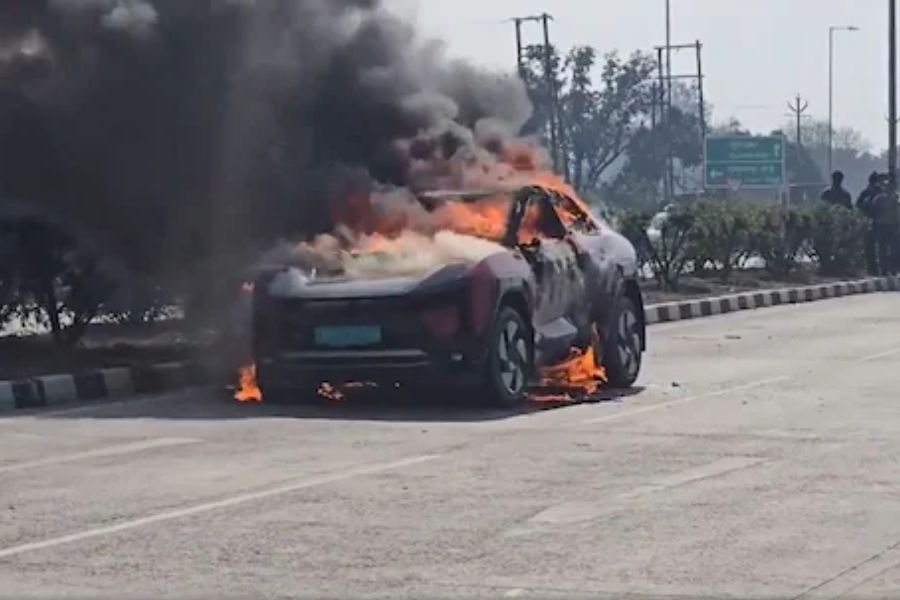
Mahindra & Mahindra has issued a comprehensive statement following a fire incident involving its electric SUV, the BE 6, which occurred near Gulaothi in Uttar Pradesh. The dramatic incident, captured on video by onlookers, has prompted the automaker to conduct a thorough investigation and share its findings with the public.
All Occupants Safe Following Highway Fire
In a relief to concerned customers and stakeholders, Mahindra confirmed that all occupants of the vehicle escaped safely without injuries. The red BE 6 was seen engulfed in flames on what appears to be a highway, drawing immediate attention on social media platforms.
Investigation Findings: What Caused the Fire?
Deflated Tyre Identified as Primary Cause
According to Mahindra’s official investigation report, a deflated rear right tyre was the root cause of the incident. The company’s analysis revealed a sequence of events that led to the fire:
Timeline of Events:
- Initial Tyre Deflation: The rear right tyre suffered a puncture or loss of pressure
- Multiple Safety Alerts Issued: The vehicle’s onboard systems generated repeated warnings about the deflated tyre
- Temperature Warnings: High tyre temperature alerts were displayed to the driver
- Continued Operation: Despite warnings, the SUV was driven for approximately 10 minutes
- High-Speed Travel: The vehicle reached speeds of up to 60 km/h during this period
Safety Systems Activated as Designed
Mahindra emphasized that the BE 6’s built-in safety mechanisms functioned exactly as intended:
- Electronic Stability Control (ESC): Engaged multiple times to manage vehicle dynamics
- Traction Control System (TCS): Activated repeatedly to limit wheel spin caused by the deflated tyre
- Speed Limiting Protocol: Electronic speed restriction was automatically implemented
- Drive System Shutdown: The powertrain was completely deactivated as a safety precaution
- Vehicle Immobilization: The BE 6 was brought to a controlled stop
Fire Origin and Spread
Friction-Generated Heat
Mahindra’s technical team, after examining video footage and vehicle data, determined that the fire originated from the deflated rear right tyre. The investigation concluded that:
- Extreme friction between the flat tyre and road surface generated excessive heat
- Continuous operation in this compromised state intensified thermal buildup
- The accumulated heat eventually ignited combustible materials in the wheel assembly
Critical Finding: Battery Pack Remains Intact
High-Voltage System Unaffected
In a significant finding that addresses concerns about electric vehicle battery safety, Mahindra stated:
“Despite intense thermal stress originating from an external source, the high-voltage battery remains unharmed and fully functional.”
Battery System Status:
- All battery health parameters within normal specifications
- Individual cell voltages stable and within acceptable limits
- No compromise to the battery pack’s structural integrity
- Electric motor remains undamaged and operational
This confirms that the fire was not related to the vehicle’s electric powertrain or lithium-ion battery pack—a crucial distinction for the EV industry.
Context: EV Fire Incidents in India
This incident follows previous electric vehicle fire cases in India, including a notable Tata Nexon EV fire near Mumbai in June 2022. Each incident underscores the importance of:
- Prompt response to vehicle warning systems
- Understanding the unique safety considerations of EVs
- Proper vehicle maintenance and tyre monitoring
About the Mahindra BE 6
The BE 6 is Mahindra’s entry into the electric midsize SUV segment, offered with two battery configurations:
Battery Options:
- 59 kWh battery pack
- 79 kWh battery pack
Driving Range:
- 556 km to 683 km (depending on variant)
Pricing: ₹19.65 lakh to ₹27.65 lakh (ex-showroom)
Key Specifications:
- Length: 4,371 mm
- Disc brakes (front and rear)
- Multiple variants including Pack One, Pack Two, and Pack Three options
Safety Lessons and Takeaways
Importance of Heeding Vehicle Warnings
This incident highlights critical safety practices for all vehicle owners:
- Never Ignore Warning Lights: Tyre pressure and temperature alerts require immediate attention
- Stop Immediately: Pull over safely when critical warnings appear
- Assess the Situation: Check tyre condition before continuing travel
- Seek Assistance: Call for roadside support rather than continuing with a deflated tyre
EV-Specific Considerations
While this fire was not battery-related, it demonstrates that:
- Modern EVs have sophisticated safety systems designed to protect occupants
- Battery pack protection mechanisms can withstand external thermal stress
- Vehicle warnings serve as early intervention points to prevent escalation
Industry Implications
The transparent investigation and detailed explanation from Mahindra sets a precedent for how automakers should handle such incidents:
- Rapid Response: Swift investigation and public communication
- Technical Transparency: Sharing detailed findings with customers
- System Validation: Confirmation that safety features performed as designed
- Root Cause Identification: Clear explanation separating battery concerns from mechanical issues
Moving Forward
Mahindra’s statement reinforces that while electric vehicles incorporate advanced safety systems, driver response to vehicle warnings remains paramount. The BE 6’s safety architecture prevented a potentially more serious situation, though the incident serves as a reminder that no warning system can substitute for appropriate driver action.
For Mahindra BE 6 owners and prospective buyers, this incident—while unfortunate—demonstrates the robustness of the vehicle’s safety systems and the structural integrity of its battery architecture under extreme external stress conditions.