


When we study car sales in India, attention usually gravitates toward the top 10 bestsellers. These charts help decode buyer preferences, fuel choices, and shifting body-style trends. However, the other end of the spectrum – the lowest-selling cars – can be equally revealing, highlighting brand perception issues, pricing mismatches, ageing products, or niche positioning.
Based on SIAM wholesale data for calendar year 2025 (January–December), here’s a brand-wise look at the least-selling model from 14 mass-market manufacturers. This list includes petrol, diesel and electric vehicles that remained on sale through the year. Limited-run or sold-out allocation models have been excluded.
For context, the top 10 best-selling cars of 2025 averaged close to 1.9 lakh units each.
14. Nissan – Magnite
Sales: 22,493 units
With the discontinuation of the X-Trail during the second half of 2025, Nissan effectively became a one-model brand in India. As a result, the Magnite ended the year as both Nissan’s best-selling and lowest-selling car.
Despite its strengths—attractive pricing, solid interiors, and a capable turbo-petrol engine—the Magnite lagged far behind segment leaders like the Tata Punch, Maruti Brezza and Tata Nexon, each of which crossed 1.7 lakh units. Nissan is banking on upcoming products such as the Gravite and Tekton to rebuild brand traction and indirectly boost Magnite sales.
13. Tata Motors – Tigor / Tigor EV
Combined sales: 12,859 units
Tata’s only sedans—the Tigor and its electric sibling—ended 2025 as the brand’s slowest movers. Both models are showing their age, with the ICE version nearing a decade on sale and the EV approaching seven years.
Strong rivals like the Maruti Dzire and Honda Amaze, combined with Tata’s own SUV-heavy lineup (Punch and Nexon), have steadily chipped away at Tigor demand. With compact sedans still proving relevant, a next-generation update could be key to reviving this duo.
12. Honda – City
Sales: 8,135 units
Once the gold standard of midsize sedans in India, the Honda City has struggled to keep pace with newer rivals such as the Verna, Virtus and Slavia. In 2025, it not only ranked as Honda’s lowest-selling model but also sat at the bottom of its segment.
Missing features, the absence of a turbo-petrol engine, and higher NVH levels compared to rivals have hurt its appeal. That said, its reliability and naturally aspirated i-VTEC engine remain strong talking points, and the upcoming facelift could address key gaps.
11. Renault – Kwid
Sales: 5,500 units
The Kwid completed a decade in India in 2025, making it one of the longest-running mass-market cars on sale. However, limited updates and a broader slump in the entry-level segment weighed heavily on its volumes.
Recent GST changes revived interest in budget hatchbacks, benefiting rivals like the Alto K10 and S-Presso. A full generational upgrade may be necessary if Renault wants the Kwid to regain relevance.
10. Maruti Suzuki – Invicto
Sales: 3,946 units
Maruti Suzuki’s attempt at cracking the Rs 20 lakh-plus segment continues to be challenging. Despite being mechanically identical to the Toyota Innova Hycross, the Invicto hasn’t matched its sibling’s success.
The reason is simple: brand perception. Buyers spending upwards of Rs 25 lakh still gravitate towards Toyota, highlighting the difficulty Maruti faces in the premium space.
9. Mahindra – XUV400
Sales: 2,823 units
Mahindra’s first EV struggled against newer, more advanced competitors. Built on an ageing platform and facing stiff competition from the Tata Nexon EV, the XUV400 was always on the back foot.
With the launch of the XUV 3XO EV in 2026, the XUV400 is expected to be phased out soon.
8. Skoda – Kodiaq
Sales: 1,477 units
The second-generation Kodiaq arrived in 2025 with a steep price hike, starting close to Rs 47 lakh. While it excels in quality, comfort and performance, the lack of diesel or hybrid options limited its appeal.
Skoda attempted to widen the net with a more affordable 5-seat variant later in the year, and a performance-focused RS version is due in 2026.
7. Toyota – Land Cruiser
Sales: 558 units
As Toyota’s flagship and one of India’s most expensive SUVs, the Land Cruiser’s low volumes are expected. Considering its fully imported status and heavy taxation, selling over 500 units in a year is actually commendable.
6. MG – Gloster
Sales: 422 units
Despite offering 4WD, a twin-turbo diesel engine and a feature-rich cabin, the Gloster struggled against the overwhelmingly popular Toyota Fortuner.
MG plans to replace it with the heavily updated Majestor, hoping for better fortunes.
5. Volkswagen – Tiguan
Sales: 339 units
The latest Tiguan launched only in a sporty R-Line trim at nearly Rs 49 lakh. Limited variants, missing luxury features and an underwhelming driving character for the price led to weak demand, forcing Volkswagen to offer early discounts.
4. Hyundai – Ioniq 5
Sales: 234 units
After a strong start and multiple awards, the Ioniq 5 saw a sharp slowdown in 2025. Increasing competition from luxury EVs and its crossover-like design diluted its appeal, though it remains one of the most well-rounded EVs on sale.
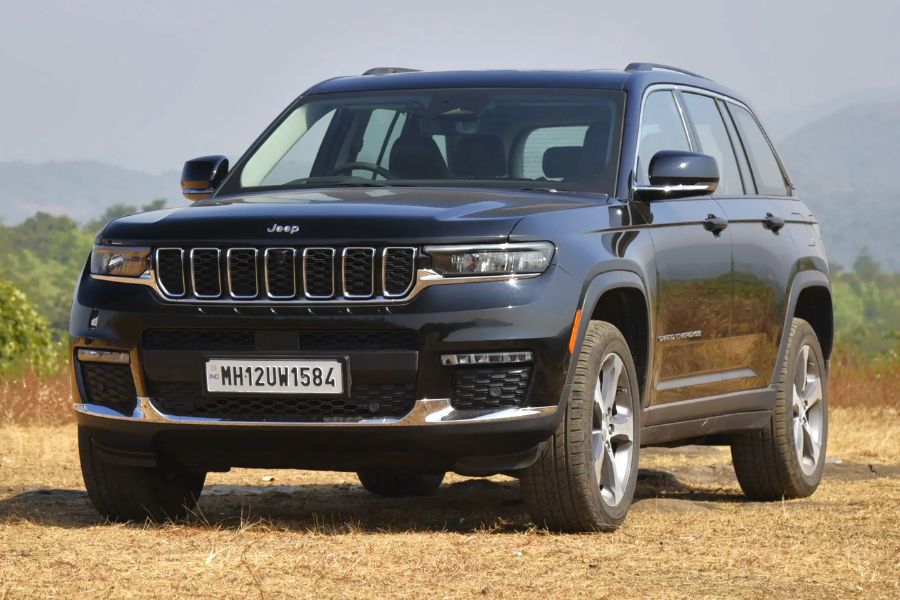
3. Jeep – Grand Cherokee
Sales: 92 units
Priced close to the Wrangler, the Grand Cherokee offers better on-road comfort but lacks a diesel engine and seven-seat layout—key expectations in this segment. Jeep’s limited network further hampers sales.
2. Kia – EV9
Sales: 20 units
Sold as a CBU at around Rs 1.3 crore, the EV9 suffered from low awareness and tough competition from more prestigious luxury EVs. Its strengths lie in comfort, technology and performance, but price perception proved decisive.
1. Citroen – C5 Aircross
Sales: 5 units
Citroen’s India debut model struggled immensely. High pricing, missing features, and low brand recognition made it a tough sell. Despite excellent ride quality and a strong diesel engine, the C5 Aircross found very few takers.
Final Thoughts
The lowest-selling cars of 2025 underline a clear message: pricing, brand perception, powertrain choice and timely updates matter as much as product quality. Even competent cars can fail if they miss the mark on market expectations.
All prices mentioned are ex-showroom, India.