


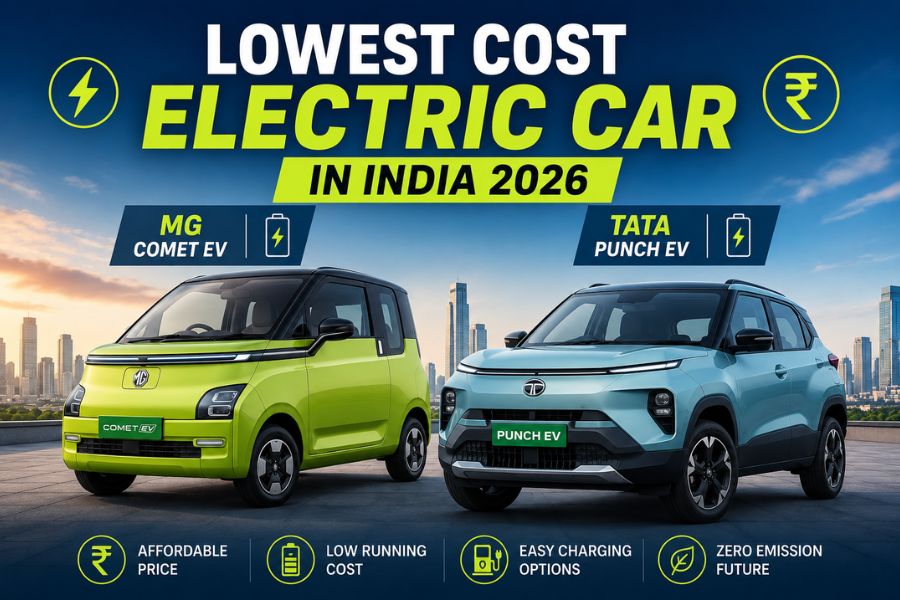
The Indian EV landscape has changed dramatically. In 2026, buying an electric car no longer means emptying your savings account — in fact, you can now drive home a brand-new electric vehicle for less than the price of a mid-range smartphone setup. From solar-powered city cars to feature-loaded micro-SUVs, the budget EV segment is officially having its moment.
This guide breaks down the lowest cost electric cars available in India in May 2026, including real prices (with and without BaaS), honest range figures, and who each car is truly best suited for. If you’ve been on the fence about going electric, this might be the article that changes your mind.
What Is BaaS — And Why Does It Matter in 2026?
Before diving into the list, you need to understand Battery-as-a-Service (BaaS) — the pricing model that has genuinely disrupted India’s EV market this year.
Under BaaS, you buy the car without the battery pack, slashing the upfront cost by 25–40%. You then pay a per-kilometre fee for battery usage (typically ₹2–₹3.5/km). It’s ideal for buyers who want a lower EMI and drive moderate distances daily. For high-mileage users, sticking with the full-price purchase may prove more economical over time.
Keep this in mind as we go through the list, because BaaS pricing has completely reshuffled who can afford what in 2026.
1. Vayve Mobility Eva — Starting at ₹3.25 Lakh (BaaS)
The headline-grabber of 2026.
India’s first solar-assisted electric car, the Vayve Eva, is the cheapest electric vehicle you can buy in India right now. Priced from ₹3.25 lakh (BaaS) to ₹4.49 lakh (BaaS) across three variants — Nova, Stella, and Vega — it marks a genuinely revolutionary entry point into electric mobility.
The Eva is a compact 3-seater quadricycle (2 adults + 1 child) designed purely for urban use. Its standout feature? A solar roof panel that adds up to 10 km of additional range per day and approximately 3,000 km annually — a first-of-its-kind for Indian roads.
Key Specifications:
- Battery options: 9 kWh / 12.6 kWh / 18 kWh (IP68-rated)
- Claimed range: 125 km (Nova) to 250 km (Vega)
- Top speed: 70 km/h
- Charging: AC 15A socket (80% in 4 hours) + DC fast charge (80% in 45 minutes)
- Running cost: As low as ₹0.50 per km
- Full price (without BaaS): ₹3.99 lakh to ₹5.99 lakh
Features punch well above the price tag: dual digital displays, Android Auto and Apple CarPlay, a 6-way powered driver seat, auto AC, TPMS, reverse parking camera, and a dashcam. The BaaS rental is pegged at ₹2/km with a minimum monthly commitment depending on the variant.
Who should buy it? Solo city commuters, students, and households looking for a second or third vehicle purely for within-city errands. The Eva is not suited for highways or intercity travel given its 70 km/h speed cap and compact cabin.
Note: Deliveries are confirmed to begin in the latter half of 2026. Early bookings are open.
Curious how the Vayve Eva fits into India’s growing small EV market? Read our full breakdown: Every Electric Car in India Under ₹15 Lakh (2026) – Prices, Range, Battery and Features — all current options compared in one place.
2. MG Comet EV — Starting at ₹4.99 Lakh (BaaS)
The compact city car that started the affordable EV conversation.
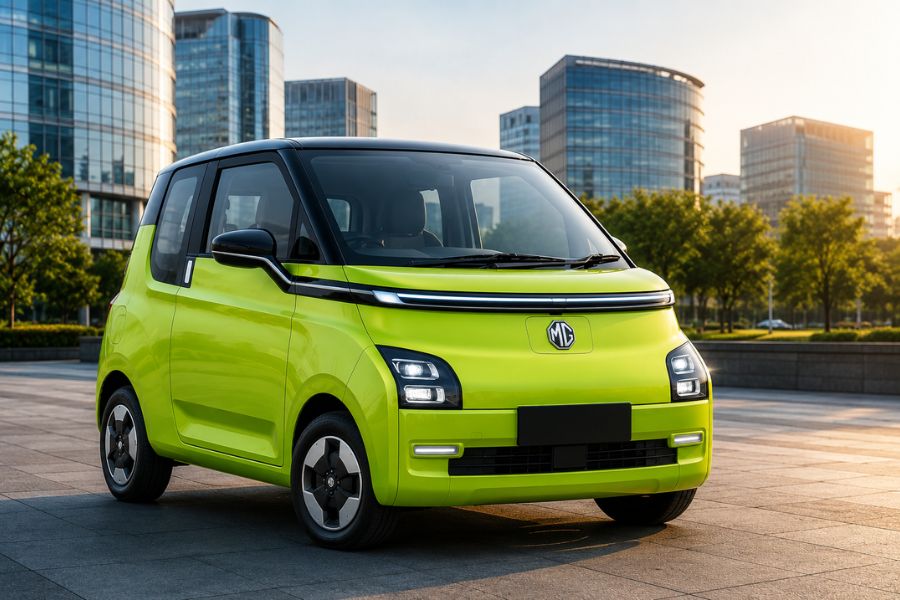
The MG Comet EV has been one of the most discussed budget EVs since its debut, and in 2026 it remains a strong contender. With BaaS pricing starting at ₹4.99 lakh (ex-showroom) plus ₹3.2/km battery rental, and the standard price ranging from ₹7.50 lakh to ₹10 lakh, the Comet occupies a useful sweet spot in the market.
Its unapologetically boxy design is actually a masterstroke of city engineering — the cube shape maximises interior space on a footprint under 3 metres in length. A 4.2-metre turning radius makes it almost impossible to get stuck in an urban parking situation, and the two-door layout adds a distinct character rarely seen in Indian cars.
Key Specifications:
- Battery: 17.3 kWh (17.4 kWh on fast-charge variants)
- Motor: 42 hp, rear-axle-mounted
- Claimed range: 230 km
- Seating: 4
- Ground clearance: 165 mm
The cabin delivers a surprisingly premium experience with digital displays, infotainment, and connected features. Fast-charge variants (FC) can deliver a useful range top-up during short stops, adding to everyday practicality.
Who should buy it? Urban professionals, young buyers, and anyone who wants a proper 4-seater at a sub-₹5 lakh entry price point. MG’s expanding service network also gives it a reliability edge over newer market entrants.
Want to know exactly how the Comet performs in real-world conditions? Read: Top Speed of MG Comet EV: How Fast Can It Go? — a detailed look at its performance figures and what they mean for daily driving.
3. Tata Punch EV (Facelift 2026) — Starting at ₹6.49 Lakh (BaaS)
The most well-rounded budget EV in India, period.
Launched in February 2026, the Tata Punch EV facelift is arguably the biggest value story in Indian EVs this year. With BaaS starting at ₹6.49 lakh (ex-showroom) and the standard price from ₹9.69 lakh, it is now more accessible than ever — and the upgrades are substantial.
The headline update is the 40 kWh battery option, delivering an ARAI-certified range of 468 km with a real-world C75 range of 355 km. Pair that with 20–80% DC fast charging in just 26 minutes and a lifetime battery warranty (15 years, unlimited km for first owners) on the 40 kWh pack, and you have a proposition that was unthinkable in this segment two years ago.
Key Specifications:
- Battery options: 30 kWh (ARAI: 365 km) and 40 kWh (ARAI: 468 km)
- Peak output: 129 hp (40 kWh variant)
- 0–100 km/h: Under 9 seconds
- Boot space: 366 litres
- Ground clearance: 195 mm
- BaaS rental: ₹2.6/km
Safety has always been a Tata strength — the Punch EV carries a 5-star Bharat NCAP rating, and all variants from the base Smart trim onwards come with 6 airbags as standard. For families making their first EV purchase, that matters enormously.
Who should buy it? First-time EV buyers, young families, and anyone who needs intercity range without sacrificing city practicality. The Punch EV is our top all-round pick in India’s budget EV segment for 2026.
Not sure which Punch EV variant is right for you? We’ve done the analysis: 2026 Tata Punch EV: Which Variant Is the Best Buy? — a clear, variant-by-variant breakdown with honest recommendations on where to spend and where to save.
4. Tata Tiago EV — Starting at ₹7.99 Lakh
Still the most popular no-fuss budget electric hatchback.
The Tata Tiago EV may face tougher competition following the Punch EV’s facelift, but it remains India’s most accessible four-door electric hatchback with a conventional purchase model. At ₹7.99 lakh (ex-showroom) for the base variant, it delivers a proven, reliable EV experience without any subscription complexity.
The Tiago EV draws on Tata’s extensive nationwide service network — a significant advantage in tier-2 and tier-3 cities where EV infrastructure is still developing. Its 24 kWh battery option covers daily commutes comfortably, and the 2025 update brought a larger 10.25-inch infotainment screen across select variants.
Who should buy it? Budget-conscious buyers who prefer a straightforward purchase, favour a conventional hatchback form factor, and value the security of Tata’s established dealership network.
See exactly what changed in the latest Tiago EV update: 2025 Tata Tiago and Tiago EV Get Feature Upgrades, Larger Infotainment Screens — a detailed breakdown of every new addition across variants.
5. Citroen eC3 — Starting at ₹11.50 Lakh
The comfort specialist in the budget EV space.
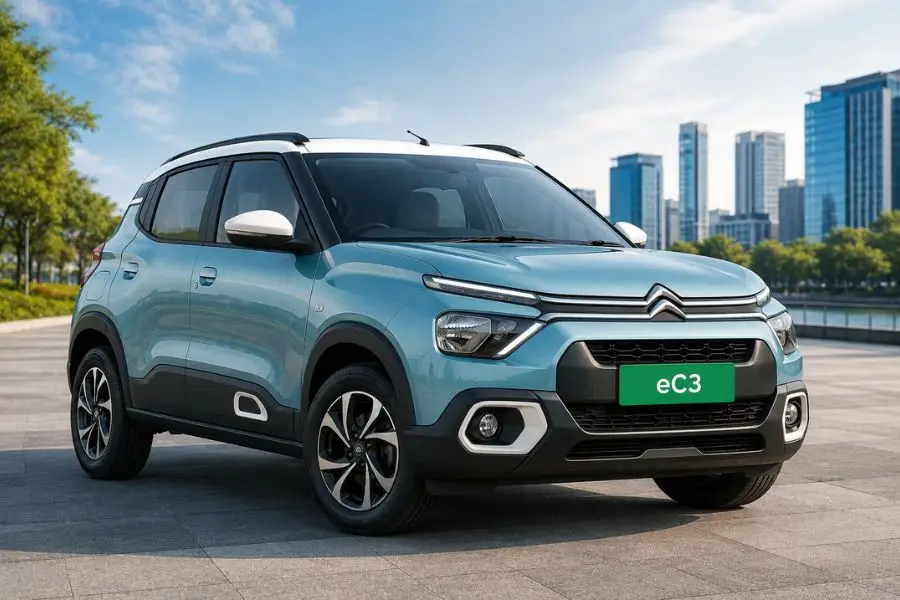
Slightly above the ultra-budget range but well worth a mention, the Citroen eC3 brings French engineering sensibility to Indian roads — most notably its “Advanced Comfort” suspension, which handles potholes and broken roads better than almost any rival in this segment. Its 29.2 kWh battery delivers a claimed range of 246 km, and the roomy rear seat is a notable advantage over smaller city EVs.
Who should buy it? Buyers who prioritise ride comfort and rear-seat space over the absolute lowest price, and who find themselves on rougher urban roads daily.
Budget EV Quick Comparison (May 2026)
| Car | BaaS Price | Full Price | Claimed Range | Best For |
|---|---|---|---|---|
| Vayve Eva | ₹3.25 lakh | ₹3.99 lakh | 125–250 km | Solo city commuters |
| MG Comet EV | ₹4.99 lakh | ₹7.50 lakh | 230 km | 4-seater city use |
| Tata Punch EV | ₹6.49 lakh | ₹9.69 lakh | 355–468 km | Families, all-round use |
| Tata Tiago EV | N/A | ₹7.99 lakh | 223–293 km | No-BaaS budget buyers |
| Citroen eC3 | N/A | ₹11.50 lakh | 246 km | Comfort-first buyers |
5 Things to Check Before Buying a Budget EV in India
1. Real-World Range vs ARAI Claims ARAI-certified figures are consistently higher than what you’ll see in daily Indian driving. A realistic estimate is 70–75% of the official number, accounting for traffic, air conditioning use, and varying road conditions.
2. BaaS vs Full Purchase — Run the Numbers If you drive under 1,500 km per month, BaaS typically works in your favour financially. Above that threshold, the full-price purchase generally becomes more economical over a 3-year ownership period.
3. Home Charging Setup Before committing to any EV, assess your electricity connection. Most budget EVs support a standard 15A socket, but a 7.2 kW wall box dramatically improves convenience. Budget ₹15,000–₹25,000 for installation.
4. Charging Infrastructure in Your City Metro cities are well-covered, but charging density drops sharply beyond major urban centres. Check Tata’s Zcharge network and MG’s charging station locator before finalising your purchase.
5. After-Sales Support and Resale Value Tata EVs currently hold the strongest resale values in India’s used electric car market. A car backed by a weak service network can cost more in the long run regardless of its showroom price.
Planning your first EV purchase but worried about what’s launching soon? Read Upcoming Electric Cars in India in 2026: Expected Launches, Prices and Key Details before you sign — so you know exactly what’s around the corner and can buy with full confidence.
Final Verdict: Which Budget EV Should You Buy in May 2026?
- Absolute lowest price: Vayve Eva at ₹3.25 lakh — genuinely exciting, but confirm deliveries and service availability in your city before booking.
- Best city 4-seater today: MG Comet EV at ₹4.99 lakh (BaaS) — proven, practical, and available to buy right now.
- Best overall value: Tata Punch EV Facelift at ₹6.49 lakh (BaaS) — the smartest spend if you can stretch the budget slightly.
- No-BaaS, no-fuss pick: Tata Tiago EV at ₹7.99 lakh — clean, simple, and backed by India’s most trusted EV service network.
The era of affordable electric cars in India is not on the horizon. It has already arrived.
For more EV buying guides, variant-wise analysis, and the latest price updates across all segments, visit CarQuestIndia.com — India’s trusted automotive resource.