


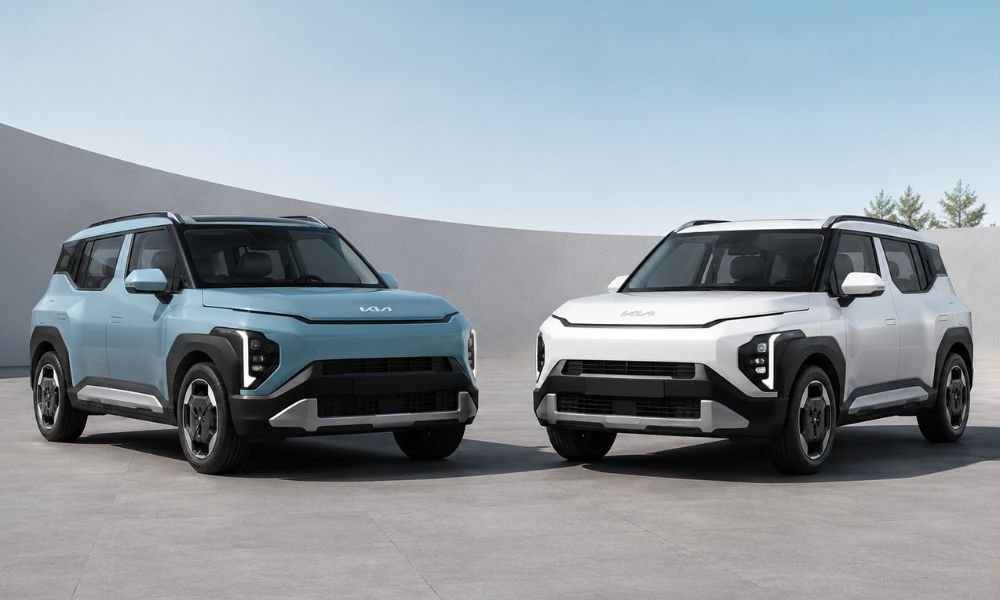
Kia’s electric foray into the sub-4-metre SUV space has landed, and the Syros EV is already stirring up serious interest among first-time EV buyers in India. But with seven variants on the price list, picking the right one isn’t straightforward. Two trims in particular sit right in the sweet spot of the lineup — the HTK Plus and the HTX — and the choice between them often comes down to one question: is the extra feature list worth the additional lakh you’ll pay? Let’s break it down.
Key Highlights
- Both HTK Plus and HTX are offered exclusively with the smaller 42kWh battery pack
- Single electric motor produces 135PS and 255Nm across both trims
- Claimed range stands at approximately 443km on this battery option
- HTX is the first variant in the lineup to get the panoramic sunroof
- Price gap between the two trims is roughly ₹1 lakh (ex-showroom)
- HTX brings a noticeably more premium cabin feel without pushing buyers into the pricier Extended Range trims
Kia Syros EV: A Quick Recap
The Syros EV carries over the boxy, upright stance of its ICE sibling, giving it a distinct road presence in a segment dominated by rounded crossover silhouettes. Kia has kept the design language identical between the petrol/diesel and electric versions, right down to the body-coloured B-pillar and L-shaped tail lamps. The EV is spread across seven trims split between two battery packs — a 42kWh unit for the lower three variants and a 51.4kWh Extended Range pack for the top four. Rivals in this space include the Tata Nexon EV, Mahindra XUV 3XO EV, MG Windsor EV, and the VinFast VF6.
HTK Plus Vs HTX: Variant-Wise Comparison
Both trims share the same 42kWh battery and motor combination, so performance and range are identical. The difference lies almost entirely in equipment and cabin experience.
| Aspect | HTK Plus | HTX |
|---|---|---|
| Battery pack | 42 kWh | 42 kWh |
| Power/Torque | 135PS / 255Nm | 135PS / 255Nm |
| Claimed range | ~443 km | ~443 km |
| Sunroof | Not offered | Panoramic sunroof |
| Touchscreen setup | 12.3-inch triple-display layout | 12.3-inch triple-display layout |
| Steering wheel | Two-spoke, integrated controls | Two-spoke, integrated controls |
| Cabin theme | Standard dual-tone upholstery | More premium convenience touches |
| Approx. ex-showroom price | ₹14.99 lakh | ₹15.99 lakh |
What The HTK Plus Gets You
The HTK Plus is positioned as a modest step above the base HTK, adding everyday convenience without dramatically altering the ownership experience. You still get Kia’s signature light elements, a fully digital instrument cluster, wireless Android Auto and Apple CarPlay, and a well-finished cabin that doesn’t feel like an entry-level offering. For buyers who primarily want an EV for city commuting and don’t care much about frills like a sunroof, this variant covers the essentials competently.
Why The HTX Justifies The Jump
The HTX is where the Syros EV genuinely starts feeling like a well-equipped modern SUV rather than a value-focused EV. The headline addition is the panoramic sunroof — a feature increasingly non-negotiable for Indian buyers, and one that HTK Plus simply doesn’t offer at any price. Beyond that, the HTX rounds off the 42kWh lineup with additional convenience touches that make daily use more pleasant, positioning it as the last stop before buyers move into pricier Extended Range territory.
Pros And Cons
HTK Plus
- Pros: Lower entry price, still feature-rich for daily use, same performance as HTX
- Cons: No sunroof, feels like a stepping-stone rather than a final destination trim
HTX
- Pros: Panoramic sunroof, more premium cabin feel, strong value-for-money before Extended Range pricing kicks in
- Cons: ~₹1 lakh costlier, still capped at 42kWh range (no bigger battery option at this trim)
Our Take: Which Should You Buy?
If budget is the primary constraint and you’re comfortable skipping the sunroof, the HTK Plus does the job without feeling stripped down. However, for most buyers, the HTX represents the smarter long-term pick. The relatively small price difference buys a meaningfully more premium ownership experience, and a sunroof is the kind of feature that’s hard to retrofit later or live without once you’ve experienced it. Unless the extra lakh genuinely breaks your budget, the HTX is the variant we’d recommend targeting.
Frequently Asked Questions (FAQs)
Q1. What is the main difference between the HTK Plus and HTX variants of the Kia Syros EV?
The biggest difference is the panoramic sunroof, which is available only from the HTX variant onwards. Both trims share the same 42kWh battery and motor setup.
Q2. Is there a range difference between HTK Plus and HTX?
No. Both use the identical 42kWh battery pack and motor, so the claimed range of approximately 443km remains the same across both variants.
Q3. Can I get the bigger 51.4kWh battery in the HTK Plus or HTX?
Yes, but under a different name. Kia offers Extended Range versions of these trims (HTK Plus ER and HTX ER) with the larger 51.4kWh pack, priced higher than their standard 42kWh counterparts.
Q4. Is the HTX worth the extra money over HTK Plus?
For most buyers, yes. The sunroof alone is a strong reason to consider the HTX, and the more premium cabin feel adds further justification for the price difference.
Q5. Who are the main rivals to the Kia Syros EV?
The Syros EV competes primarily with the Tata Nexon EV, Mahindra XUV 3XO EV, MG Windsor EV, and the VinFast VF6.
Q6. Does either variant get Level 2 ADAS?
ADAS availability varies by trim across the Syros EV lineup, with certain safety features reserved for higher trims. Buyers specifically prioritising ADAS should check the exact safety spec sheet for their preferred variant before booking.
Conclusion
The Kia Syros EV’s HTK Plus and HTX trims cater to slightly different buyer mindsets — one prioritises value, the other prioritises comfort and premium feel. Given that the powertrain and range are identical across both, the decision essentially boils down to whether a panoramic sunroof and a more upmarket cabin are worth roughly ₹1 lakh to you. For most Indian buyers stepping into their first EV, we’d lean toward the HTX as the more satisfying long-term choice.
Read More: