


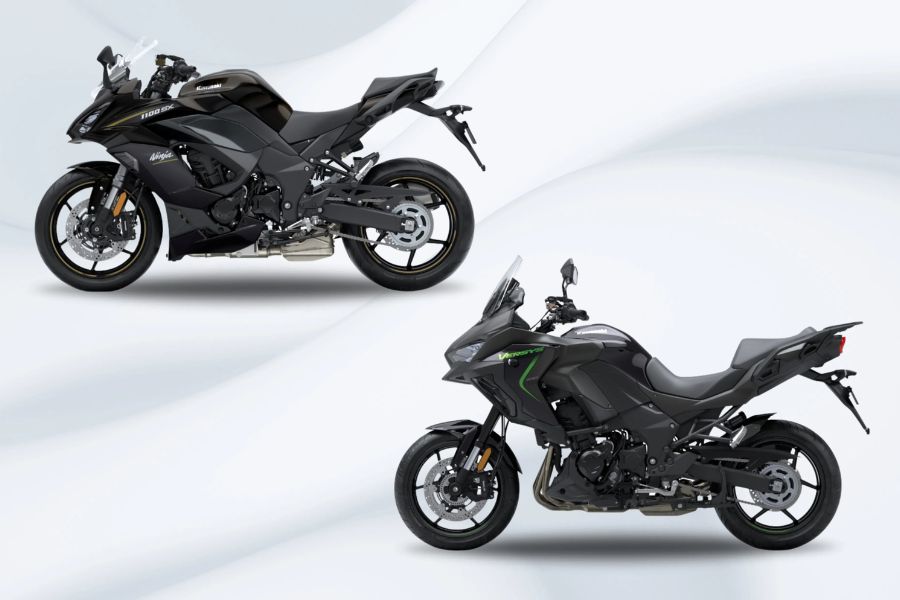
Kawasaki offers two very different interpretations of litre-class touring with the Kawasaki Ninja 1100SX and the Kawasaki Versys 1100. While both motorcycles share a similar engine platform and are built for long-distance riding, their personalities and purposes differ significantly.
The Ninja 1100SX is a sport-tourer focused on performance and road dynamics, whereas the Versys 1100 is designed as a comfortable, upright adventure-style tourer suited for varied road conditions.
Here’s a detailed breakdown of how the two Kawasaki 1100 models compare in terms of design, chassis, features and price.
Design and Ergonomics

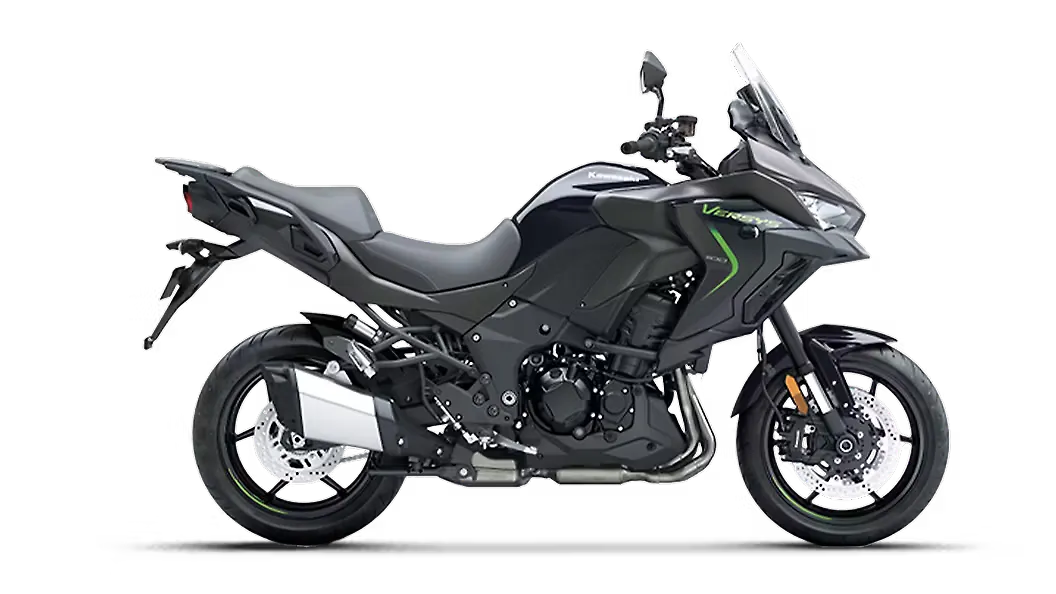
The Versys 1100, on the other hand, focuses more on practicality and comfort. Its design is taller and more rugged, with a large windscreen, wide handlebar and upright ergonomics. This layout places the rider in a relaxed seating position that is ideal for long journeys and daily usability.
In short:
-
Ninja 1100SX: Sporty design with slightly forward-leaning ergonomics
-
Versys 1100: Tall stance and upright riding posture for comfort
Chassis, Suspension and Weight
Although both motorcycles are built around a twin-spar aluminium frame, there are important differences in their chassis setup.
The Versys 1100 is the heavier motorcycle, weighing 257 kg, which is about 22 kg more than the Ninja. Its larger build is partly due to a sturdier rear subframe and a bigger one-piece touring seat designed for long-distance comfort.
The Versys also benefits from:
-
Longer-travel suspension
-
Higher ground clearance
-
Larger 310 mm front brake discs
These elements make it better suited for uneven roads and long-distance touring.
The Ninja 1100SX, in contrast, is lighter and more road-focused, making it easier to handle during spirited riding and highway cornering.
Another difference lies in fuel capacity. The Versys carries 21 litres of fuel, which is 2 litres more than the Ninja, helping it achieve better touring range.
Features and Technology
When it comes to technology, the Ninja 1100SX offers a more advanced electronics package.
The Ninja features a 4.3-inch colour TFT display, giving it a modern cockpit feel along with better readability and connectivity features.
Key features on the Ninja 1100SX include:
-
Colour TFT instrument cluster
-
Bidirectional quickshifter (standard)
-
Four riding modes
-
Comprehensive electronic rider aids
The Versys 1100, by comparison, uses a simpler semi-digital instrument cluster with analogue elements.
While both motorcycles share several electronic safety aids, the Versys misses out on some advanced equipment.
Key differences include:
-
Quickshifter is optional on the Versys
-
No riding modes on the Versys
-
Simpler instrument display
This makes the Ninja feel more modern and performance-oriented, while the Versys prioritises simplicity and touring comfort.
Engine and Performance
Both motorcycles are powered by the same inline-four engine platform, producing strong performance suited for highway touring.
Typical performance figures include:
-
Maximum Power: around 136 hp
-
Peak Torque: around 113 Nm
-
Mileage: roughly 17–18 km/l
Because of their different ergonomics and weight distribution, however, the riding experience differs significantly.
-
Ninja 1100SX: sharper handling and sportier feel
-
Versys 1100: relaxed ride and better comfort on poor roads
Price in India
Price is another area where the two motorcycles differ.
| Model | Price (Ex-showroom India) |
|---|---|
| Kawasaki Versys 1100 | ₹13.79 lakh |
| Kawasaki Ninja 1100SX | ₹14.42 lakh |
The Ninja 1100SX costs around ₹63,000 more than the Versys, largely due to its additional electronics, sportier styling and more advanced feature set.
Which One Should You Choose?
Choosing between the Kawasaki Ninja 1100SX and Kawasaki Versys 1100 depends mainly on how you plan to ride.
Choose the Ninja 1100SX if you want:
-
A sport-tourer with sharper performance
-
Modern electronics and riding modes
-
A lower, sportier riding position
Choose the Versys 1100 if you prefer:
-
Maximum comfort for long-distance touring
-
A tall riding stance and better road visibility
-
Suspension better suited for rough roads
Both motorcycles occupy a unique space in the litre-class touring segment and offer distinct riding experiences rather than directly competing with each other.
Read More: