


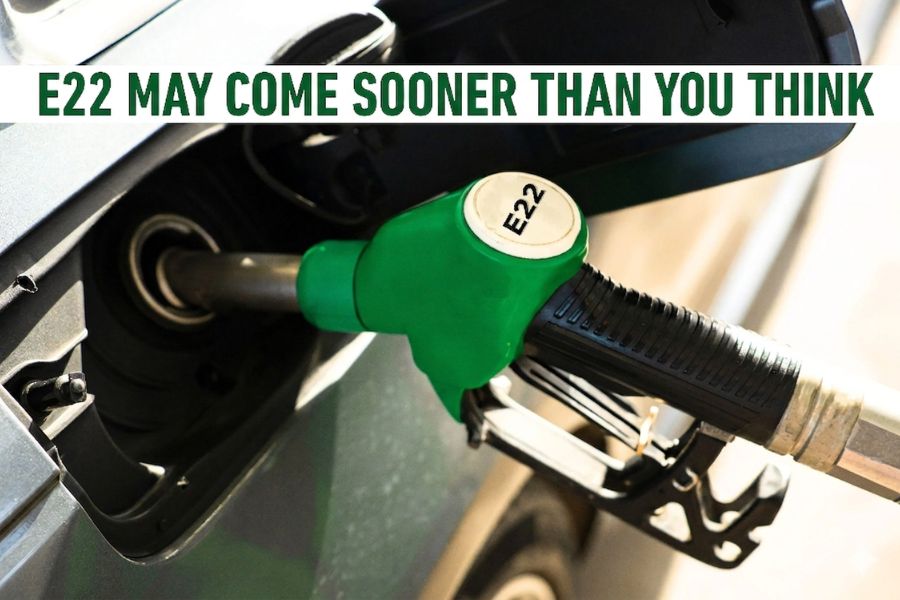
India’s ethanol blending journey has been one of the most ambitious clean energy pivots among emerging economies. Having crossed the 20% blending milestone—E20 fuel officially rolled out at petrol pumps nationwide from April 1, 2026—the country’s sugar and bioenergy industry now faces a paradox of success: too much capacity, not enough consumption.
With ethanol production infrastructure running at nearly double the current absorption rate, and crude oil prices surging past $110 a barrel amid ongoing geopolitical tensions in the Middle East, the Indian Sugar and Bio-Energy Manufacturers Association (ISMA) is pressing hard for the next logical move — a transition to E22, and ultimately a policy framework that makes flex-fuel vehicles (FFVs) commercially viable at scale.
The Overcapacity Problem: A Crisis Born of Ambition
India’s ethanol industry didn’t arrive at overcapacity by accident. It got there by following explicit government signals.
Since 2018, the sector has attracted over ₹40,000 crore in investments, supported by government interest subvention schemes offering 6% annual interest support. Total installed production capacity now stands at approximately 2,000 crore litres annually, with further expansion in the pipeline. Yet, at 20% blending, oil marketing companies (OMCs) require only around 1,200–1,250 crore litres per year — leaving a massive structural surplus.
For Ethanol Supply Year (ESY) 2025–26, ethanol producers collectively offered a staggering 17,760 million litres to OMCs, while the actual requirement stood at roughly 10,500 million litres — a supply overhang of nearly 70%.
The ripple effects are already visible on the ground. Underutilisation has created financial pressure for sugar mills and distilleries alike, leading to delayed payments to farmers and weakened rural incomes in sugarcane-growing states. In Maharashtra, ex-mill sugar prices have fallen below the cost of production. India is projected to close the current season with carryover stocks of 59–60 lakh tonnes of sugar — a figure that is actively suppressing domestic market prices.
Why E22, and Why Now?
ISMA Director General Deepak Balani has been unambiguous in laying out the association’s position. The ask isn’t a dramatic leap to E27 or E30 just yet — it’s a measured, technically defensible step to E22 as an immediate interim measure.
The technical logic is compelling. All new vehicles sold in India after 2023 are mandatorily E20-compliant. According to ISMA, moving from E20 to E22 requires no engine recalibration for this fleet. The Automotive Research Association of India (ARAI) has conducted tests that support this position, and Brazil’s experience — where E20-compliant vehicles routinely run on blends of 22–25% without issues — provides an established precedent.
“From E20 to E22 should not be a problem. There is scientific evidence. There are some tests which have been done by ARAI also,” Balani has stated, drawing a direct parallel to the Brazilian biofuel model.
The arithmetic behind the demand is straightforward: even a 2-percentage-point increase in blending would meaningfully absorb a portion of the excess supply, improve distillery utilisation rates, stabilise farmer payments, and reduce India’s crude oil import bill — which already weighs heavily on the current account.
With global crude above $100 a barrel and the Prime Minister having cited in Parliament that E20 blending alone has helped India avoid importing 4.5 crore barrels of crude, the macroeconomic case for pushing higher is hard to dismiss.
The Flex-Fuel Vehicle Equation: The Longer Game
While E22 is the near-term ask, ISMA’s broader agenda centres on creating the conditions for flex-fuel vehicles to go mainstream in India. This is where the policy asks become more structural.
Three specific levers have been identified:
1. GST Rationalisation on E100 and Flex-Fuel Vehicles
ISMA has argued for a reduction in GST on E100 (pure ethanol fuel) and on flex-fuel vehicles themselves. The economic case is straightforward: at a weighted average ethanol cost of ₹67 per litre, with 5% GST and dealer margins factored in, E100 at the fuel pump should cost around ₹80–82 per litre — meaningfully cheaper than petrol at current crude prices. If GST rationalisation enables this pricing advantage, consumer pull would naturally follow without requiring mandates.
The All India Distillers Association (AIDA) has reinforced this ask, noting that price competitiveness is the single most powerful driver of fuel switching behaviour. If the green option is also the cheaper option, the market does the heavy lifting.
2. Vehicle Pricing Parity and CAFÉ Credits
A persistent barrier to FFV adoption has been the price premium that flex-fuel-compatible vehicles carry over conventional ICE vehicles. ISMA is pushing for CAFÉ (Corporate Average Fuel Economy) super-credits for FFV manufacturers — a provision reportedly included in the draft CAFÉ-3 norms (yet to be formally notified), which proposes a super-credit multiplier of 2.5 for biofuel vehicles. This would make it financially rewarding for original equipment manufacturers (OEMs) to build and price FFVs competitively.
NITI Aayog’s recent Net Zero report has also explicitly recognised flex-fuel vehicles as a viable clean mobility pathway — lending institutional weight to the industry’s case.
3. Ethanol Dispensing Infrastructure
Beyond the vehicle and fuel price questions, the absence of widespread E100/E85 dispensing infrastructure remains a structural bottleneck. The All India Distillers Association has called for an accelerated rollout of ethanol pumps at retail fuel outlets, alongside the GST reforms.
The Trade-Offs: What Higher Blends Mean for Vehicle Owners
The industry’s push for higher blending is not without legitimate counterpoints, and a balanced view demands they be acknowledged.
Fuel efficiency is the most immediate consumer concern. Ethanol carries a significantly lower calorific value than petrol — roughly 65% of the energy density per litre. At E20, official estimates already indicate mileage drops of 2–7% depending on vehicle vintage and calibration. Moving to E22 or higher would extend this efficiency penalty, particularly for older vehicles.
Corrosion and wear is a secondary concern for aging vehicle fleets. Ethanol’s corrosive properties can accelerate degradation of rubber components, fuel seals, and injectors in vehicles not engineered to modern specifications. Most vehicles manufactured after 2023 have been designed with E30 compliance in mind, but a significant proportion of India’s on-road fleet predates these standards.
Cold-start performance can also be affected at higher blends, particularly in colder climates.
That said, most leading OEMs have already future-proofed their current engine and fuel system designs for blends up to E30. The calibration updates needed to optimise performance at E22–E30 will follow once these blends become commercially available and mandated — a sequencing challenge more than a fundamental technical barrier.
The Grain vs. Sugarcane Divide
India’s ethanol story isn’t solely a sugar industry story. The production landscape has shifted significantly over the past two years. In ESY 2024–25, grain-based ethanol (primarily maize, supplemented by rice) accounted for approximately 60% of total production, while sugarcane-based producers contributed the remaining 40%.
This split matters for the policy debate. Grain-based producers — represented by the Grain Ethanol Manufacturers Association (GEMA) and others — face even sharper viability pressures because, unlike sugar mills, they produce no co-products that can cross-subsidise operations when ethanol allocation is restricted. Many grain-based distilleries are currently operating at around 50% of capacity, a level that threatens their long-term financial viability.
GEMA has joined ISMA in calling for higher blending targets, GST rationalisation on flex-fuel vehicles, and accelerated development of ethanol dispensing infrastructure. The convergence of the sugar and grain ethanol camps on the same policy asks adds political weight to the demand.
India’s Cost Competitiveness Challenge
One structural issue that ISMA has acknowledged candidly is India’s cost of ethanol production relative to global benchmarks.
The Fair and Remunerative Price (FRP) mechanism — which sets the minimum price sugar mills must pay sugarcane farmers — means that FRP payments account for roughly 75% of sugarcane ethanol production costs. India pays some of the highest mandated prices for its sugarcane feedstock anywhere in the world, making Indian ethanol structurally more expensive than, say, US corn-based ethanol, which operates without equivalent price floor controls.
This cost premium limits India’s ability to be globally competitive in ethanol trade, reinforcing the case for a robust domestic consumption push through blending mandates rather than relying on export markets to absorb surplus supply.
Government Signals and the Road Ahead
The government’s position, while not yet formalised into new blending targets, has been encouraging for the industry. Key signals include:
- The E20 nationwide rollout from April 1, 2026, demonstrating execution capability at scale
- The Prime Minister’s parliamentary references to the import-substitution impact of the blending programme
- The draft CAFÉ-3 norms with proposed 2.5x super-credits for biofuel vehicles
- NITI Aayog’s Net Zero report recognising flex-fuel vehicles as a clean pathway
- A Supreme Court order in January 2026 asking the Centre for Air Quality Management to evaluate flex-fuels and hydrogen as alternatives to EVs — a significant judicial nudge
Balani has publicly expressed confidence that 2026 will see “concrete steps” from the government to expand ethanol consumption, citing the combination of overcapacity pressure, elevated crude prices, and growing institutional recognition of flex-fuel vehicles.
Since ESY 2014–15 through February 2026, the ethanol blending programme has cumulatively generated revenues of over ₹1,50,925 crore for the industry, achieved foreign exchange savings of more than ₹1,70,560 crore, contributed to a net CO₂ reduction of approximately 869 lakh metric tonnes, and displaced over 289 lakh metric tonnes of crude oil. These are not trivial numbers, and they represent the programme’s strongest argument for continuation and scaling.
Brazil’s Blueprint: The Model India Wants to Replicate
Brazil remains the global reference point for what a mature flex-fuel ecosystem looks like. Brazilian flex-fuel vehicles — which can run on any combination of ethanol and petrol — today account for the vast majority of new car sales in the country, and ethanol substitutes nearly 55% of petrol demand. Consumer choice, competitive fuel pricing, widespread infrastructure, and a stable regulatory framework drove that transition over two decades.
India is not starting from zero. The technical foundation — with most modern engines already E30-capable — is in place. The feedstock supply is abundant, even excessive. The macroeconomic motivation, with crude above $100 a barrel, has rarely been stronger. What’s missing is the policy architecture: the GST structure, the CAFÉ credits, the FFV infrastructure rollout, and the explicit blending mandate step-up that would allow market forces to take over.
E22 is not the destination. It is the next step on a longer road that India’s sugar and bioenergy industry, its farmers, and its energy security imperatives all have a stake in completing.
Read More: