


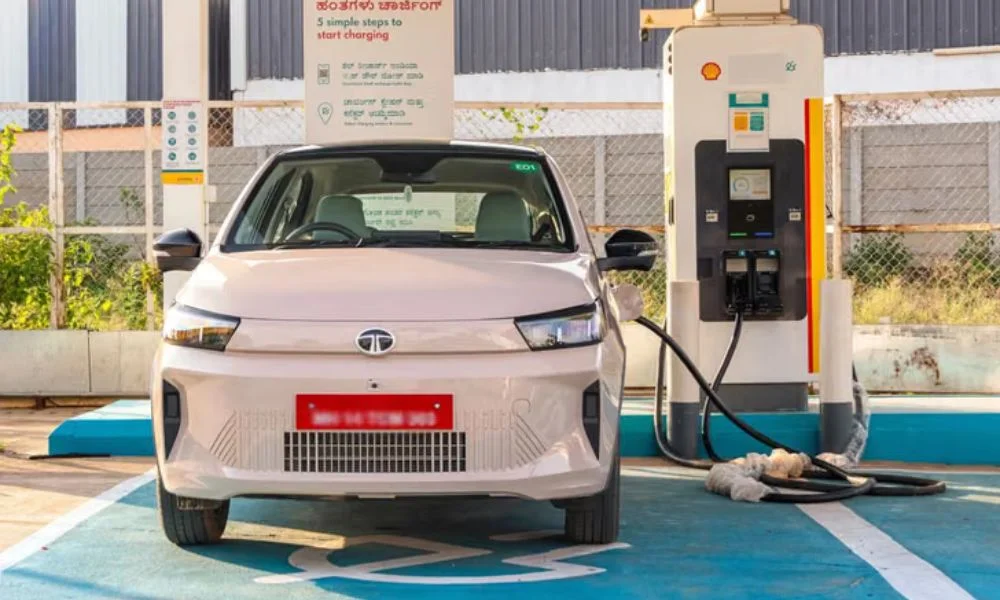
Haryana has just handed electric vehicle buyers the biggest financial incentive the state has ever offered. The Haryana Cabinet, led by Chief Minister Nayab Singh Saini, has approved a complete 100 percent exemption on Motor Vehicle Tax for new electric two-wheelers, three-wheelers, and four-wheelers priced up to Rs 30 lakh at the time of registration. For anyone shopping for an EV in Gurugram, Faridabad, Panchkula, or anywhere else in the state, this single policy change could save lakhs of rupees on a new car or scooter. Here’s everything you need to know before you walk into a showroom.
KEY HIGHLIGHTS
- 100 percent Motor Vehicle Tax exemption for new EVs (two-wheelers, three-wheelers, four-wheelers) priced up to Rs 30 lakh ex-showroom
- 50 percent tax exemption for EVs priced above Rs 30 lakh
- Replaces the earlier 20 percent tax rebate that had been in place for EVs and CNG vehicles
- CNG vehicles continue to receive the existing 20 percent rebate, unchanged
- A separate 1 percent motor vehicle tax rebate has also been approved for non-transport vehicles registered in a woman’s name, capped at vehicles up to Rs 20 lakh
- Brings Haryana in line with Delhi and Chandigarh, which already waive registration tax on eligible EVs
- Fulfils a commitment made in the Haryana Budget 2026-27, presented on March 2, 2026
- Aimed at stopping revenue and registration leakage to neighbouring Delhi-NCR states
WHY HARYANA MADE THIS MOVE
Until this decision, Haryana offered only a 20 percent rebate on Motor Vehicle Tax for electric and CNG vehicles at the time of registration. That’s a modest saving compared to what neighbouring Delhi and Chandigarh already provided in the form of zero registration tax on EVs.
This gap had a real-world consequence. Dealers in Haryana had reportedly been losing business because customers were buying vehicles from local showrooms but registering them across the border in Delhi or Chandigarh purely to dodge the higher tax outgo. That meant lost tax revenue for the state and lost momentum for local dealerships. Transport Minister Anil Vij is understood to have pushed for this correction for some time before the Cabinet finally cleared it.
By moving straight from a 20 percent rebate to a full exemption, Haryana isn’t just tweaking its EV policy, it’s resetting the competitive equation with the National Capital Region entirely.
HOW MUCH WILL YOU ACTUALLY SAVE?
To understand the real impact, it helps to look at what the previous tax structure looked like for personal, non-transport vehicles in Haryana before this waiver.
Four-wheeler, up to Rs 6 lakh: Previous tax 5%, previous EV rebate 20% off applicable tax, new EV tax 0% (up to Rs 30 lakh)
Four-wheeler, Rs 6 lakh–Rs 20 lakh: Previous tax 8%, previous EV rebate 20% off applicable tax, new EV tax 0% (up to Rs 30 lakh)
Four-wheeler, above Rs 20 lakh: Previous tax 10%, previous EV rebate 20% off applicable tax, new EV tax 0% up to Rs 30 lakh, 50% above Rs 30 lakh
Two-wheeler, up to Rs 75,000: Previous tax 4%, previous EV rebate 20% off applicable tax, new EV tax 0% (up to Rs 30 lakh)
Two-wheeler, Rs 75,000–Rs 2 lakh: Previous tax 6%, previous EV rebate 20% off applicable tax, new EV tax 0% (up to Rs 30 lakh)
Two-wheeler, Rs 2 lakh–Rs 20 lakh: Previous tax 8%, previous EV rebate 20% off applicable tax, new EV tax 0% (up to Rs 30 lakh)
Take a mid-size electric SUV priced at Rs 18 lakh ex-showroom. Under the old 10 percent tax slab with a 20 percent rebate, a buyer would have paid roughly Rs 1.44 lakh in Motor Vehicle Tax. Under the new policy, that entire amount is waived. On a premium electric SUV priced at Rs 35 lakh, where the 50 percent exemption kicks in, buyers would still pay tax only on half the applicable rate, a substantial cut from what they’d have paid earlier.
For popular mass-market EVs like the Tata Nexon.ev, Punch.ev, MG Windsor, or Mahindra BE 6, all of which sit comfortably under the Rs 30 lakh threshold, this translates into a straightforward, no-questions-asked full tax waiver at registration.
WHO BENEFITS AND WHO DOESN’T
Pros:
- Covers the overwhelming majority of EVs sold in India today, since most mass-market electric cars, scooters, and autos fall well under Rs 30 lakh
- Removes the incentive to register vehicles outside the state, which should help local dealerships and keep tax revenue within Haryana
- Two-wheelers and three-wheelers, including e-rickshaws, are covered too, not just passenger cars
- Combines with existing central FAME-style benefits and GST advantages EVs already enjoy, making the total cost of ownership noticeably lower
- Women buyers get an additional layer of savings through the separate 1 percent rebate on conventional vehicles up to Rs 20 lakh
Cons:
- Premium electric vehicles above Rs 30 lakh, such as higher-end variants of the Kia EV6, BMW iX, or Mercedes-Benz EQ models, only get a 50 percent exemption, not a full waiver
- CNG vehicle owners see no additional benefit; their rebate stays capped at 20 percent
- The policy applies only to new registrations in Haryana, so it doesn’t help existing EV owners who already paid tax under the older structure
- As with most state incentives, implementation timelines and RTO-level paperwork can take a few weeks to streamline after a Cabinet approval
WHAT THIS MEANS IF YOU’RE PLANNING AN EV PURCHASE
If you’ve been sitting on the fence about switching to electric, this is about as strong a nudge as any state government has given so far. A few practical points worth keeping in mind:
- Check the ex-showroom price threshold carefully. The Rs 30 lakh cut-off is based on ex-showroom price, not on-road price, so factor that in when comparing variants
- Ask your dealer for written confirmation of the tax exemption at the time of booking, since RTOs typically take a little time to update their systems after a policy change
- If you’re a woman buyer purchasing a conventional (non-electric) vehicle under Rs 20 lakh, remember the separate 1 percent rebate applies only if the vehicle is registered in your name
- Combine this with central government incentives and lower running costs to work out your real total cost of ownership over five to seven years, not just the upfront saving
FREQUENTLY ASKED QUESTIONS (FAQs)
- What exactly did the Haryana Cabinet approve regarding EV road tax?
The Haryana Cabinet approved a 100 percent exemption on Motor Vehicle Tax for new electric two-wheelers, three-wheelers, and four-wheelers with an ex-showroom price up to Rs 30 lakh. Vehicles priced above Rs 30 lakh get a 50 percent exemption instead. - Does this replace the earlier 20 percent EV tax rebate in Haryana?
Yes. The earlier 20 percent rebate on Motor Vehicle Tax for EVs has now been enhanced to a full exemption for vehicles up to Rs 30 lakh. CNG vehicles continue to receive the unchanged 20 percent rebate. - Is the Rs 30 lakh limit based on ex-showroom or on-road price?
It is based on the ex-showroom price of the vehicle, as specified under the Haryana Motor Vehicles Taxation Act, 2016. - Are electric two-wheelers and three-wheelers covered under this waiver?
Yes. The exemption applies to pure electric or battery-operated two-wheelers, three-wheelers (including autos and e-rickshaws), and four-wheelers, not just passenger cars. - Is there any additional benefit for women buyers under this policy?
Yes, but it’s a separate provision. The Haryana Cabinet also approved a 1 percent Motor Vehicle Tax rebate on non-transport (conventional) vehicles registered in a woman’s name, applicable to vehicles priced up to Rs 20 lakh. - When does this new tax exemption come into effect?
The decision was approved by the Haryana Cabinet on July 28, 2026, fulfilling an announcement made in the Haryana Budget 2026-27 presented on March 2, 2026. Buyers should confirm implementation status with their local RTO or dealer, as state-level rollout can take a short while to reflect at the registration stage. - How does this compare to Delhi and Chandigarh’s EV tax policies?
This move brings Haryana on par with Delhi and Chandigarh, both of which already offer zero registration tax on eligible electric vehicles.
CONCLUSION
Haryana’s decision to waive Motor Vehicle Tax entirely on EVs up to Rs 30 lakh isn’t a minor policy tweak, it’s a genuine reset of the state’s electric mobility push. By closing the gap with Delhi and Chandigarh, the state is not only trying to make EVs more affordable for its residents but also plugging a revenue leak caused by cross-border registrations. For buyers, the math is simple: if you were already considering an electric car, scooter, or auto, the financial case just got a lot stronger. Just make sure your dealer and RTO paperwork reflect the new exemption before you finalise your purchase.