


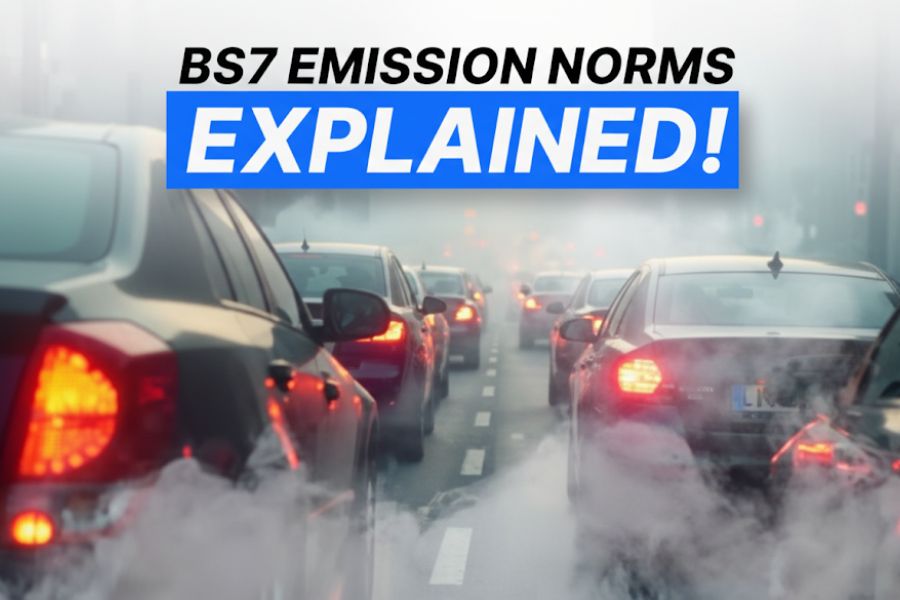
India is preparing for a major transformation in its automotive sector with the upcoming implementation of Bharat Stage 7 (BS7) emission norms. As the country continues its commitment to reducing vehicular pollution and improving air quality, BS7 represents the next significant step after BS6, which was implemented in April 2020.
BS7 norms, modeled on Europe’s Euro 7 standards, aim to drastically reduce harmful pollutants such as nitrogen oxides (NOx), carbon monoxide (CO), and particulate matter (PM). These standards will reshape vehicle manufacturing, pricing, and ownership in India over the next few years.
This guide explains what BS7 norms are, their timeline, technical features, and their impact on car buyers and the automotive industry.
What Are BS7 Norms?
Bharat Stage 7 (BS7) norms are the seventh version of emission regulations introduced by the Government of India. They are designed to control vehicular emissions across:
-
Passenger cars
-
Two-wheelers
-
Commercial vehicles
-
Buses and trucks
BS7 will apply to both petrol and diesel vehicles and will also introduce new rules for electric and hybrid vehicles.
Key Objectives of BS7 Norms
The main goals of BS7 standards are:
-
Reducing harmful pollutants like NOx, PM, and CO
-
Aligning India with global emission benchmarks
-
Improving air quality in major cities
-
Promoting cleaner fuel and vehicle technologies
-
Encouraging sustainable mobility solutions
BS7 Implementation Timeline in India
Although the government has not announced an official date, industry experts expect a phased rollout.
Expected Schedule
-
2025–2026: Implementation in major metro cities
-
2026–2027: Expansion to other urban centers
-
2027–2028: Nationwide rollout
The timeline is expected to follow Europe’s Euro 7 standards with a short delay.
Key Features and Technical Specifications of BS7
1. On-Board Monitoring (OBM) System
BS7 introduces On-Board Monitoring (OBM), which continuously tracks vehicle emissions in real time throughout its life. This is an upgrade from BS6’s periodic diagnostics system.
2. Uniform Emission Limits
Under BS7, petrol and diesel vehicles will follow the same NOx limit:
-
Petrol: 60 mg/km
-
Diesel: 60 mg/km
This removes the previous diesel advantage.
3. Real Driving Emission (RDE) Testing
Vehicles will be tested in real road conditions instead of only in laboratories. This ensures accurate emission measurement in daily driving.
4. Regulation of Non-Exhaust Emissions
For the first time, BS7 will regulate:
-
Brake dust
-
Tyre wear particles
-
Microplastics
This covers pollution beyond exhaust gases.
5. EV Battery Standards
Electric and plug-in hybrid vehicles will face stricter testing for:
-
Battery durability
-
Charge retention
-
Long-term performance
6. Lifetime Emission Monitoring
BS7 vehicles will monitor emission performance throughout their operational life, ensuring compliance even after years of use.
BS6 vs BS7: Key Differences
| Feature | BS6 | BS7 |
|---|---|---|
| NOx (Petrol) | 60 mg/km | 60 mg/km |
| NOx (Diesel) | 80 mg/km | 60 mg/km |
| Monitoring | OBD | OBM |
| Testing | Limited RDE | Full RDE |
| Non-Exhaust Emissions | Not regulated | Regulated |
| EV Standards | Basic | Advanced |
Impact of BS7 on the Automotive Industry
1. Higher Manufacturing Costs
Manufacturers must invest in:
-
Advanced emission systems
-
New sensors
-
Improved testing facilities
-
Engine redesign
This will increase vehicle prices.
2. Challenges for Diesel Vehicles
Diesel engines will struggle to meet strict limits. Some large diesel engines may be discontinued due to high compliance costs.
3. Faster Shift to Electric Vehicles
BS7 will accelerate:
-
EV adoption
-
Hybrid vehicle launches
-
Reduction in pure petrol/diesel models
4. Technology Innovation
BS7 will drive development in:
-
Better catalytic converters
-
Advanced SCR systems
-
Improved DPFs
-
Efficient fuel injection
-
Lightweight materials
What BS7 Means for Car Buyers
Higher Prices
Vehicle prices may increase by 5–15%, especially for diesel models.
Existing BS6 Vehicles
BS6 vehicles will remain legal, but owners may face:
-
Lower resale value
-
Possible restrictions in some cities
-
Higher future taxes
Better Efficiency
Improved technology may lead to better fuel economy, reducing long-term costs.
Improved Air Quality
BS7 will significantly reduce urban pollution, improving public health.
Environmental Benefits of BS7
Reduction in Pollutants
BS7 will reduce:
-
Nitrogen Oxides (NOx)
-
Particulate Matter (PM)
-
Carbon Monoxide (CO)
-
Hydrocarbons (HC)
Climate Change Impact
Cleaner vehicles and EV adoption will help India meet climate targets.
Public Health Improvements
Benefits include:
-
Fewer respiratory diseases
-
Reduced heart problems
-
Lower healthcare costs
-
Better quality of life
Industry Preparation for BS7
Manufacturers are already working on:
-
Next-generation engines
-
BS7 prototypes
-
Global supplier partnerships
-
Hybrid technology development
Oil companies are also upgrading fuel quality to support advanced emission systems.
Evolution of Bharat Stage Norms
| Year | Standard |
|---|---|
| 2000 | India 2000 (Euro 1) |
| 2005 | BS2 |
| 2010 | BS3 |
| 2017 | BS4 |
| 2020 | BS6 |
| 2023 | BS6 Phase 2 |
| 2025–27 | BS7 (Expected) |
Frequently Asked Questions
Will BS7 ban diesel vehicles?
No. But many diesel models may be discontinued due to high compliance costs.
When will BS7 start?
Expected between 2025 and 2027 with phased implementation.
How much will prices increase?
Estimated 5–15%, depending on segment and fuel type.
Can BS6 vehicles be upgraded to BS7?
No. Retrofitting is not practical or cost-effective.
Difference between OBD and OBM?
-
OBD: Periodic checks (BS6)
-
OBM: Continuous monitoring (BS7)
Will BS7 boost EV sales?
Yes. Higher ICE costs will make EVs more attractive.
Conclusion
BS7 emission norms mark a major step in India’s journey toward cleaner mobility. While manufacturers and buyers may face higher costs and limited diesel options, the long-term benefits are substantial.
BS7 will:
-
Reduce pollution
-
Improve public health
-
Encourage EV adoption
-
Promote innovation
-
Align India with global standards
Though the transition may be challenging, it is essential for building a sustainable and environmentally responsible transportation system.
Read More: