


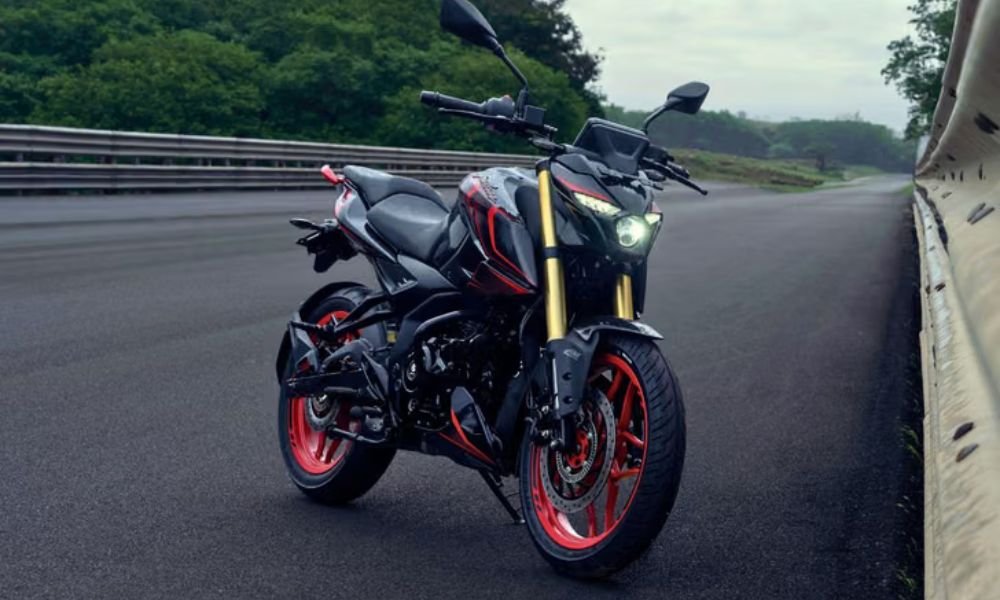
Bajaj just pulled the wraps off two new Pulsar N160 variants — and this time, they’ve brought serious hardware to the fight. The Pulsar N160 S and Pulsar N160 SS were officially launched on August 7, 2026, priced at Rs 1,33,511 and Rs 1,42,585 (ex-showroom, Delhi) respectively. With a brand-new 4-valve engine, electronic throttle, four riding modes, Crawl Technology, and — for the first time in this segment — a 5-inch TFT display with Google Maps mirroring on the SS, this isn’t just a refresh. It’s a statement. Bajaj is going after TVS Apache RTR 160 4V and Hero Xtreme 160R 4V hard, and the spec sheet suggests they’re ready to win.
Key Highlights
- New 165cc 4-valve oil-cooled engine producing 18.5 PS @ 9,500 rpm and 14.4 Nm @ 8,000 rpm
- 0–60 km/h in just 4.5 seconds — the quickest in segment
- Electronic throttle (ride-by-wire) with four riding modes: Road, Rain, Sport, Off-Road
- Bajaj Crawl Technology — prevents stalling in stop-and-go city traffic
- 37mm USD front forks with monoshock rear suspension
- 300mm front disc / 230mm rear disc for strong braking
- N160 S: LCD display, Bluetooth, turn-by-turn navigation, single-channel ABS
- N160 SS: 5-inch TFT with Google Maps mirroring, Wi-Fi, traction control, dual-channel ABS, adjustable levers — a segment first
- Three new colour options: Atlantic Blue, Pearl Metallic White, Brooklyn Black
- Standard N160 (2-valve) continues to be sold alongside the new variants
The New 4-Valve Engine — What Changed and Why It Matters
The heart of both new variants is a completely reworked 164.5cc single-cylinder, oil-cooled, 4-valve engine — and Bajaj hasn’t just bolted on extra valves. The bore has been increased from 58mm to 63.5mm, while the stroke has been reduced from 63mm to 52mm, giving it a more over-square character that loves to rev. The result: 18.5 PS of peak power, up 2.5 PS over the outgoing 2-valve motor, and torque at 14.4 Nm — just a whisker below the old 14.65 Nm figure but delivered higher in the rev range.
This engine also switches from a conventional mechanical throttle to an electronic throttle body (ride-by-wire), enabling the four riding modes. That’s a feature you’d typically see on motorcycles costing significantly more.
The 5-speed gearbox has been retained, and Bajaj claims a 0–60 km/h sprint in 4.5 seconds — a bold number for a 160cc commuter-sport bike.
Bajaj Crawl Technology — A Game-Changer for City Riding
One of the most underrated features on the N160 S and SS is Crawl Technology. In bumper-to-bumper traffic, the bike can move at very low speeds in higher gears without constant clutch work or the engine threatening to stall. If you’ve ever ridden in peak Bangalore or Delhi traffic, you know exactly how much this matters in the real world. It’s the kind of feature that makes daily commuting genuinely less exhausting — and it’s a Bajaj-first on this platform.
N160 S vs N160 SS — Which Variant Should You Buy?
Here’s where it gets interesting. Both bikes share the same engine, chassis, suspension, and brakes. The differences are in electronics, display tech, and a few convenience features.
| Feature | Pulsar N160 S | Pulsar N160 SS |
|---|---|---|
| Price (ex-showroom Delhi) | Rs 1,33,511 | Rs 1,42,585 |
| Engine | 165cc, 4V, 18.5 PS | 165cc, 4V, 18.5 PS |
| Display | LCD | 5-inch TFT |
| Connectivity | Bluetooth | Bluetooth + Wi-Fi |
| Navigation | Turn-by-turn | Full Google Maps mirroring |
| Riding Modes | 4 (Road, Rain, Sport, Off-Road) | 4 (Road, Rain, Sport, Off-Road) |
| Crawl Technology | Yes | Yes |
| Traction Control | No | Yes |
| ABS | Single-channel | Dual-channel |
| Adjustable Levers | No | Yes |
| Front Forks | 37mm USD | 37mm USD |
| Front Disc | 300mm | 300mm |
| Rear Disc | 230mm | 230mm |
The N160 S is the sweet spot for most buyers — you get all the mechanical goodness, the new engine, ride modes, and Crawl Tech at a genuinely sharp price point. The N160 SS is for the feature maximalists who want Google Maps on the dash and traction control in the rain. The Rs 9,074 premium for the SS is reasonable if those additions matter to your daily life.
Hardware and Design Updates
While the overall N-family design language has been retained — muscular fuel tank, projector LED headlamp, split tail section, LED DRLs — Bajaj has made some meaningful hardware upgrades that improve the riding experience.
Suspension
Both variants get 37mm upside-down front forks — beefier than the previous-gen setup — paired with a monoshock at the rear. The ergonomics have also been slightly revised, with the handlebar angle and seat height tweaked to give a sportier, more committed riding posture.
Brakes
Braking is handled by 300mm front disc and 230mm rear disc, with ABS as standard. The SS gets dual-channel ABS for added confidence in mixed road conditions.
Wheels and Colours
Gold-finished alloy wheels add a premium visual touch, matching the gold-finished USD forks. The three launch colours — Atlantic Blue, Pearl Metallic White, and Brooklyn Black — each come with unique coloured rims to distinguish them further.
Pros and Cons
Pros
- 4-valve engine with genuinely improved peak power (18.5 PS) in the 160cc segment
- Electronic throttle and four riding modes at this price point is class-leading
- Crawl Technology is a practical, real-world differentiator for city riders
- TFT with Google Maps on the SS is a genuine segment first
- 37mm USD forks and 300mm front disc feel overspecced in the best way
- Sharp pricing — N160 S undercuts some rivals while offering more features
Cons
- Torque drops marginally (14.4 Nm vs 14.65 Nm on the 2V) — minor but worth noting
- No traction control on the N160 S — only on SS
- Standard N160 (2V) buyers may feel their bike got outpaced quickly
- Mileage figures not yet officially confirmed; 4-valve tuning may trade some economy for performance
How It Stacks Up Against Rivals
The Pulsar N160 S and SS enter a segment that already has two strong performers. Here’s a quick comparison:
| Spec | Bajaj Pulsar N160 SS | TVS Apache RTR 160 4V | Hero Xtreme 160R 4V |
|---|---|---|---|
| Engine | 165cc, 4V | 159.7cc, 4V | 163cc, 4V |
| Power | 18.5 PS | 17.55 PS | 15.2 PS |
| Torque | 14.4 Nm | 14.73 Nm | 14.35 Nm |
| Display | 5-inch TFT | TFT (Race Tuned) | Digital LCD |
| Ride Modes | Yes (4 modes) | Yes | No |
| Google Maps | Yes | No | No |
| Traction Control | Yes (SS only) | No | No |
| Approx. Price | Rs 1.43 lakh | Rs 1.35 lakh | Rs 1.25 lakh |
The N160 SS clearly leads on outright power, ride modes, and connected features. The Apache RTR 160 4V remains a strong rival with slightly higher torque and a proven engine. The Hero Xtreme 160R 4V undercuts both on price but trails on tech.
Ownership Considerations
Before you book, a few practical points worth keeping in mind:
City or highway? If 80% of your riding is urban, the Crawl Technology and Rain mode on both variants will be used regularly. The SS’s traction control also adds meaningful safety on wet roads.
Feature vs price trade-off: The gap between the 2-valve standard N160 and the new 4-valve S is approximately Rs 10,708. For that money, you’re getting significantly more technology, a stronger engine, and a better feature set. It’s hard to argue for the base 2V unless budget is the primary concern.
Service network: Bajaj’s dealership and service network is one of the most widespread in India, which means parts availability and service costs should remain competitive.
Expected mileage: Bajaj hasn’t officially declared mileage figures for the new 4-valve variants. Given the 2V delivers around 45–48 km/l in real-world conditions, expect the 4V to come in slightly lower — likely 40–44 km/l — given the higher state of tune. Confirmed data post-owner reviews will tell the full story.
Verdict — Is the Bajaj Pulsar N160 S/SS Worth It?
Short answer: yes, and then some. The Pulsar N160 S and SS don’t just tick boxes — they redefine what buyers can expect from a 160cc motorcycle in this budget.
The 4-valve engine, electronic throttle, four riding modes, and Crawl Technology on the N160 S at Rs 1.34 lakh is genuinely difficult to beat. The SS takes things further with Google Maps mirroring, traction control, and dual-channel ABS for Rs 1.43 lakh — making it arguably the most feature-rich motorcycle in the 160cc segment right now.
If you’re in the market for a sporty daily commuter that won’t feel outdated for years, the Pulsar N160 S is the pragmatic pick. If you want the full-tech experience without crossing the Rs 1.5 lakh mark, the N160 SS is where you stop looking.
Frequently Asked Questions (FAQs)
Q1. What is the ex-showroom price of the Bajaj Pulsar N160 S and N160 SS? The Pulsar N160 S is priced at Rs 1,33,511 and the Pulsar N160 SS is priced at Rs 1,42,585 — both ex-showroom, Delhi. On-road prices will vary by city and state.
Q2. What is the engine displacement and power output of the new N160 S/SS? Both variants are powered by a new 164.5cc single-cylinder, oil-cooled, 4-valve engine that produces 18.5 PS at 9,500 rpm and 14.4 Nm of torque at 8,000 rpm. The engine uses an electronic throttle body (ride-by-wire).
Q3. What is Bajaj Crawl Technology and how does it work? Crawl Technology allows the motorcycle to move at very low speeds — such as in stop-and-go city traffic — in higher gears without stalling the engine or requiring constant clutch intervention. It’s essentially a low-speed assist feature for urban commuting ease.
Q4. What is the difference between the N160 S and N160 SS? The N160 SS adds a 5-inch TFT display with full Google Maps mirroring, Wi-Fi connectivity, traction control, dual-channel ABS, and adjustable levers over the N160 S. Both share the same engine, chassis, suspension, and brakes.
Q5. Will the standard Bajaj Pulsar N160 (2-valve) continue to be sold? Yes. Bajaj has confirmed that the existing 2-valve Pulsar N160 variants will continue to be sold alongside the new 4-valve S and SS models, giving buyers a more affordable entry point into the N160 family.
Q6. What colours are available for the Pulsar N160 S and SS? Both the N160 S and N160 SS are available in three new colour options: Atlantic Blue, Pearl Metallic White, and Brooklyn Black — each paired with unique coloured alloy rims.
Q7. How does the Pulsar N160 SS compare to the TVS Apache RTR 160 4V? The N160 SS leads on outright power (18.5 PS vs 17.55 PS), ride modes, Google Maps integration, and traction control. The Apache RTR 160 4V edges out on torque (14.73 Nm) and is priced slightly lower. Both are strong competitors in the segment.
Prices mentioned are ex-showroom Delhi at the time of launch. On-road prices vary by city, state taxes, and dealer charges. Always confirm pricing and variant availability at your nearest Bajaj dealership before purchase.