


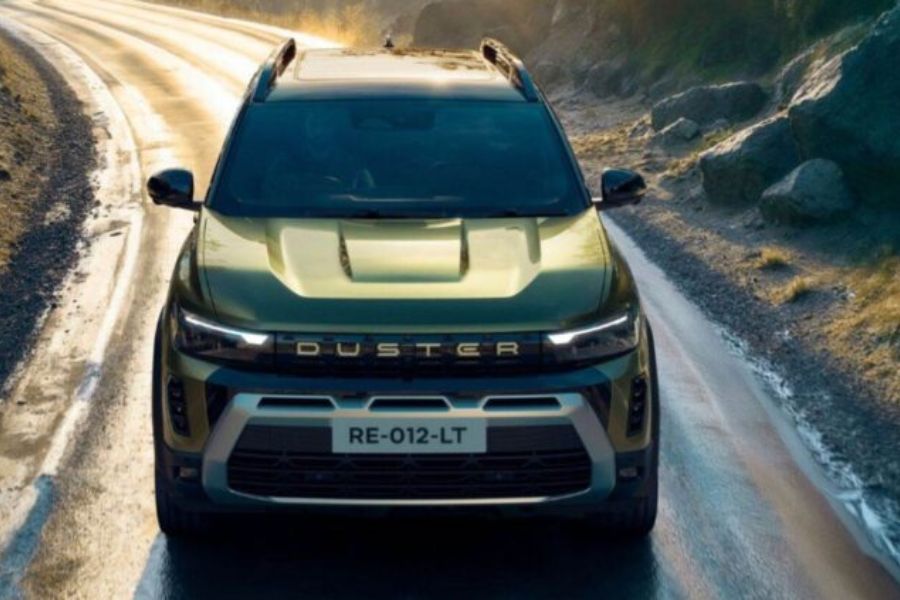
2026 Renault Duster Specifications Analysis: How Does It Compare Against Midsize SUV Rivals?
After a four-year hiatus since its 2022 discontinuation, the Renault Duster makes a comeback to the competitive midsize SUV segment it originally pioneered in India back in 2012. The third-generation model now faces formidable competition from market leaders like the Hyundai Creta, Maruti Suzuki Grand Vitara, Kia Seltos, and newer entrants including the Tata Sierra and Maruti Victoris. Here’s a comprehensive specification breakdown to see if the new Duster can reclaim its position.
Size and Space: Dimensions Breakdown
Overall Footprint Comparison
The reimagined Duster measures 4,343mm in length, positioning itself strategically within the segment. It surpasses the segment-leading Creta by 13mm while remaining shorter than the Seltos (by 117mm), Hyryder (by 23mm), and Victoris (by 17mm).
Width advantages are notable, with the Duster measuring 1,813mm—23mm broader than the Creta and 18mm wider than Maruti and Toyota’s offerings. However, the Tata Sierra claims the title of widest SUV at 1,841mm, also boasting the longest wheelbase at 2,730mm.
The Duster’s 2,657mm wheelbase places it competitively in the middle, avoiding the compact dimensions of Skoda-Volkswagen twins while not matching the Sierra’s expansive proportions.
Ground Clearance and Off-Road Capability
With 212mm of ground clearance, the Duster secures second place, trailing only the Honda Elevate’s segment-leading 220mm. This positions it favorably above the Creta (190mm) and Kushaq/Taigun twins (188mm) for tackling rough terrain and speed breakers.
Cargo Capacity Leadership
A standout feature is the Duster’s class-leading boot space of 518 liters (measured to the parcel shelf)—significantly more than the Creta’s 433 liters and Grand Vitara/Hyryder’s 373 liters. Only the Tata Sierra claims more space at 622 liters, though this measurement extends to the roof rather than the parcel shelf.
Wheel Size
The Duster rides on 18-inch wheels, matching premium variants of the Creta and Seltos, while the Sierra offers larger 19-inch options on top trims.
Engine Options and Performance Analysis
Turbo-Petrol Power Leadership
The Duster introduces a 1.3-liter turbocharged petrol engine producing 163hp and 280Nm—the most powerful turbo-petrol unit in the segment. This outmuscles competitors:
- Creta/Seltos/Sierra: 160hp, 253-255Nm
- Kushaq/Taigun: 150hp, 250Nm (top variant)
Transmission options include a 6-speed manual and 7-speed dual-clutch automatic.
Entry-Level Turbo-Petrol
A 1.0-liter three-cylinder turbo-petrol (100hp/160Nm) serves as the base option, offering slightly less output than the Kushaq/Taigun’s 1.0-liter units (115hp/178Nm).
Strong Hybrid Superiority
The Duster’s 1.8-liter strong hybrid system delivers 160hp combined output—21hp more than the Grand Vitara and Hyryder’s 1.5-liter hybrid setups (116hp combined). The torque advantage stands at 31Nm (172Nm vs 141Nm). This hybrid pairs with an 8-speed dedicated hybrid transmission.
What’s Missing?
Unlike the Creta, Seltos, and Sierra, the Duster skips diesel engine options entirely. The Sierra’s 1.5-liter diesel (118hp/280Nm) offers the most powerful oil-burner in the segment.
Additionally, the Duster won’t offer:
- CNG variants (available on Victoris, Grand Vitara, Hyryder)
- All-wheel-drive configurations (available on select competitors)
Naturally Aspirated Petrol Standings
For buyers seeking simple petrol engines, the Honda Elevate leads with 121hp, followed by the Creta/Seltos at 115hp. The Victoris and Toyota twins produce 103hp from their naturally aspirated mills.
Pricing Strategy and Market Positioning
Expected Price Range
While official pricing awaits announcement in March 2026, industry estimates suggest the Duster will be positioned between ₹10.5 lakh to ₹20 lakh (ex-showroom)—directly challenging the Creta (₹10.79-20.20 lakh) and Seltos (₹10.99-19.99 lakh).
Current Segment Pricing Landscape
Most Affordable: Citroen Aircross (₹8.29-13.69 lakh), though it lacks premium features like panoramic sunroof, 360-degree camera, and ADAS
Value Propositions: MG Astor (₹9.65-16.24 lakh), Honda Elevate (₹11.60-16.67 lakh)
Premium Positioning: Tata Sierra (₹11.49-21.29 lakh) currently commands the highest pricing
Mainstream Competitors: Victoris (₹10.50-19.99 lakh), Grand Vitara (₹10.77-19.72 lakh), Hyryder (₹10.95-19.76 lakh)
Verdict: Can the Duster Reclaim Its Crown?
Strengths
- Segment-leading boot space (518 liters)
- Most powerful turbo-petrol engine (163hp)
- Superior strong hybrid system output
- Competitive dimensions with excellent width
- Strong ground clearance for Indian roads
Considerations
- No diesel engine option
- No AWD or CNG availability
- Pricing yet to be revealed
Market Outlook
On paper, the third-generation Renault Duster presents compelling specifications that could seriously challenge the Hyundai Creta’s dominance. Its combination of spaciousness, powerful engines, and practical design addresses key buyer priorities in the midsize SUV segment.
Success will ultimately hinge on aggressive pricing and competitive feature packaging. If Renault positions the Duster competitively against the ₹11-19 lakh bracket occupied by the Creta, Seltos, Victoris, and Sierra, it could emerge as a strong value proposition.
The automotive community awaits the March 2026 price announcement, which will determine whether the Duster can translate its impressive specifications into market success and reclaim relevance in the segment it helped create over a decade ago.
Note: All specifications are based on manufacturer data; prices mentioned are ex-showroom India. Skoda Kushaq facelift pricing also pending announcement.